Arashiyama Monkey Park Iwatayama: A Practical Guide to Kyoto’s Wild Macaque Troop
Most day-trippers to Arashiyama see the bamboo grove, cross Togetsukyo Bridge for a photo, and head back to the station without ever climbing the wooded hill directly behind the bridge, where more than 120 wild Japanese macaques roam a forested mountainside above one of the best views over Kyoto you’ll find anywhere in the city.
Iwatayama Monkey Park isn’t a zoo. The monkeys aren’t caged, you are, at least at the feeding hut near the summit, and the whole place runs more like a managed nature reserve than a typical tourist stop. Reaching it takes a genuinely steep 20 to 30 minute climb, which is exactly why it stays far less crowded than the bamboo grove at the bottom of the hill, even in peak season.
Here’s what the climb actually involves, what’s waiting at the top, and how to fit it into an Arashiyama day without wrecking your schedule.
The Essentials at a Glance
| What | Details |
|---|---|
| Admission | ¥800 adults, ¥400 children (ages 4–15), free under 4 — cash only, no advance tickets or reservations |
| Hours | 9:00 a.m.–4:30 p.m. (March–September), 9:00 a.m.–4:00 p.m. (October–February) |
| The climb | About 1.45km and 160m of elevation gain, roughly 20–30 minutes uphill on stairs and switchbacks |
| Feeding the monkeys | ¥100 per bag of food, sold only inside the caged feeding hut at the summit |
| Nearest station | Saga-Arashiyama (JR Sagano Line) or Arashiyama (Keifuku/Randen), both about 10–15 minutes’ walk via Togetsukyo Bridge |
| Typical visit length | 60–90 minutes round trip, including time at the summit |
Getting There
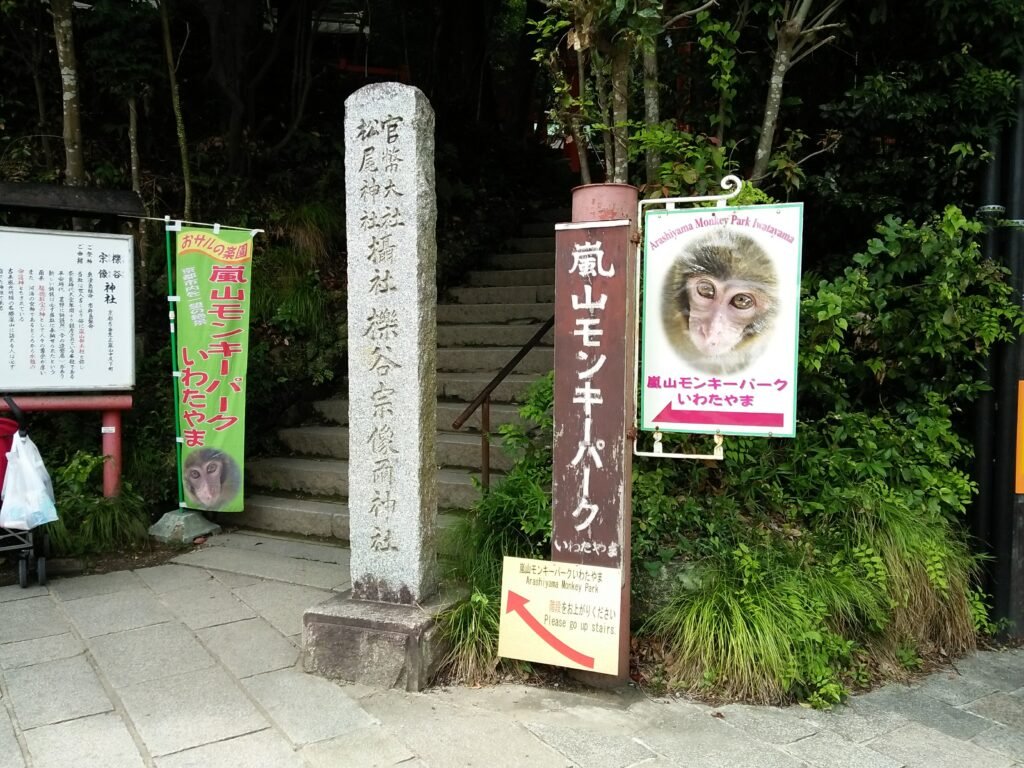
The park entrance sits at the south end of Togetsukyo Bridge, on the opposite bank from the main Arashiyama district. From Saga-Arashiyama Station (JR Sagano Line, about 15 minutes and 240 yen from Kyoto Station), it’s roughly a 15-minute walk through the district and across the bridge. From Arashiyama Station on the Keifuku Randen line, the entrance is closer, just a few minutes across the bridge from the tram stop.
There’s no ticket booth at the bottom of the hill. You pay ¥800 at a small building right at the base, then start climbing immediately. Bring cash — there’s no ATM or card reader anywhere on the mountain, and the food and drink stand at the summit is cash-only too.
The Climb
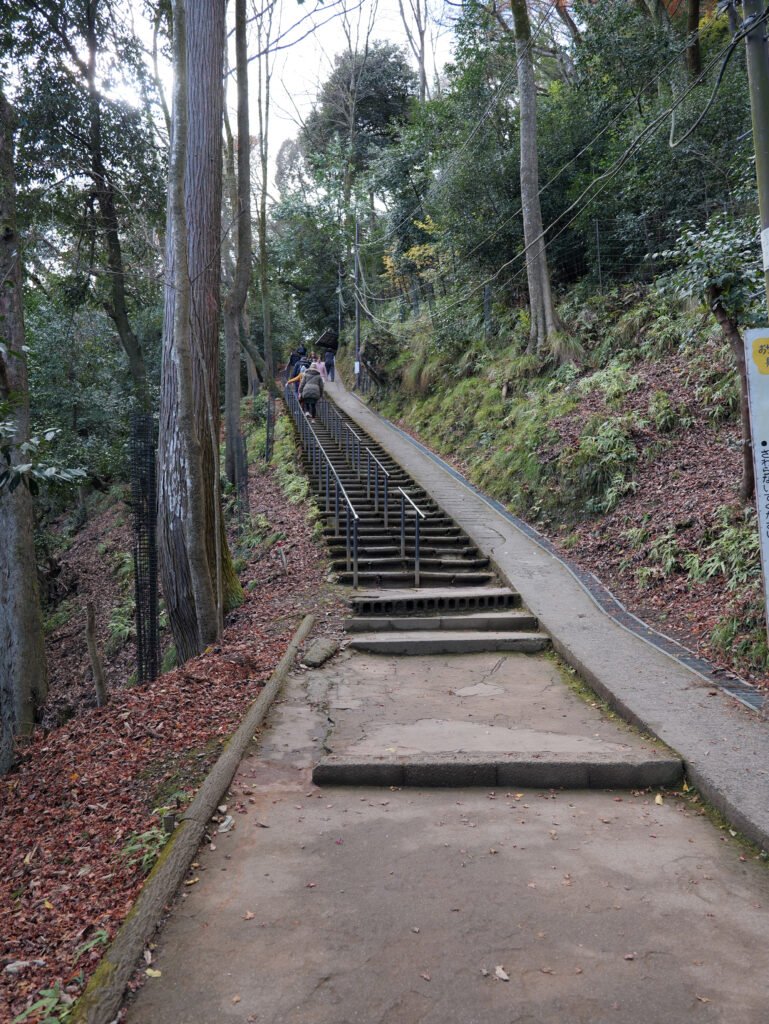
The path is about 1.45 kilometers with 160 meters of elevation gain, made up of roughly 120 stone stairs followed by a steep, switchbacking dirt trail through the trees. Most people manage it in 20 to 30 minutes, though there are benches scattered along the way if you need to stop, and it’s common to see people pausing for breath even in reasonable shape. Wear shoes you can actually climb in; sandals and the wrong kind of soles make the steeper sections harder than they need to be.
There’s some shade from the tree cover, but it’s still a real climb, and it gets uncomfortable fast on a hot, humid Kyoto afternoon. Bring water — there’s nowhere to refill until the summit.
At the Summit
The payoff is a genuinely wide, unobstructed view over Arashiyama, the Katsura River, and central Kyoto beyond it, one of the better panoramas in the city and far less crowded than the observation points people usually line up for. More than 120 Japanese macaques live on the mountain and move freely across the summit area and the paths around it, which means you’ll likely pass monkeys on the way up as well as at the top.
Feeding is only allowed inside a caged hut at the summit, where staff sell bags of food for ¥100 and visitors feed the monkeys through the wire from the safe side. Outside the hut, keep at least two meters from any monkey, avoid direct eye contact (macaques can read a hard stare as a threat), and don’t try to touch or feed them on the open paths. Staff are generally around and will step in if anyone crowds the animals.
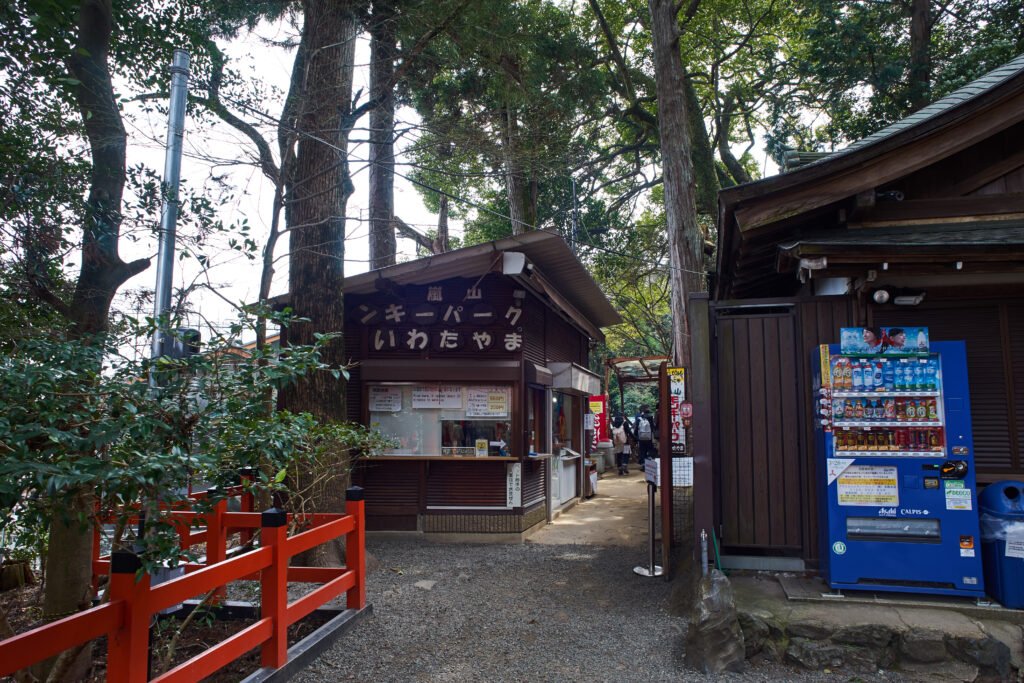
Park staff know the resident troop individually and track them by matriline, so if you ask, they can usually tell you which family a particular monkey belongs to. There’s a small rest area and drink machines near the top if you need a break before heading back down.
When to Go
Morning is the more comfortable climb, before the heat builds, and it also means you’re at the summit before tour groups doing Arashiyama as a single stop tend to arrive. Because the hill itself limits numbers, no ticket-free path here draws the kind of crowds the bamboo grove gets, so this isn’t a spot you need to rush to at dawn the way you might for other Arashiyama sights. Weekends bring more families and school groups; a weekday morning is about as quiet as it gets.
Pairing It With the Bamboo Grove and Tenryu-ji
The monkey park sits right at the edge of the same district as the Arashiyama Bamboo Grove and Tenryu-ji, just across Togetsukyo Bridge, which makes it easy to fold into the same visit. A logical order: bamboo grove and Tenryu-ji early while they’re quiet, then across the bridge for the climb once you’ve warmed up, since the monkey park doesn’t get meaningfully more crowded as the morning goes on the way the grove does. Budget the better part of half a day for all three together, more if you stop for food along the way.
Bottom Line
Iwatayama Monkey Park asks more of you than most Arashiyama stops, a real climb instead of a short walk, and pays it back with one of the better views in Kyoto and wild macaques you can actually get close to. Bring cash, wear real shoes, and treat it as the second half of an Arashiyama morning rather than a stop on its own.