Arashiyama Bamboo Grove & Tenryu-ji: A Practical Guide to Kyoto’s Sagano District
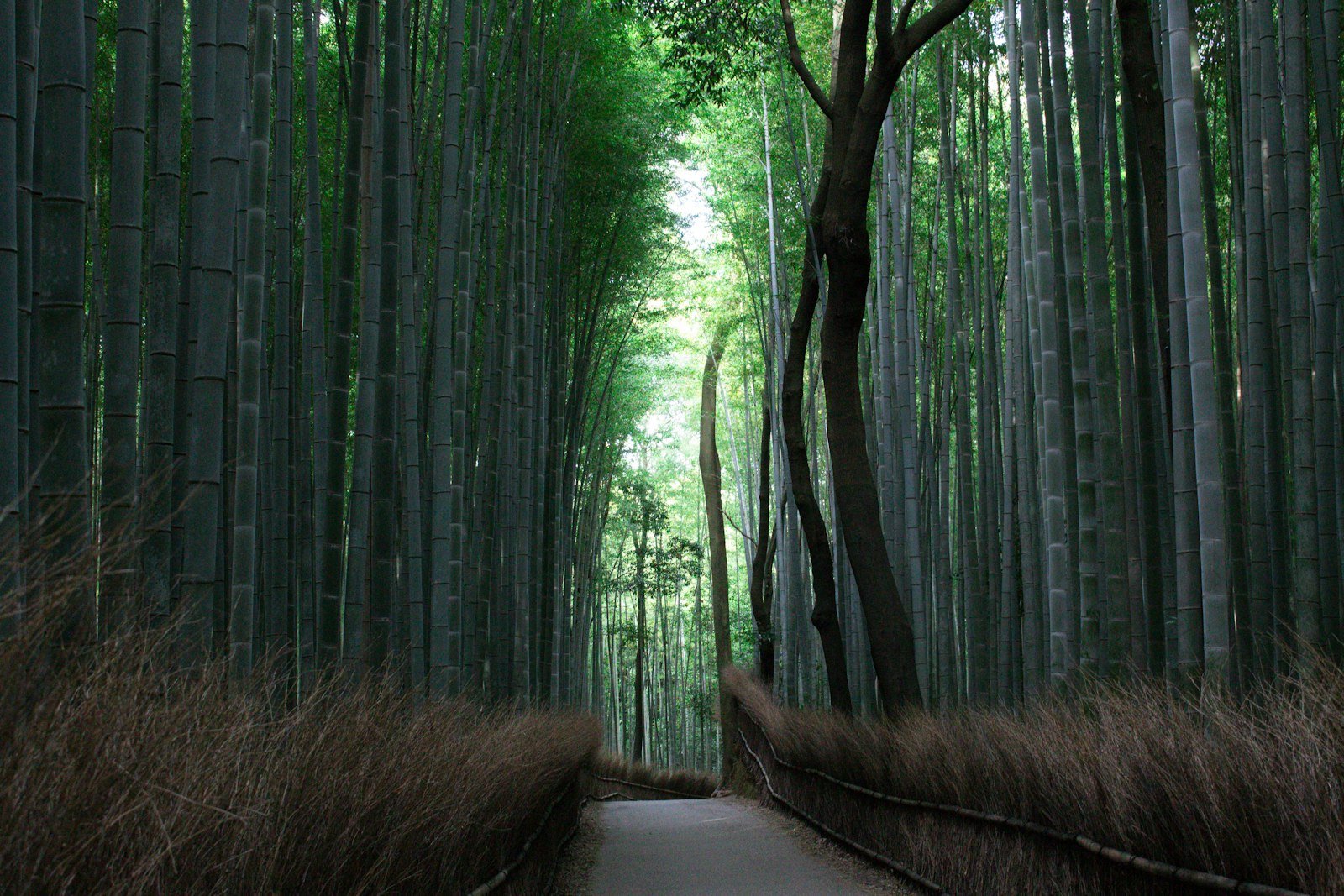
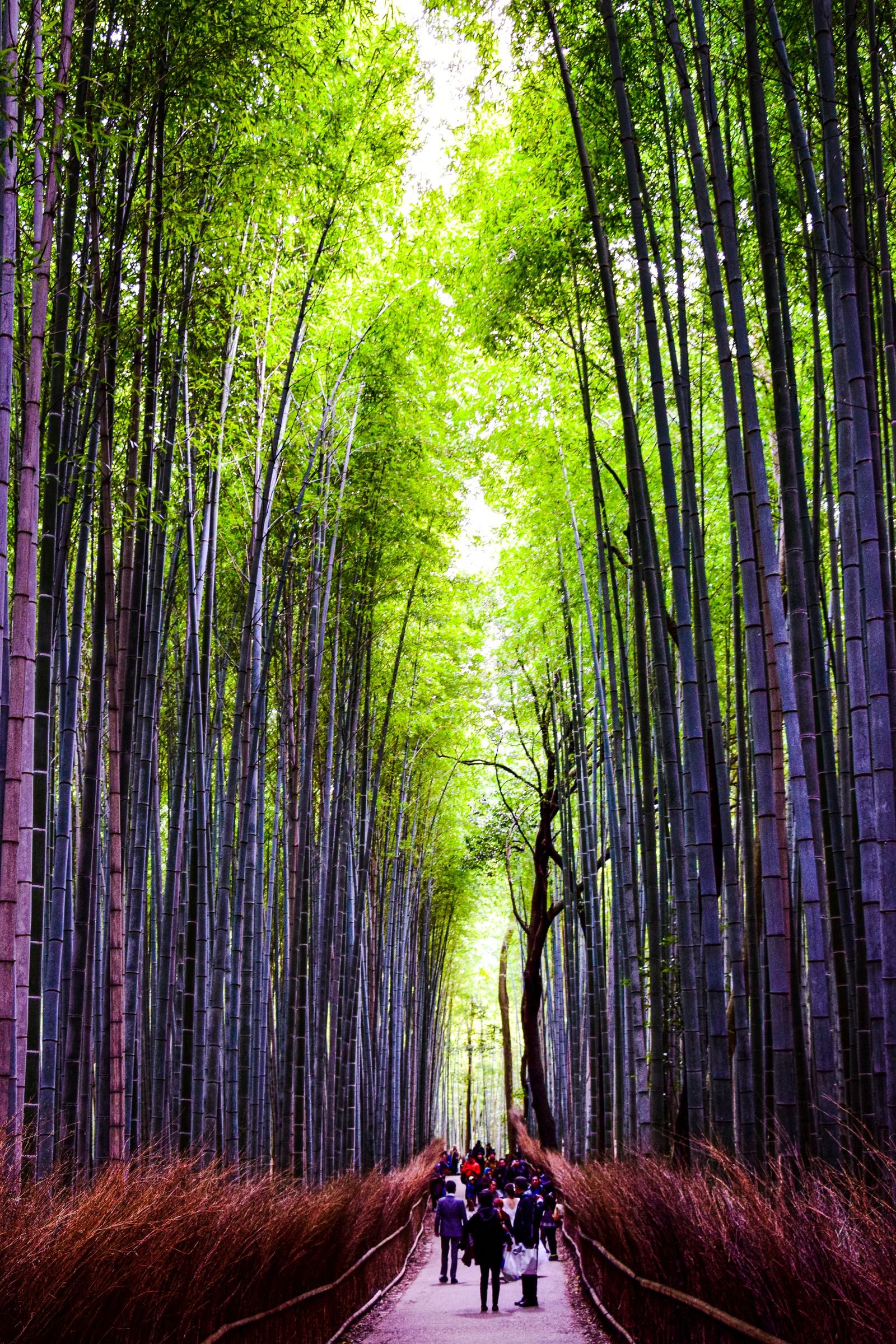
The famous shot, glowing green stalks arching overhead and a path vanishing into soft light, is real. It’s also about 400 meters long. The whole bamboo grove that fills half of Instagram’s Kyoto tag takes maybe five to ten minutes to walk end to end, and if that’s your entire Arashiyama plan, you’ll probably wonder what the fuss was about.
Arashiyama isn’t a single attraction, it’s a district, and the bamboo grove is really just the connector between the things worth actually stopping for: a UNESCO World Heritage temple with one of Kyoto’s best gardens, a river crossed by an old wooden bridge, a hillside of wild monkeys with a view over the whole city. Treat the grove as the walk between stops rather than the destination itself, and the visit improves a lot.
Below is the version I’d want before my first visit: what the bamboo grove actually is (and isn’t), how to fold Tenryu-ji into the same walk, the best timing if you want it quiet, and what’s worth the extra twenty minutes nearby.
The Essentials at a Glance
| What | Details |
|---|---|
| Bamboo Grove admission | Free, open all day — it’s a public path, not a ticketed site |
| Bamboo Grove length | About 400m, roughly 5–10 minutes end to end |
| Tenryu-ji admission | ¥500 for the garden; +¥300 to enter the temple buildings |
| Tenryu-ji hours | 8:30 a.m.–5:00 p.m. (entry until 4:50 p.m.) |
| Typical visit length | 2–3 hours for the grove, temple, and a stop at the river |
| Nearest JR station | Saga-Arashiyama, JR Sagano Line — about 15 minutes and 240 yen from Kyoto Station |
| Nearest Randen station | Arashiyama Station, Keifuku (Randen) Arashiyama Line — right in the district center |
| Least crowded hours | Before 8 a.m., or after 4 p.m. |
Getting There
The JR Sagano Line is the fastest route from central Kyoto: a direct ride from Kyoto Station to Saga-Arashiyama Station, about 15 minutes and roughly 240 yen. From the station it’s a 10–15 minute walk to the bamboo grove and Tenryu-ji.
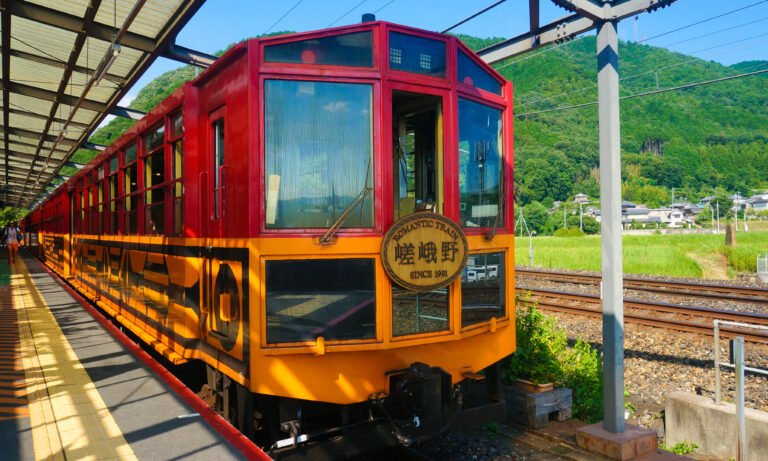
The Keifuku Arashiyama Line, known locally as Randen, is the more scenic option if you’re coming from central Kyoto via a transfer at Katabiranotsuji. It’s a slow, one-car tram that ends right in the middle of the district, a couple of minutes’ walk from Tenryu-ji’s north gate and the bamboo grove entrance, and it’s worth riding at least one way even if you don’t strictly need to.
Both the JR line and the local buses get properly crowded in peak season. If you can, avoid the Randen line’s evening rush back into town around 5–6 p.m., when day-trippers head home all at once.
When to Go
The bamboo grove has no ticket gate and no set hours, which means nothing slows the crowds down once tour buses start arriving, usually by 9 or 10 a.m. Arrive before 8 a.m. and the path is close to empty: just a handful of photographers and the sound of wind moving through the stalks, which is genuinely part of the appeal and easy to miss once it’s crowded. By late morning it’s a slow shuffle of people taking the same photo, and it stays that way into mid-afternoon.
Tenryu-ji opens at 8:30, so pairing an early bamboo grove walk with the temple right as it opens is the best sequence for this district. You get both places while they’re still quiet.
Spring (cherry blossoms, late March through April) and autumn (foliage, mid-to-late November) are Arashiyama’s two peak seasons, and both the grove and the approach streets get considerably busier during them. Weekdays are noticeably calmer than weekends year-round.
Tenryu-ji: The Temple Half of the Visit
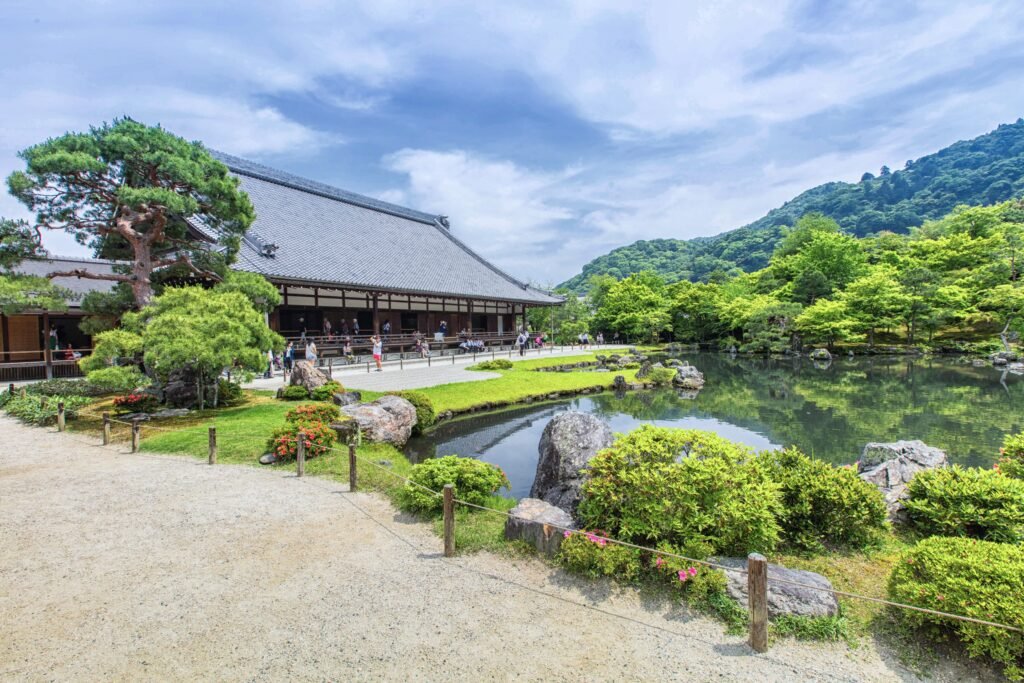
Tenryu-ji is ranked among Kyoto’s five great Zen temples and is the largest, most important temple in Arashiyama, but a surprising number of visitors skip it entirely for the bamboo grove next door. That’s a mistake. The ¥500 garden fee buys you Sogenchi Pond, a landscape garden designed in the 14th century by the priest Muso Soseki that borrows the Arashiyama hillside behind it as part of the composition, a technique called shakkei, and the layout hasn’t fundamentally changed in seven hundred years.
The extra ¥300 to enter the temple buildings gets you the Dharma Hall’s ceiling, painted with a dramatic cloud dragon (Unryu-zu). It’s worth it if the ceiling painting happens to be on view that day, since access is sometimes limited to weekends and specific seasonal dates, so check before committing to the extra fee.
Tenryu-ji’s north gate exits directly into the bamboo grove, which is the natural way to link the two: garden first while it’s quiet, then straight into the grove as the light comes up.
Worth the Extra Twenty Minutes
Togetsukyo Bridge. The wooden bridge spanning the Katsura River at the base of the district, with the Arashiyama hills as a backdrop, is a five-minute walk from the bamboo grove and one of the more photographed non-temple spots in Kyoto, especially at sunset.
Arashiyama Monkey Park Iwatayama. A steep 20–30 minute climb up a wooded hillside (¥800 admission) ends at a lookout with wild Japanese macaques and a genuinely good view over the city. It’s a different kind of stop from the temples and gardens nearby, and worth it if you have the extra hour and don’t mind the climb.
Food along the way. Sagano has plenty of tofu-focused restaurants — yudofu, simmered tofu, is something of a local specialty near the temples — and the streets near the Randen station sell matcha soft-serve and yatsuhashi in every direction. Easy to graze through rather than sit down for a full meal.
Where to Stay Nearby
Arashiyama sits far enough from central Kyoto that most visitors treat it as a half-day trip rather than a home base, and that’s usually the right call. Staying in Higashiyama, Gion, or near Kyoto Station keeps you closer to everything else on a typical itinerary, with Arashiyama as a 15–20 minute train ride out. Our Kyoto neighborhood comparison guide compares the tradeoffs of Kyoto’s main base neighborhoods.
If you’d rather stay in Arashiyama itself, for the early-morning bamboo walk without a train ride first, or just for the quieter evenings once the day-trippers leave, there are a handful of traditional ryokan and smaller hotels in the district, though the selection is far more limited than central Kyoto. Booking.com is the easiest way to see what’s actually available in Arashiyama on your dates.
Bottom Line
The bamboo grove alone is a five-minute walk, not a half-day activity, so build the visit around Tenryu-ji and at least one extra stop, whether that’s the river bridge or the monkey park, rather than the grove by itself. Go before 8 a.m. if you want it quiet, pair it with Tenryu-ji right at opening, and treat the grove as the passage between the things actually worth your time, not the destination itself.