Myoshin-ji: A Practical Guide to Kyoto’s Largest Zen Temple Complex
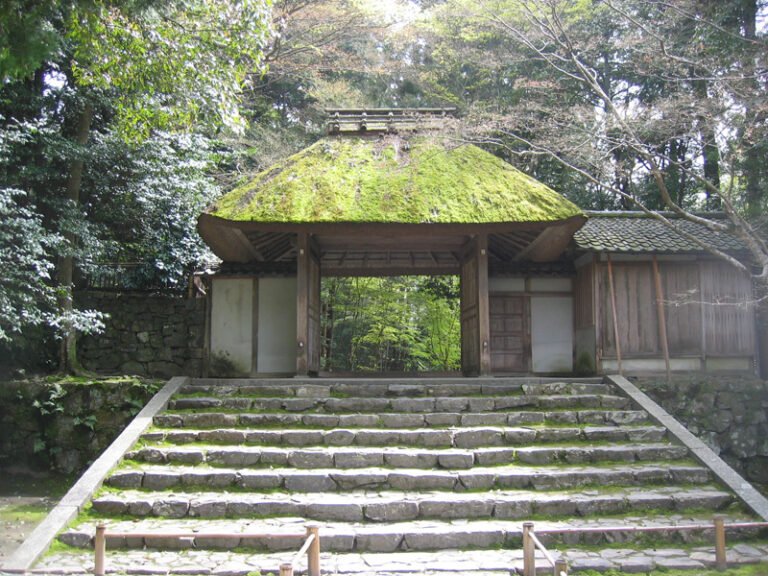
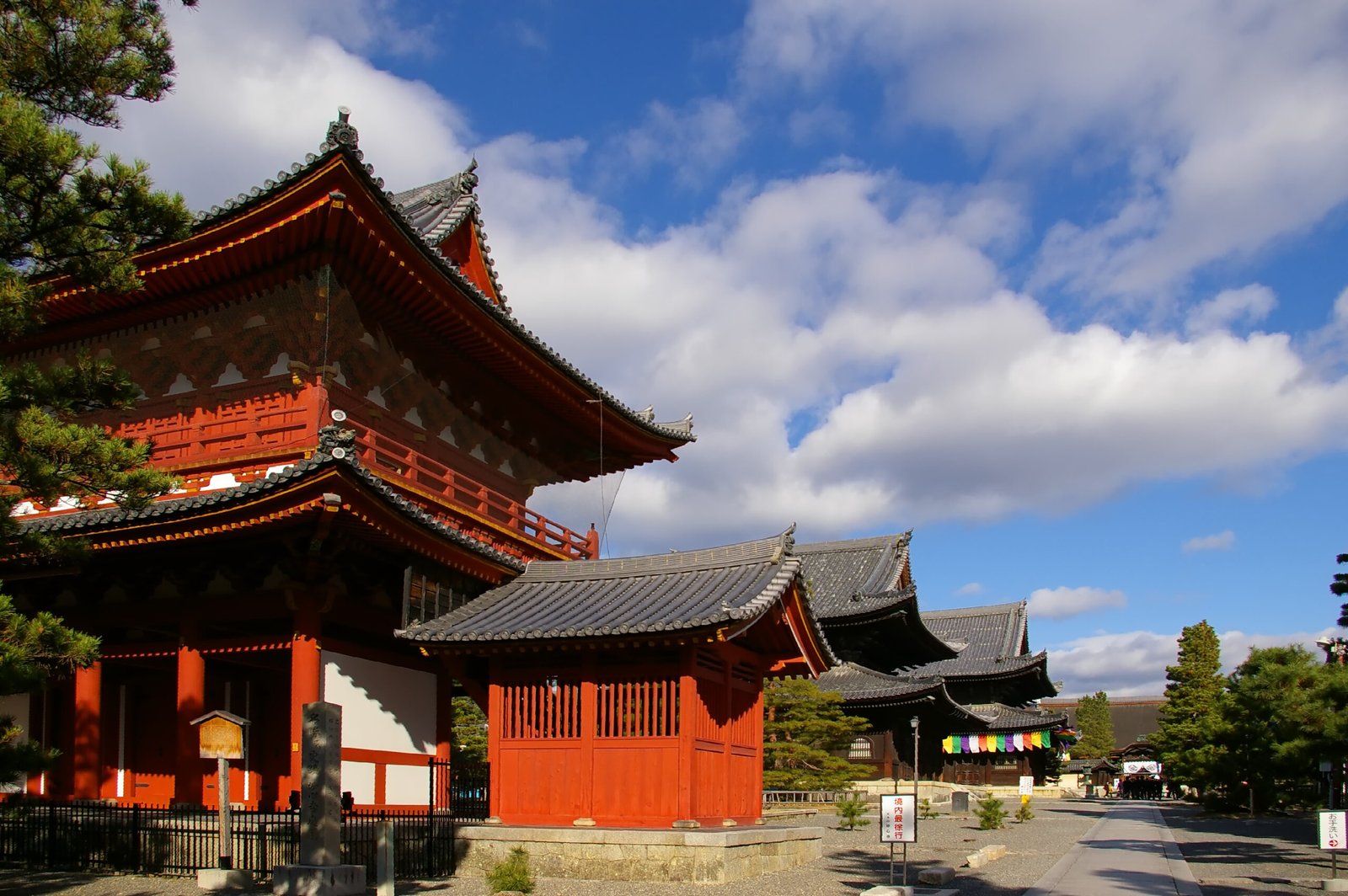
Northwest of Nijo Castle and just south of Ninna-ji, there’s a walled complex so large that the streets around it feel like their own neighborhood. Myoshin-ji is the head temple of its own branch of Rinzai Zen Buddhism, and its grounds hold somewhere around 40 to 50 sub-temples behind their own gates and hedges, most of them still working monasteries rather than tourist stops. Only a handful open their doors to visitors, which is exactly what makes the place worth a slow afternoon: wide stone paths, quiet lanes between temple walls, and none of the queueing you’d find at Kyoto’s more famous single-building attractions.
The Essentials at a Glance
| What | Details |
|---|---|
| Grounds | Open to walk through at any hour, free of charge; individual halls and sub-temples keep their own hours |
| Hatto (Dharma Hall) | Guided visits roughly every 20 minutes, about 9:10 a.m.–3:40 p.m.; Japanese-language only, around 500 yen |
| Sub-temples open to the public | Taizo-in, Keishun-in, and Daishin-in, roughly 9:00 a.m.–5:00 p.m.; separate admission for each, generally in the ¥300–700 range |
| Access | 5-minute walk from JR Hanazono Station (Sagano Line), or 3 minutes from Myoshinji Station on the Keifuku Kitano Line |
| Visit length | 30–40 minutes for the Hatto alone; 1.5–2.5 hours if you add Taizo-in and a second sub-temple |
| Known for | Kano Tan’yu’s cloud dragon ceiling painting and Taizo-in’s gardens |
A Palace Turned Head Temple
The site started out as an imperial villa. In 1342, Emperor Hanazono, who had abdicated the throne years earlier, donated his residence to the Zen monk Kanzan Egen so it could be converted into a meditation center. That founding temple grew steadily over the following century, but most of what stood here was burned down during the Onin War in the 1460s and 70s, the decade-long conflict that flattened much of Kyoto. What visitors walk through today mostly dates from the rebuilding that followed, from the late 1400s through the 1600s, and Myoshin-ji has since grown into the head temple overseeing thousands of affiliated Rinzai Zen temples across Japan — a scale that’s easy to forget while wandering its quiet stone lanes.
The Dragon That Watches You From Every Angle
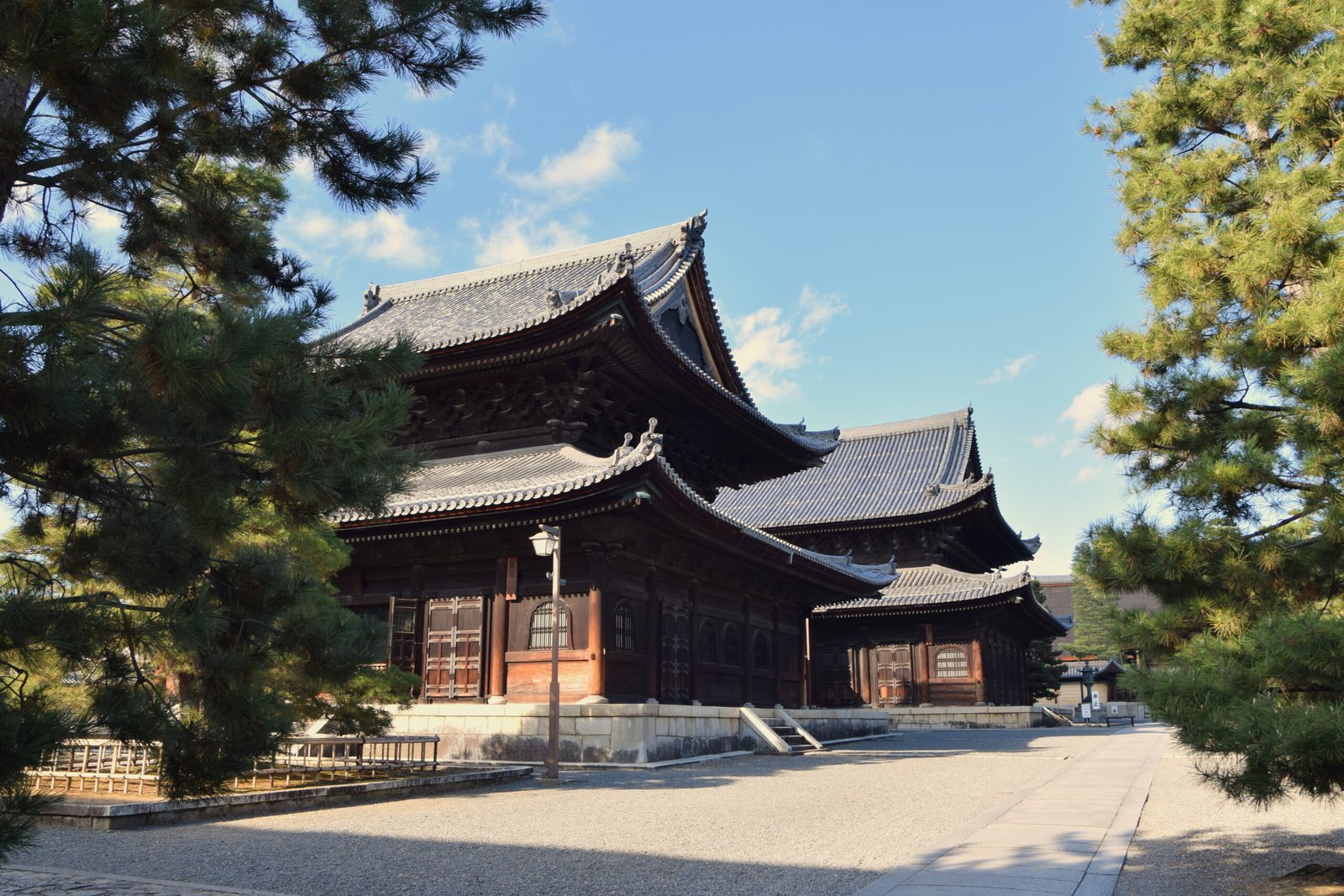
The main reason most visitors come to Myoshin-ji is on the ceiling of the Hatto, the Dharma Hall rebuilt in 1656. Painted by Kano Tan’yu in the mid-1600s, the Unryu-zu, or “Cloud Dragon,” covers the entire ceiling in a single sweeping composition, and the trick of it is that the dragon’s gaze seems to follow you as you move underneath — step to one side of the hall and the dragon looks like it’s diving straight at you, step to the other and it looks like it’s circling away. Guides walk visitors around the hall’s edge to demonstrate the effect, which is part of why entry is by guided tour only, in Japanese, in short 30-minute groups. The same hall holds one of Japan’s oldest temple bells, cast in 698, still legible with an inscription that predates the temple itself by more than six centuries.
Taizo-in: The Sub-Temple Most Visitors See
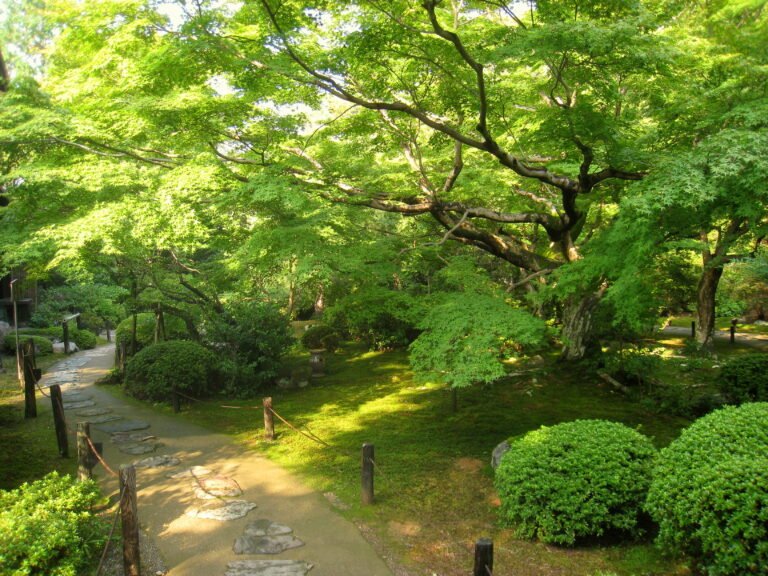
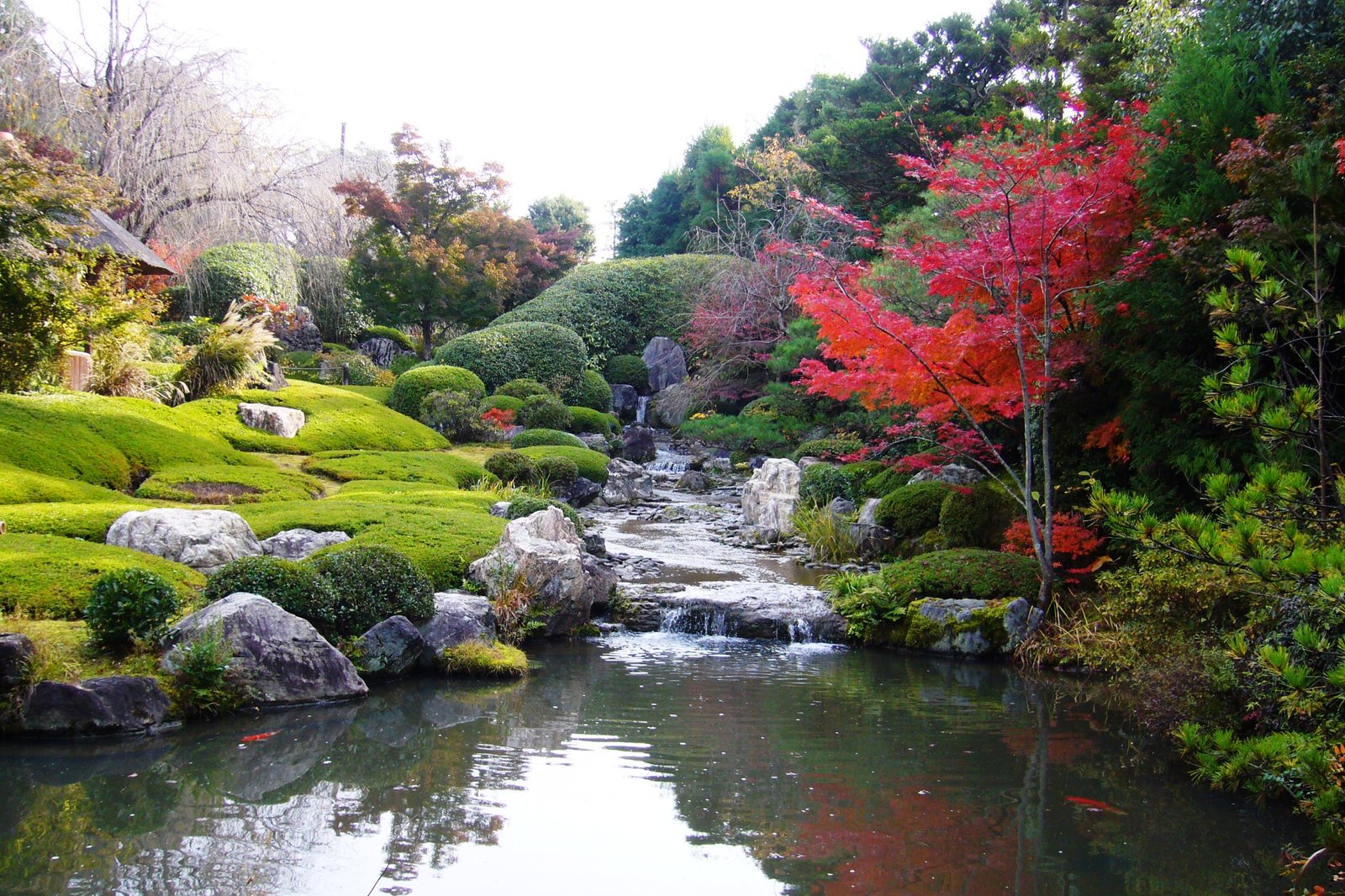
Of Myoshin-ji’s dozens of sub-temples, Taizo-in is the one built for visitors, and it’s open year-round rather than on special occasions. It actually predates the main temple’s current buildings by more than a century, and its oldest garden, a dry-landscape rock arrangement known as Motonobu-no-niwa, is attributed to the painter Kano Motonobu, working in the 1500s. The newer draw is the Yoko-en, a strolling pond garden added in the mid-20th century that’s often ranked among the better modern gardens in Kyoto: a curved path around still water, stone bridges, and maples that color well into November. Between the two gardens, Taizo-in makes a reasonable argument for being the single best sub-temple stop in the entire complex, and it’s usually where visitors spend the bulk of their time here.
Keishun-in and Daishin-in: Two More Worth a Look
If Taizo-in leaves you wanting more, two other sub-temples keep regular public hours nearby. Keishun-in has a smaller strolling garden and a tea room that’s easy to have almost to yourself outside peak season, and its admission runs a little less than Taizo-in’s. Daishin-in is the smallest and cheapest of the three, built around a compact rock garden and a peony garden that’s at its best in late April and early May — a reminder that Myoshin-ji rewards a return visit in a different season, not just a single afternoon. None of the three requires advance booking; you simply pay at each gate as you go, so it’s easy to see one and skip the others if your schedule is tight.
Getting There
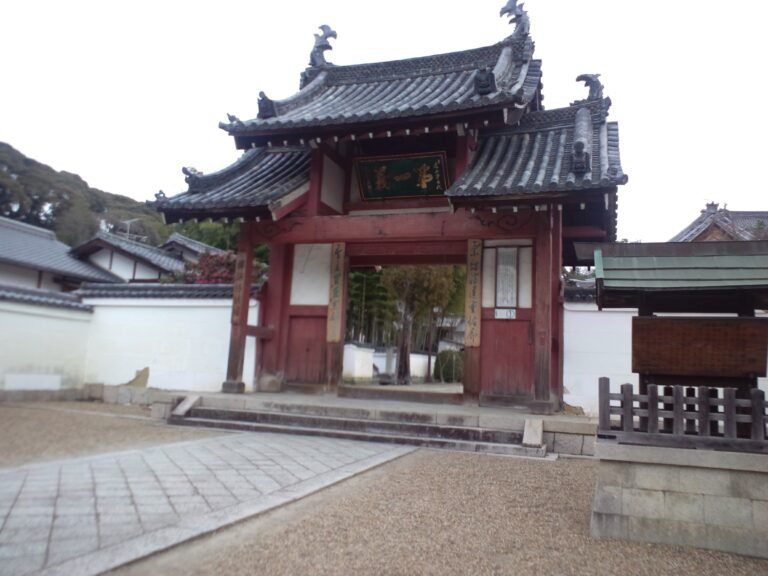
The easiest approach is by JR: take the Sagano Line from Kyoto Station to Hanazono Station, a ride of around 10 minutes for about 200 yen, then walk five minutes north to the temple’s south gate. If you’re coming from elsewhere in the city, the Keifuku Kitano Line (Randen), Kyoto’s small local tram, stops even closer, at Myoshinji Station, three minutes from the same gate. There’s no need to plan a special trip out here on its own — both Ninna-ji and Ryoan-ji are a short bus or taxi ride away, and most visitors treat Myoshin-ji as one stop on a loop through the temples of northwest Kyoto rather than a destination by itself.
Pairing Myoshin-ji With Ninna-ji and Ryoan-ji
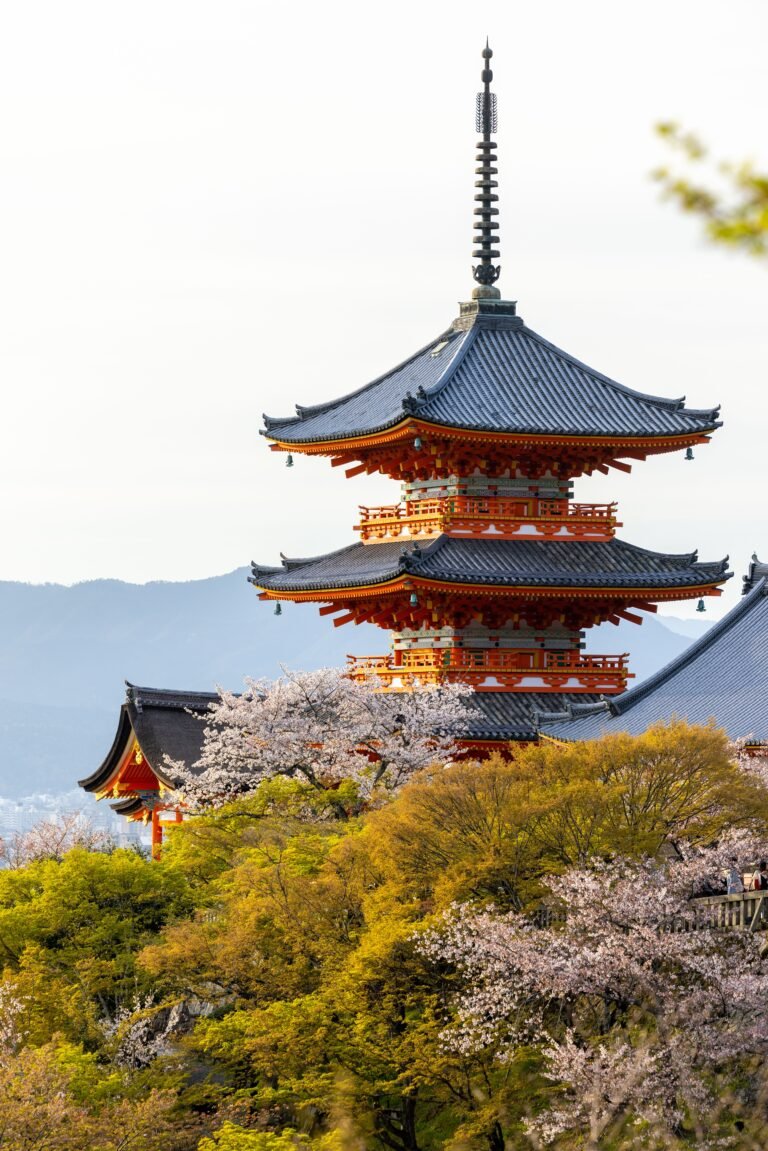
Northwest Kyoto has a cluster of major temples within a few minutes of each other, and Myoshin-ji slots neatly into that route. Ninna-ji, the former imperial residence turned temple with its own five-story pagoda, is a short bus ride north, and Ryoan-ji, home to Kyoto’s most famous rock garden, sits between the two. Visitors chasing the big-name golden roofline can continue on to Kinkaku-ji from there, making for a full day that mixes a quiet working monastery with some of the city’s most photographed sights. Our guide to getting around Kyoto has more on the bus passes that make a day like this easy to string together.
Planning Your Visit
Myoshin-ji works well any time of year, but it’s worth timing around what you want to see: Taizo-in’s maples for autumn color, Daishin-in’s peonies for late spring, or just a quiet weekday morning if you’d rather have the stone paths to yourself. Come dressed for walking, since the complex is large enough that getting between sub-temples takes real time, and wear socks you don’t mind slipping on and off if you plan to enter any of the tatami interiors. There’s no large gift shop or restaurant cluster inside the grounds, so plan to eat before or after — Hanazono Station has a handful of casual options nearby. Prices for the Hatto tour and each sub-temple are worth double-checking on arrival, since they can shift from year to year.
Bottom Line
Myoshin-ji isn’t a single postcard image the way Kinkaku-ji or Fushimi Inari are, and that’s the point. It’s a working Zen monastery on a scale most visitors don’t expect from a Kyoto temple, with a genuinely startling ceiling painting and one of the city’s better modern gardens tucked inside Taizo-in. If you want an hour or two of Kyoto that feels unhurried, and you’re already headed toward Ninna-ji or Ryoan-ji, it’s an easy and worthwhile detour.