Ryōan-ji: A Practical Guide to Kyoto’s Zen Rock Garden
Ryōan-ji’s rock garden is famous for a single trick of design: fifteen stones are arranged across a rectangle of raked gravel, and no matter where you stand on the viewing veranda, you can only ever see fourteen of them at once. Whether that’s a deliberate lesson about the limits of human perception or simply a side effect of the layout is still debated, but the effect is real, and it’s the reason this small, quiet temple in northwest Kyoto draws visitors from all over the world.
This guide covers what to look for in the garden itself, when to go to actually get a moment of quiet in front of it, and the rest of the grounds most visitors walk past.
The Essentials at a Glance
| What | Details |
|---|---|
| Admission | ¥600 adults, ¥500 elementary/junior high students |
| Hours | 8:00–17:00 (Mar–Nov), 8:30–16:30 (Dec–Feb) |
| Typical visit length | 45–60 minutes |
| By train from Kyoto Station | JR Sagano Line to Hanazono Station (about 15 minutes, ~220 yen), then a 20-minute walk |
| By bus | City Bus 59, which also connects to Kinkaku-ji and Ninna-ji |
| Least crowded time | Right at opening or in the last hour before closing |
Getting There
Ryōan-ji sits in the same northwest corner of Kyoto as Kinkaku-ji and Ninna-ji, and City Bus 59 links all three, which makes combining them into one route straightforward. If you’d rather take the train, the JR Sagano Line runs from Kyoto Station to Hanazono Station in about fifteen minutes, followed by a twenty-minute walk north to the temple gate.
Because it sits slightly off the main road that Kinkaku-ji’s crowds funnel down, Ryōan-ji rarely feels as packed as its famous neighbor, even on a day when both are busy.
When to Go
A rock garden built around stillness doesn’t do well with a crowd shuffling past the veranda, and Ryōan-ji can get exactly that during the middle of the day, especially when it’s paired with a Kinkaku-ji visit on a tour itinerary. Arriving at opening or in the last hour before closing is the most reliable way to get an actual quiet stretch in front of the garden rather than a few seconds between other visitors’ photos.
Weekday visits outside of spring and autumn peak season are consistently calmer than weekends, though even then, patience is part of the experience here.
What You’re Actually Looking At
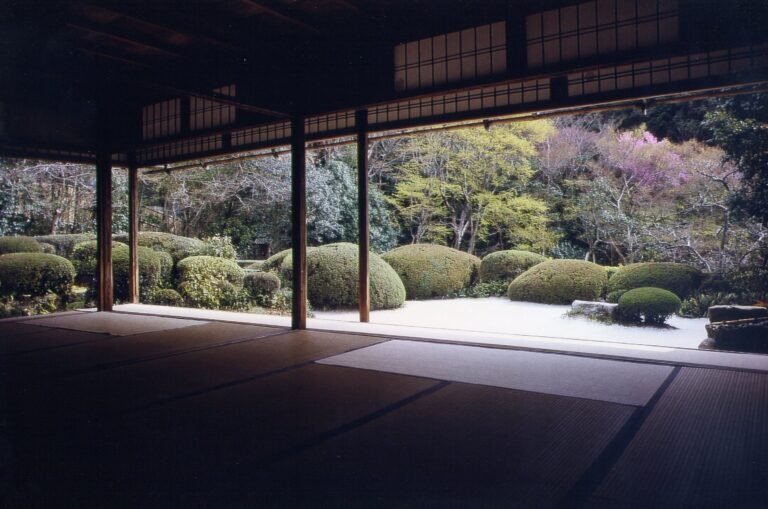
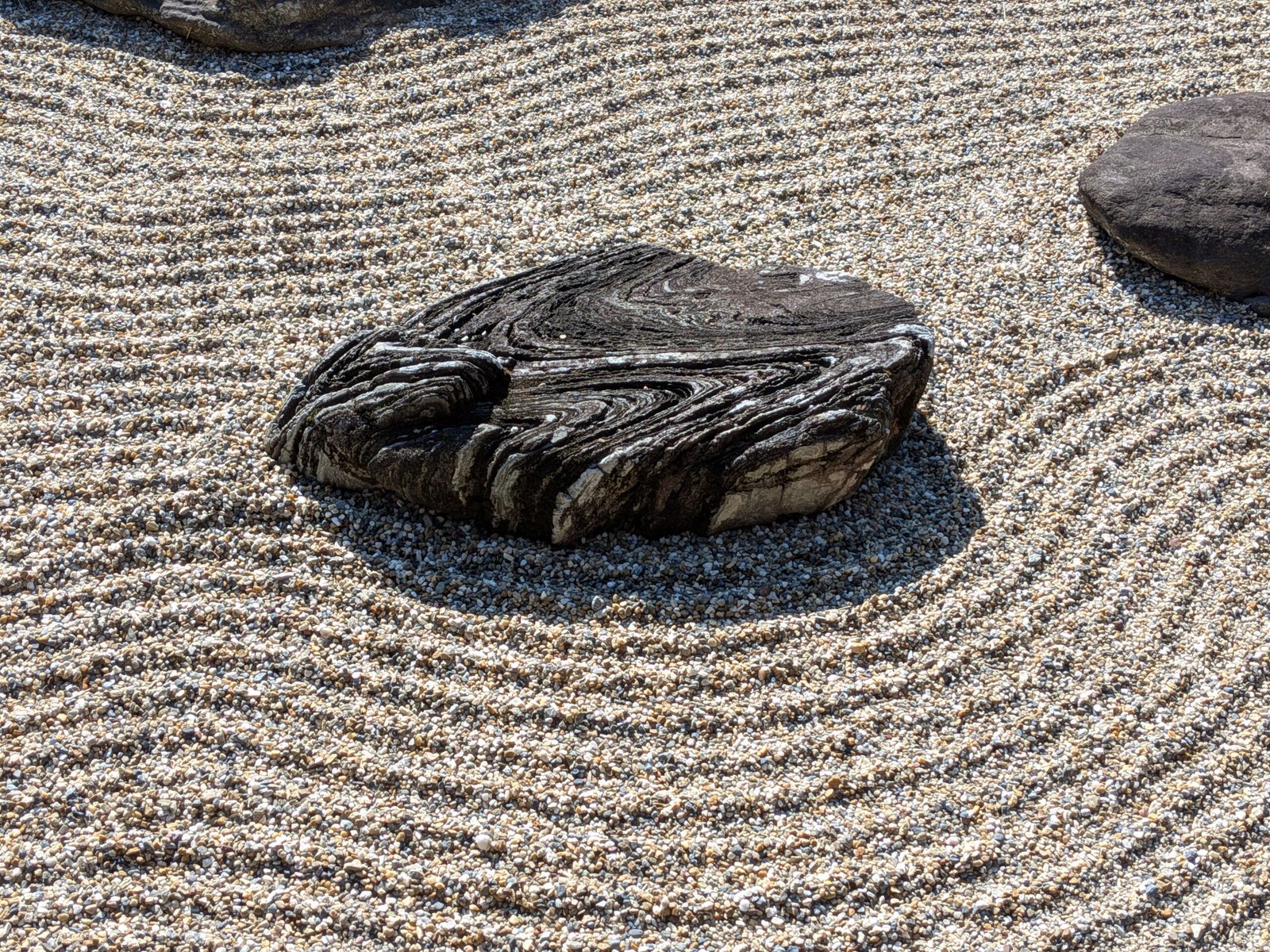
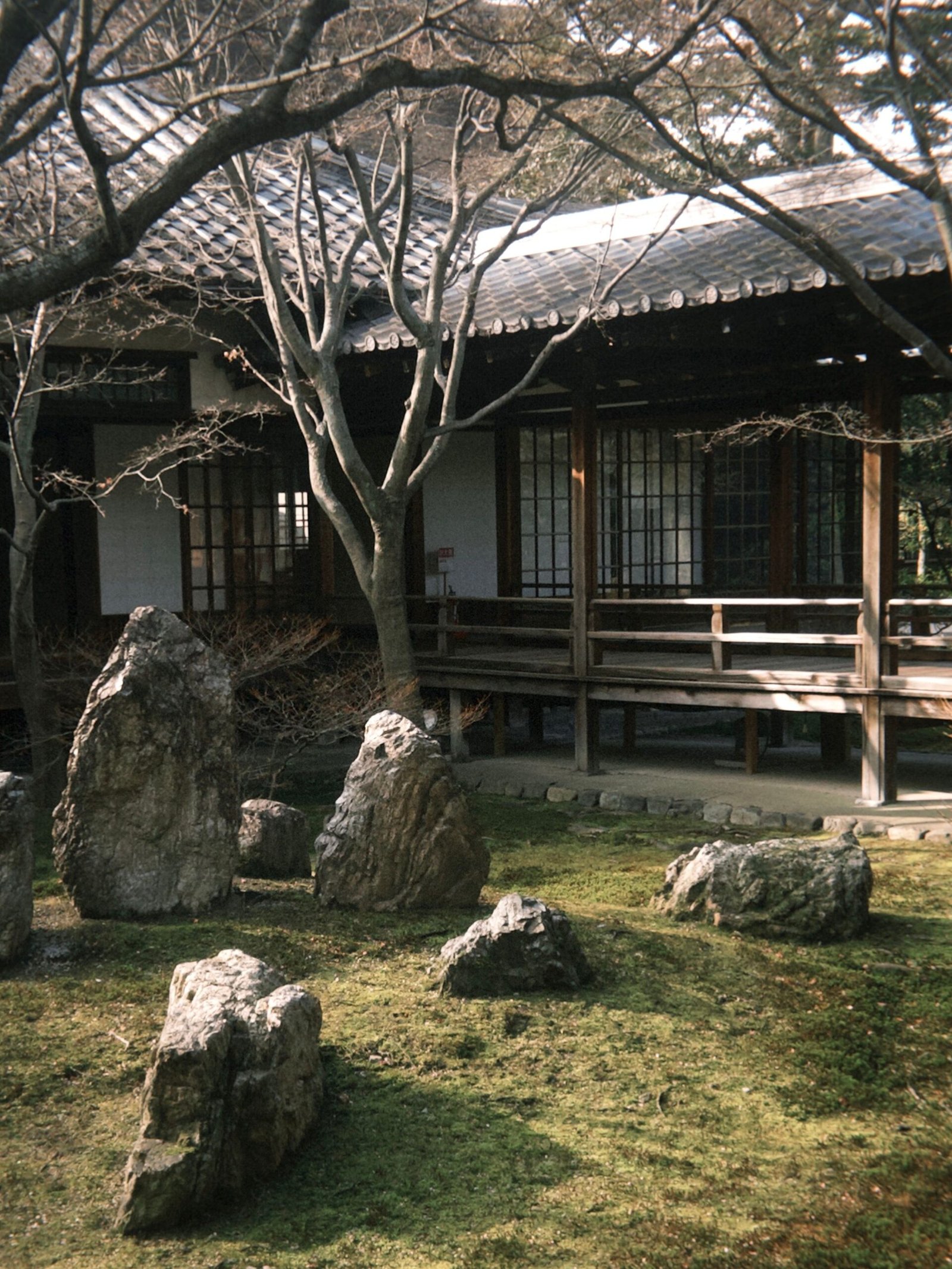
The rock garden. Fifteen stones sit in five groups across a rectangle of white gravel raked into parallel lines, enclosed by a low earthen wall. No plants, no water, no obvious symbolism is explained on site — the garden has been interpreted as everything from a tiger carrying her cubs across a river to a pure abstraction of empty space, and the temple itself offers no official answer. Part of the point is sitting with that ambiguity rather than resolving it.
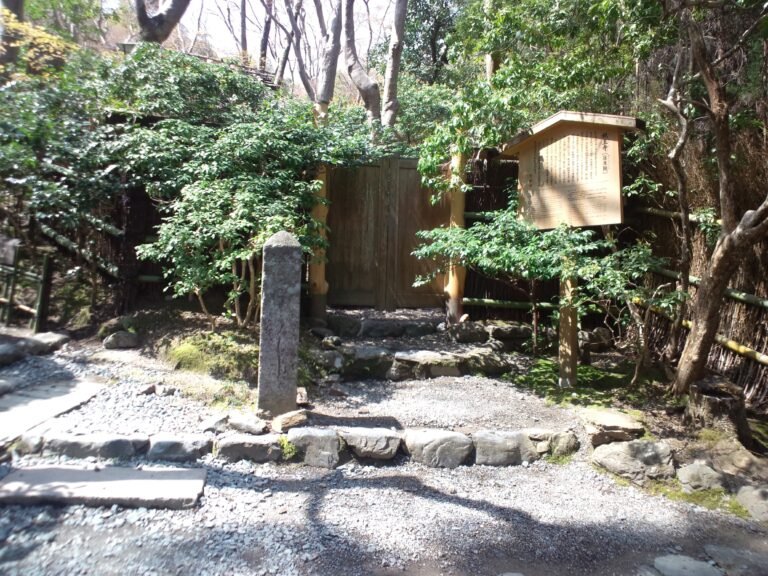
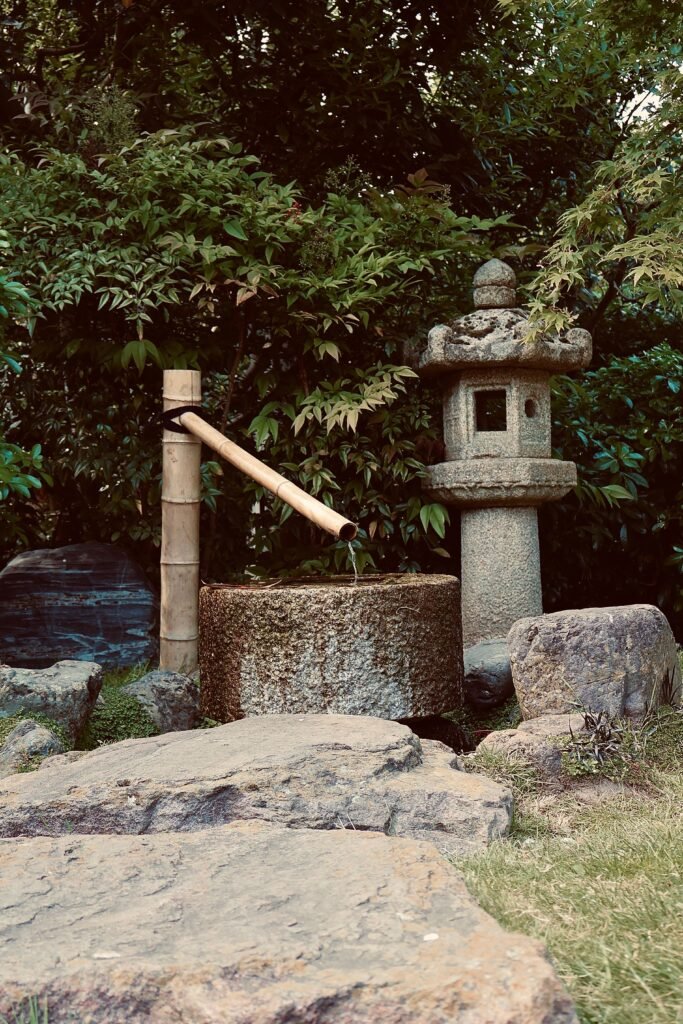
The tsukubai. A stone water basin behind the main hall carries a well-known inscription, read by using the square hole in its center as the shared radical for four surrounding characters: “ware tada taru wo shiru” — roughly, “I learn only to be contented.” It’s easy to miss if you don’t know to look for it, tucked away from the main garden view.
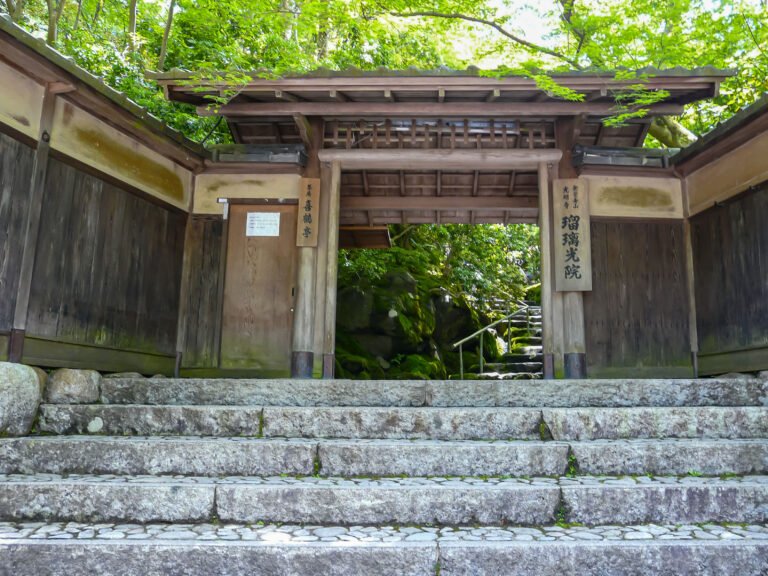
The pond garden. Most visitors never make it past the rock garden, but Ryōan-ji’s grounds include Kyōyōchi Pond, a much larger, greener garden dating back centuries earlier than the rock garden itself. It’s a good place for an actual walk if the crowded veranda has left you wanting more space.
Nearby, If You Have More Time
Kinkaku-ji is a short bus ride away on the same Route 59 and pairs naturally with a Ryōan-ji visit — our Kinkaku-ji guide covers what to expect there. Ninna-ji, a large temple complex with its own five-story pagoda, sits at the other end of the same bus route if you want to make a full morning of Kyoto’s northwest corner.
Where to Stay Nearby
This part of Kyoto is quieter and more residential than the city center, so most visitors treat it as a day trip rather than a base. Our Kyoto neighborhood comparison guide covers the more central areas that make sense for staying overnight.
Booking.com is a reasonable place to check availability in those more central neighborhoods.
Bottom Line
Ryōan-ji is a small site that rewards patience more than any other stop on a typical Kyoto itinerary. Time your visit for the quiet hours, spend longer at the rock garden than feels necessary, and don’t skip the pond garden just because the famous view is the one everyone came for.