Gion Matsuri: A Practical Guide to Kyoto’s Grandest Festival
Gion Matsuri is Kyoto’s most famous festival and one of the three great festivals of Japan — a month-long series of rites, music, and processions held every July and centered on Yasaka Shrine. It began in 869 as a purification ritual to ward off plague, and more than a thousand years later it still draws the whole city into the streets for the Yamaboko Junko, when two dozen towering wooden floats roll through downtown Kyoto.
This guide covers how the festival actually unfolds over the month, the two parade dates, the Yoiyama evenings that precede them, and where to stand if you want to see it without getting swallowed by the crowd.
The Essentials at a Glance
| What | Details |
|---|---|
| When | Throughout July, with the two main parades on July 17 and July 24 |
| Where | Streets around Yasaka Shrine and Shijo-Karasuma, central Kyoto |
| Cost | Free to watch from the street; reserved seating runs about ¥4,000–¥7,000 |
| Best evenings | Yoiyama nights of July 14–16 and July 21–23 |
| Crowd level | Very heavy, especially July 15–17 |
| Typical visit length | A few hours for the parade, or a full evening for Yoiyama |
A Month-Long Festival, Not a Single Day
Gion Matsuri runs the entire month of July, but most visitors only ever hear about a single day. The festival actually unfolds as a long sequence of smaller rites — the float-mounting ceremonies, purification rituals, and portable shrine processions — that build toward two separate halves: the Saki Matsuri in the first half of the month and the Ato Matsuri in the second.
Each half has its own Yoiyama evenings and its own Yamaboko Junko parade, which is why the festival can feel confusing to plan around from the outside. In practice, most visitors pick one half — usually the Saki Matsuri, which is larger — and build a day or two of their trip around it.
The Two Yamaboko Junko Parades
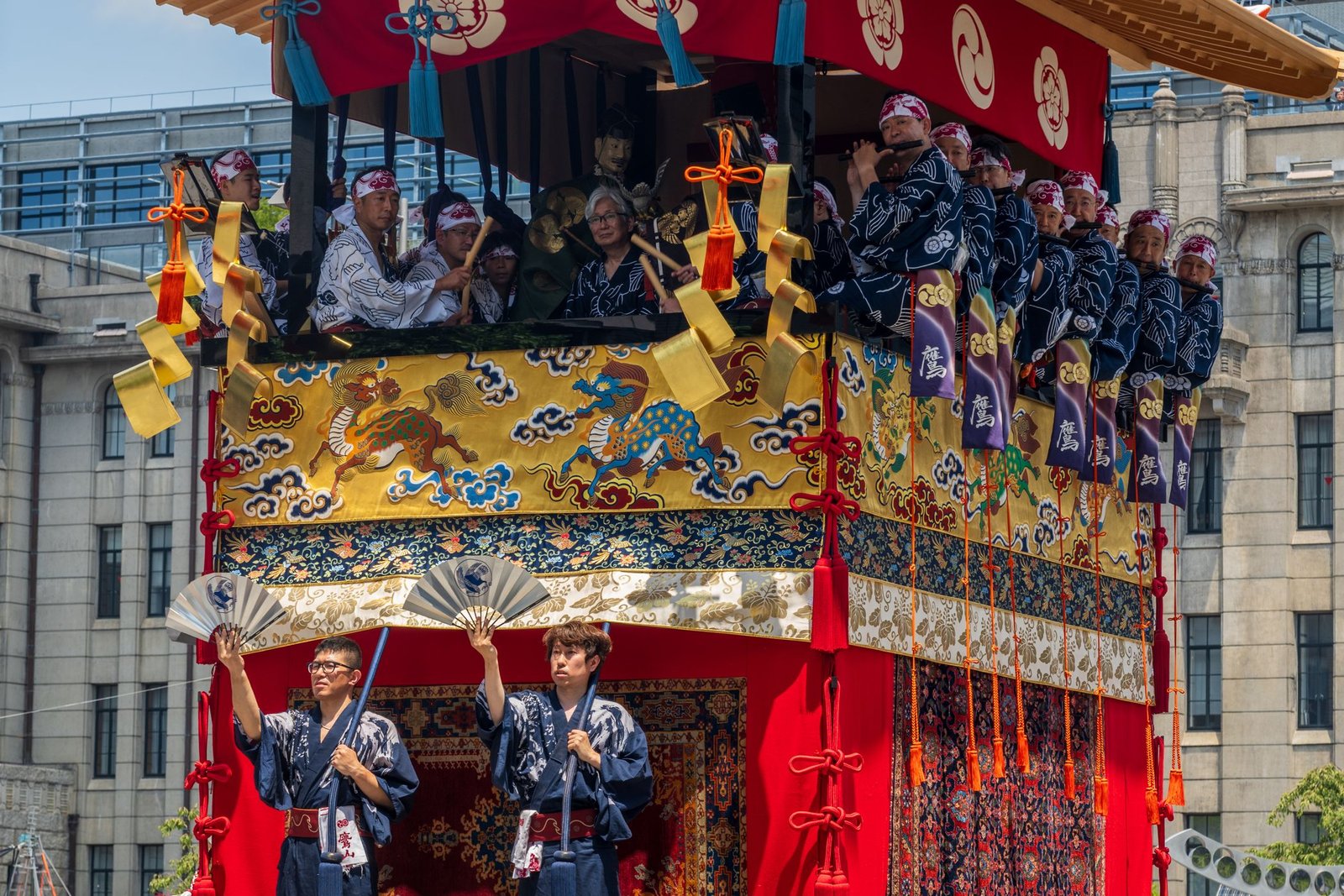
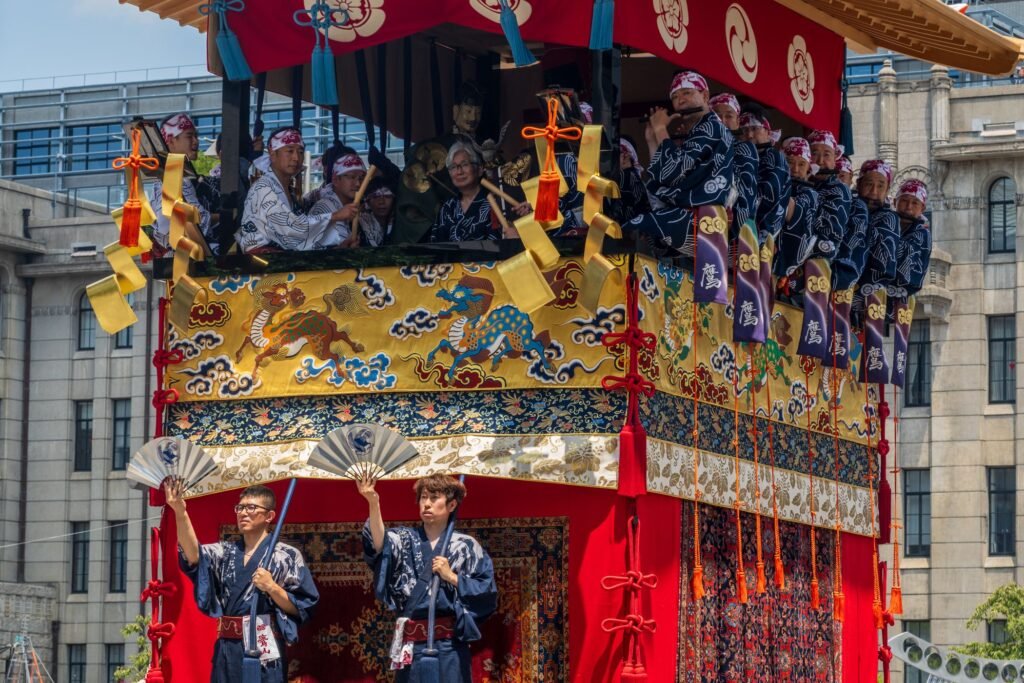
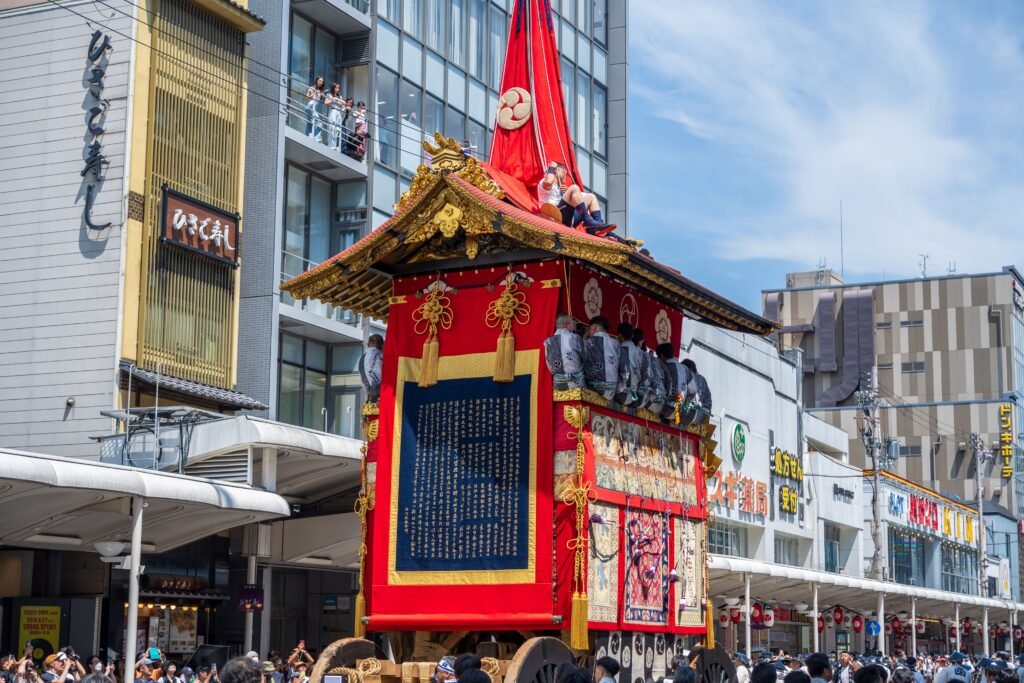
The Saki Matsuri parade on July 17 is the larger of the two, with around 23 floats moving through the streets from 9:00, led by the Naginata Boko and its halberd said to ward off evil. The Ato Matsuri parade on July 24 is smaller, with around 11 floats, and moves in the opposite direction along the same central streets.
Some floats carry musicians playing the festival’s distinctive flute, drum, and bell music, and several are hung with imported tapestries centuries old, which is why the parade is sometimes called a moving museum.
Yoiyama: The Nights Before
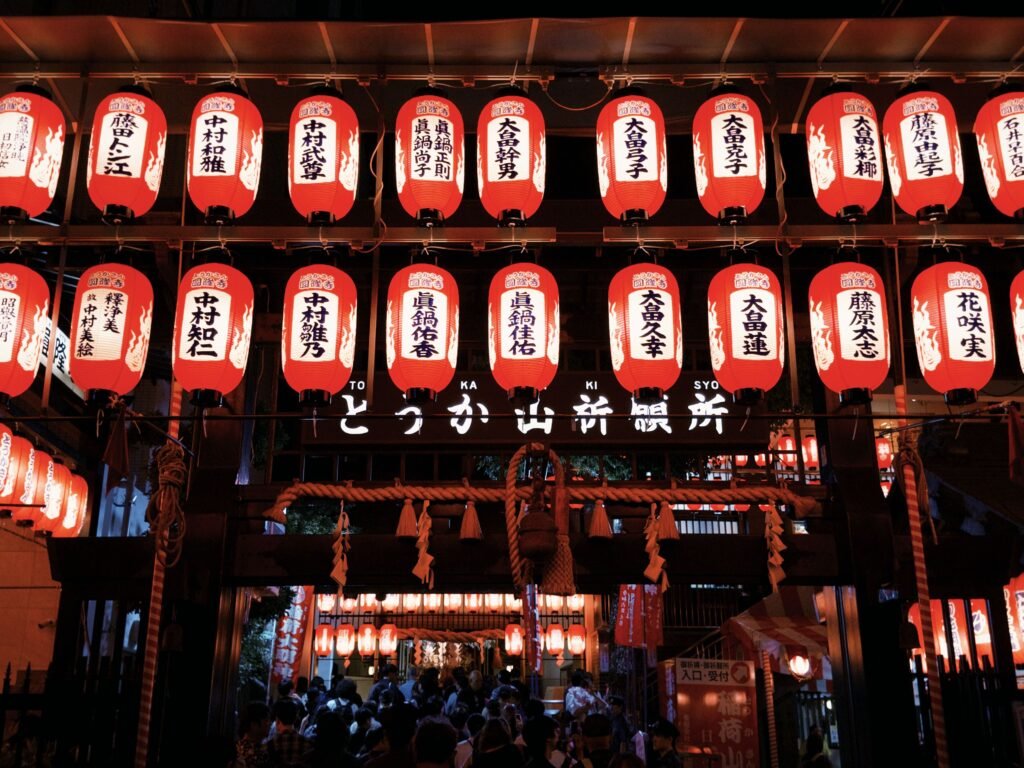
The three evenings before each parade — July 14–16 and July 21–23 — are Yoiyama, when the streets around the floats close to traffic and fill with food stalls, lantern light, and the same festival music played live from inside the floats. Many visitors find Yoiyama more enjoyable than the parade itself: you can walk right up to the floats, and on some of them pay a small fee to climb aboard.
Look out for the Byobu Matsuri as well — old merchant houses along the route open their front rooms during Yoiyama to display folding screens and family heirlooms, free to view from the street.
Where to Watch
Reserved seating is sold along Gojo-dori and Oike-dori for both parades and is the easiest way to guarantee a clear view. For free viewing, arrive by 7:00 for a curbside spot along Shijo-dori or Kawaramachi-dori; by 8:30 on parade morning, the best free spots are already taken.
Tips for Visiting
- Arrive by 7:00 for free curbside spots on either parade day
- Wear light, breathable clothing — July in Kyoto is hot and humid
- Yoiyama evenings are more relaxed than the parade itself and easier with kids
- Book accommodation months ahead if your trip lands in mid-July
- The Mikoshi Togyo portable shrine processions on the evenings of July 17 and 24 are separate events from the float parade
Nearby, If You Have More Time
Gion Matsuri is Yasaka Shrine’s festival, so a visit pairs naturally with the shrine itself and the surrounding neighborhood — see our guides to Yasaka Shrine and Gion.
Where to Stay Nearby
Basing yourself in Gion or around Shijo-Kawaramachi puts you within walking distance of both parade routes and the Yoiyama evenings. Our Kyoto neighborhood comparison guide covers how this area compares to the rest of the city.
Booking.com is a reasonable place to check availability around Shijo and Gion, though it is worth booking well ahead for a trip in July.
Bottom Line
Gion Matsuri rewards visitors who look past the single parade day — the Yoiyama evenings are arguably the better experience, with lantern-lit floats, open streets, and none of the parade-day crush. If your trip lands anywhere near July, it is worth planning around.