Koryu-ji: A Practical Guide to Kyoto’s Oldest Temple and Its Enigmatic Miroku Bosatsu
Most first-time visitors to Kyoto never make it to Koryu-ji, which is a little strange, because by most accounts it’s the oldest temple in the city — older than Kiyomizu-dera, older than Kinkaku-ji, older than Kyoto itself if you count from its founding in 603. It sits in the quiet Uzumasa district on the western edge of town, a neighborhood better known these days for its film studios than its temples, and that obscurity works in the temple’s favor: short lines, a slow pace, and a treasure hall holding Japan’s very first registered National Treasure — a wooden bodhisattva with an expression so quietly human that visitors have been comparing it to the Mona Lisa for decades. If you’re already planning a trip out to Ninna-ji or Ryoan-ji, Koryu-ji is an easy detour that rewards the extra stop.
The Essentials at a Glance
| What | Details |
|---|---|
| Admission | Temple grounds free; Reihokan (Treasure Hall) around 700 yen — some listings show a combined-ticket price closer to 500 yen, so budget a little flexibly |
| Hours | Roughly 9:00am–5:00pm, shorter in winter |
| Visit length | 45–60 minutes is enough to see the grounds and the treasure hall unhurried |
| Photography | Not permitted inside the Reihokan treasure hall |
| Access | One-minute walk from Uzumasa Koryu-ji Station on the Keifuku Arashiyama Line (randen); or about a 13-minute walk from JR Uzumasa Station |
| Nearby | Uzumasa Kyoto Village (the former Toei Kyoto Studio Park) is about a 5-minute walk away |
Kyoto’s Oldest Temple, Founded Before the City Existed
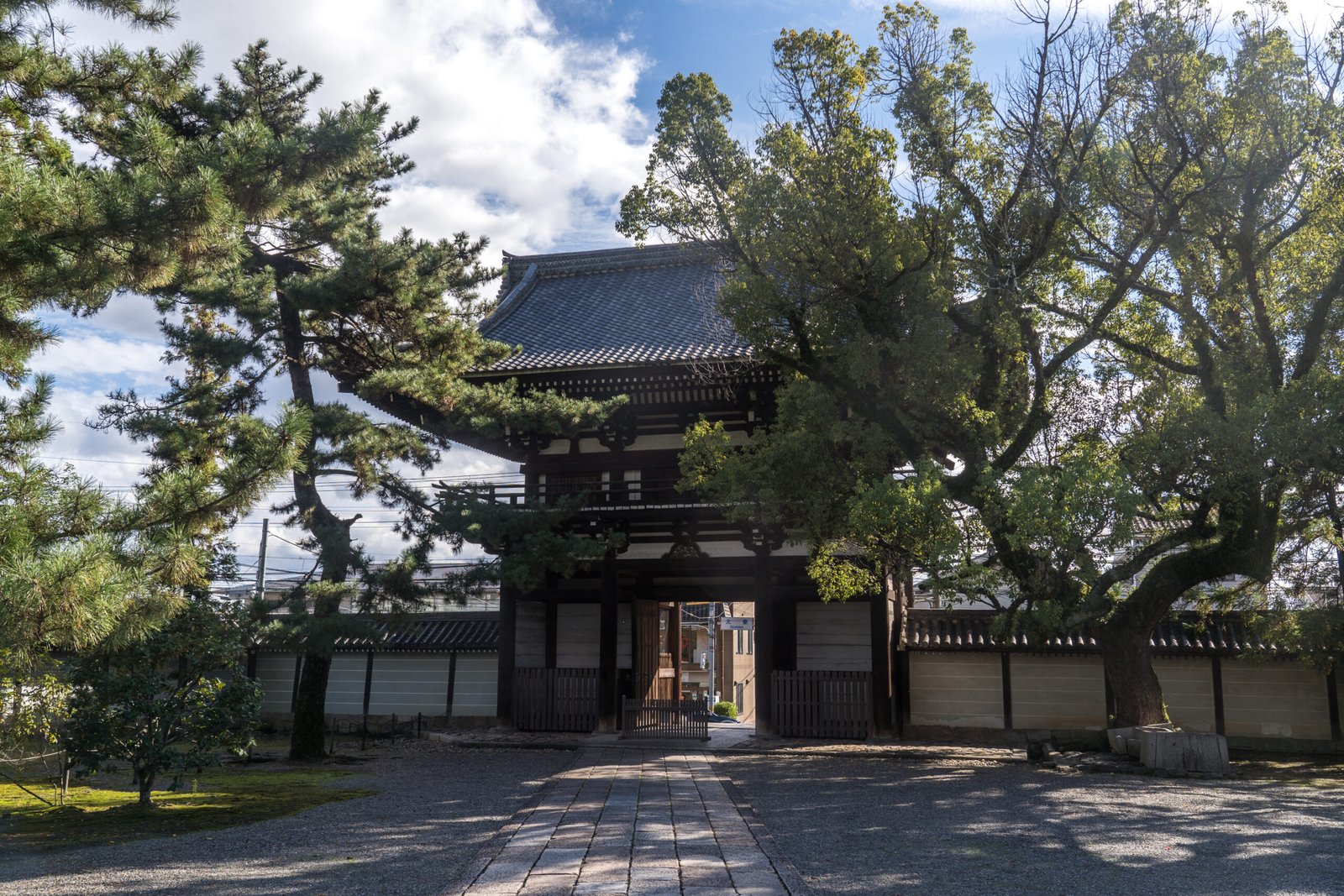
Koryu-ji’s founding is usually dated to 603, when Hata no Kawakatsu — a powerful figure from the Hata clan, immigrants from the Asian mainland who brought weaving, sake brewing, and irrigation know-how to the Kyoto basin long before it was a capital — built the temple around a Buddhist image reportedly given to him by Prince Shotoku. That makes it nearly two centuries older than Heian-kyo itself, which wasn’t founded until 794. The temple has also gone by the names Uzumasa-dera and Kadono-dera over the centuries, names tied to the Hata clan’s old territory here. Little from that original founding survives directly: fires in 818 and 1150 destroyed most of the early buildings along with a good deal of the temple’s own historical records, so much of what’s known about its earliest years is pieced together from later reconstruction and a handful of surviving documents, including a temple inventory from 873. Restoration after the fires, led by the monk Doshi starting in the 830s, is what shaped the layout visitors walk through today.
The Weeping and the Crowned: Two Miroku Bodhisattvas
The reason most people make the trip is a single statue in the Reihokan treasure hall: the Hokan Miroku, or “Crowned Maitreya,” seated in the half-lotus pensive pose with one hand resting lightly against the cheek, as if caught mid-thought. It stands just over 123 centimeters tall and is carved from Japanese red pine, an unusual choice of material for a Japanese Buddhist statue of its era, which has led some scholars to suggest it may have been carved on the Korean peninsula, or by a sculptor trained there, sometime in the 7th century. It was likely gilded originally, though the gold has long since worn away to bare wood. When Japan’s modern system for registering National Treasures began, this statue was the very first object listed — a status that, combined with its unusually soft, contemplative expression, has earned it comparisons to the Mona Lisa and to Rodin’s Thinker in just about every write-up of the temple you’ll find. The hall also holds a second, related figure, the Hokei Miroku or “Weeping Maitreya,” carved from camphor wood in the Asuka period with a slightly more anguished cast to its features — a useful contrast if you want to see how differently two sculptors, working in different materials, handled the same subject. Photography isn’t allowed inside the hall, so this is one of the few sights in Kyoto you’ll have to actually remember rather than scroll back through later.
More Than One Treasure Hall
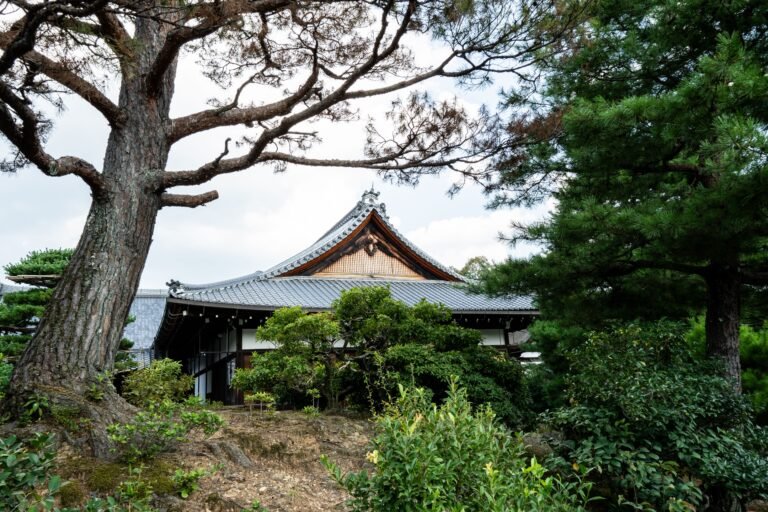
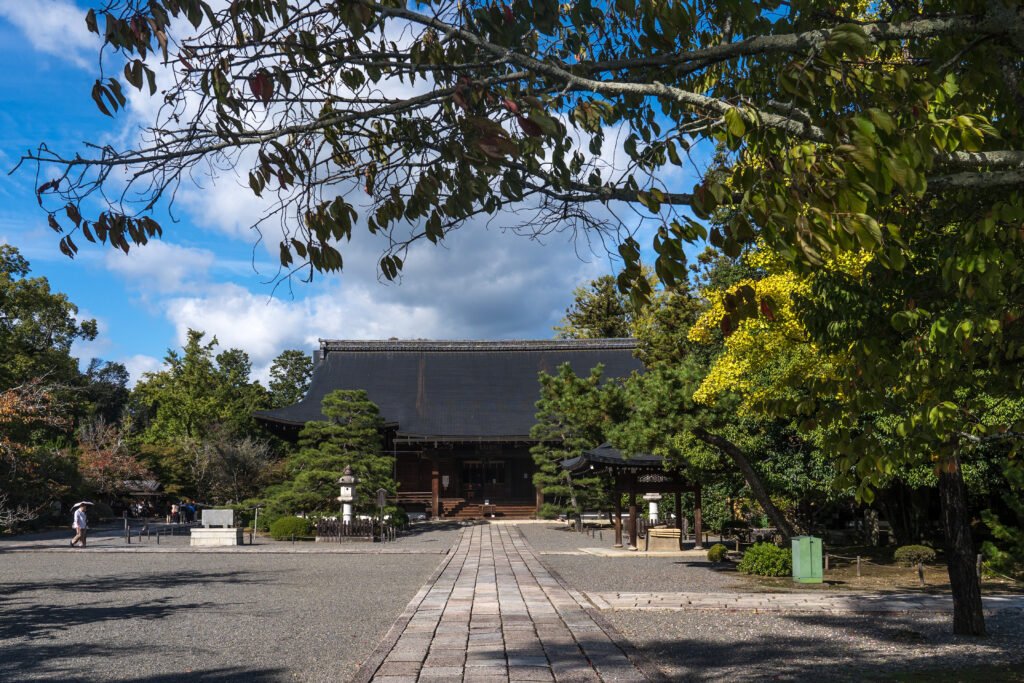
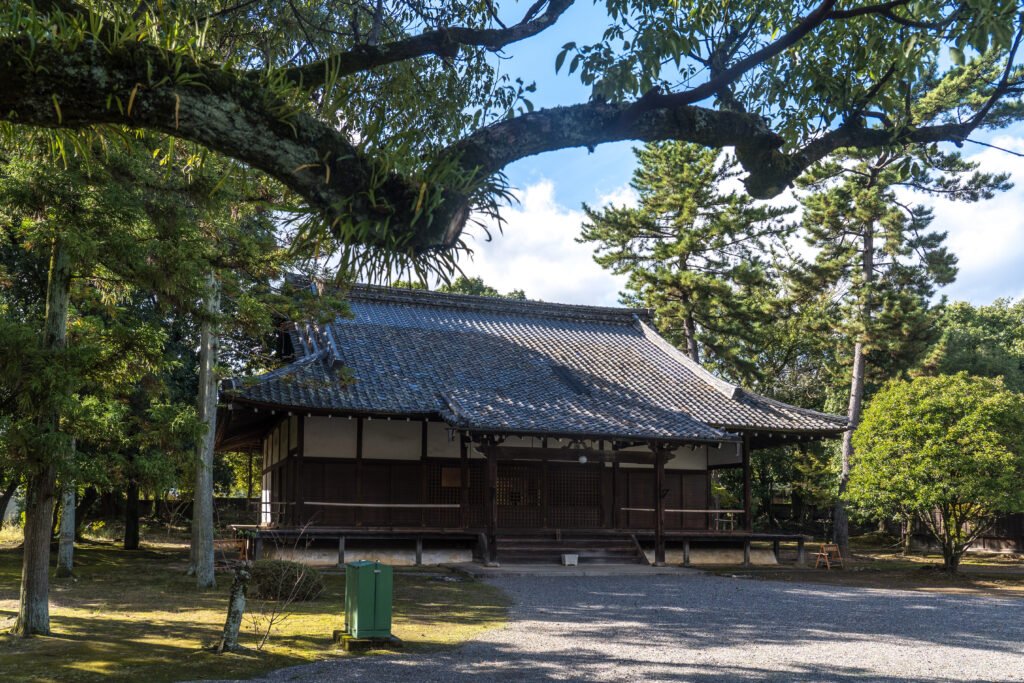
The Reihokan isn’t a one-statue museum. Alongside the two Miroku figures, it houses a seated Amida Nyorai from around 840, a set of Twelve Heavenly Generals dated to 1064, and a scattering of other Heian and Asuka-period sculpture, enough that serious temple-architecture visitors can easily spend half an hour inside. Outside the treasure hall, the Taishiden hall is dedicated specifically to Prince Shotoku, whose standing statue there has long drawn devotion from Kyoto’s weavers — the Hata clan’s association with silk and textile work is part of why Nishijin’s weaving district, a short distance away, has historically treated Shotoku as something of a patron figure. The Lecture Hall, rebuilt in 1165, is a Kamakura-period structure and reportedly the oldest wooden building still standing in Kyoto, predating even the oldest surviving pieces of the Imperial Palace. It houses three more Buddha statues and, despite its age and importance, tends to get a fraction of the attention the Reihokan draws.
When to Go and What to Combine It With
Mid-to-late November brings solid autumn color around the Lecture Hall, and because Koryu-ji doesn’t attract the crowds that Arashiyama or Higashiyama do even during peak foliage weeks, it’s a reasonable place to see good color without a wait. Weekday mornings, shortly after opening, are the quietest time overall. Because the temple sits right next to Uzumasa Kyoto Village, Kyoto’s working film studio and samurai-themed attraction, the two pair naturally into a single half-day out west — historical gravity on one side of the street, theatrical swordfights on the other. From there, Ninna-ji and Ryoan-ji are both a short bus or taxi ride further north, so a fuller day could easily run Koryu-ji, the studio park, then one or both of those temples before heading back into the city center. Our guide to getting around Kyoto covers the bus and rail logistics for stringing a day like that together.
Getting There
The easiest route is the Keifuku Arashiyama Line, Kyoto’s old-fashioned single-car tram known locally as randen, which stops directly at Uzumasa Koryu-ji Station — the temple gate is about a minute’s walk from the platform. It’s reachable from Shijo-Omiya in the city center or from Arashiyama itself, making it a convenient link if you’re coming from either direction. Alternatively, the JR Sagano Line runs to Uzumasa Station, about a 13-minute walk from there, and city buses 72 and 73 connect from Kyoto Station in around 33 minutes if you’d rather skip the transfer.
Bottom Line
Koryu-ji doesn’t have the scale of Kyoto’s headline temples, and it isn’t trying to. What it has is a genuinely rare object — the country’s first registered National Treasure — displayed without ceremony in a small, uncrowded hall, plus thirteen centuries of continuous history behind it. If you’re heading to the Uzumasa or Omuro side of the city anyway, there’s little reason not to add it to the list.