Seimei Shrine: A Practical Guide to Kyoto’s Shrine of the Legendary Onmyoji
Walk north along Horikawa-dori past Nijo Castle and the crowds thin out well before Ichijo-dori. On the east side of the street sits a modest shrine marked by a sharp, five-pointed star instead of the usual shrine crest, dedicated to a man most visitors have never heard of: Abe no Seimei, the Heian-era court diviner who spent his career reading omens for emperors. Seimei Shrine (Seimei Jinja) rarely makes a first-timer’s list, and that is a large part of its appeal — a small, specific, slightly eerie corner of the city for anyone who wants Kyoto’s spiritual side without the tour-bus scale of Fushimi Inari or Kiyomizu-dera.
The Essentials at a Glance
| What | Details |
|---|---|
| Address | 806 Ichijo-agaru, Horikawa-dori, Kamigyo-ku |
| Founded | 1007, two years after Seimei’s death, by order of Emperor Ichijo |
| Admission | Free to enter |
| Hours | Generally 9:00am–6:00pm daily, though it is worth confirming if you are arriving right at the edges of that window |
| Visit length | 15–20 minutes for most visitors |
| Access | Short walk or bus ride north of Nijo Castle and the Imperial Palace area |
| Festival | Seimei Matsuri, held around the autumnal equinox in September |
The Diviner Who Became a Shrine
Seimei served multiple emperors across a long career as what the Heian court called an onmyoji, a kind of astrologer-diviner who read the calendar for lucky and unlucky days, performed purification rituals, and advised on everything from building sites to the timing of political decisions. He is a genuinely documented figure in court records of the era, by most accounts living from around 921 to 1005. Over the centuries that followed, though, he picked up a reputation for something closer to sorcery — command over spirits called shikigami, an uncanny sense for danger, in some tellings even fox blood on his mother’s side. Two years after his death, Emperor Ichijo ordered a shrine built on the site of Seimei’s former residence. It remains one of the few shrines in Kyoto raised specifically to honor one person’s memory and skill, rather than to house a deity carried over from an older cosmology.
That reputation has had a long afterlife. Centuries of folklore, Edo-period kabuki, and, more recently, a wave of novels, manga, and mobile games built around his legend have kept Seimei’s name circulating well beyond academic histories of the Heian court, and a share of the shrine’s visitors today are drawn by that fiction rather than the history itself. The shrine does not lean hard into that side of things — there is no gift shop stacked with character goods — but it is worth knowing the name might ring a bell from somewhere other than a textbook.
A Five-Pointed Star and a Well That Still Changes Direction
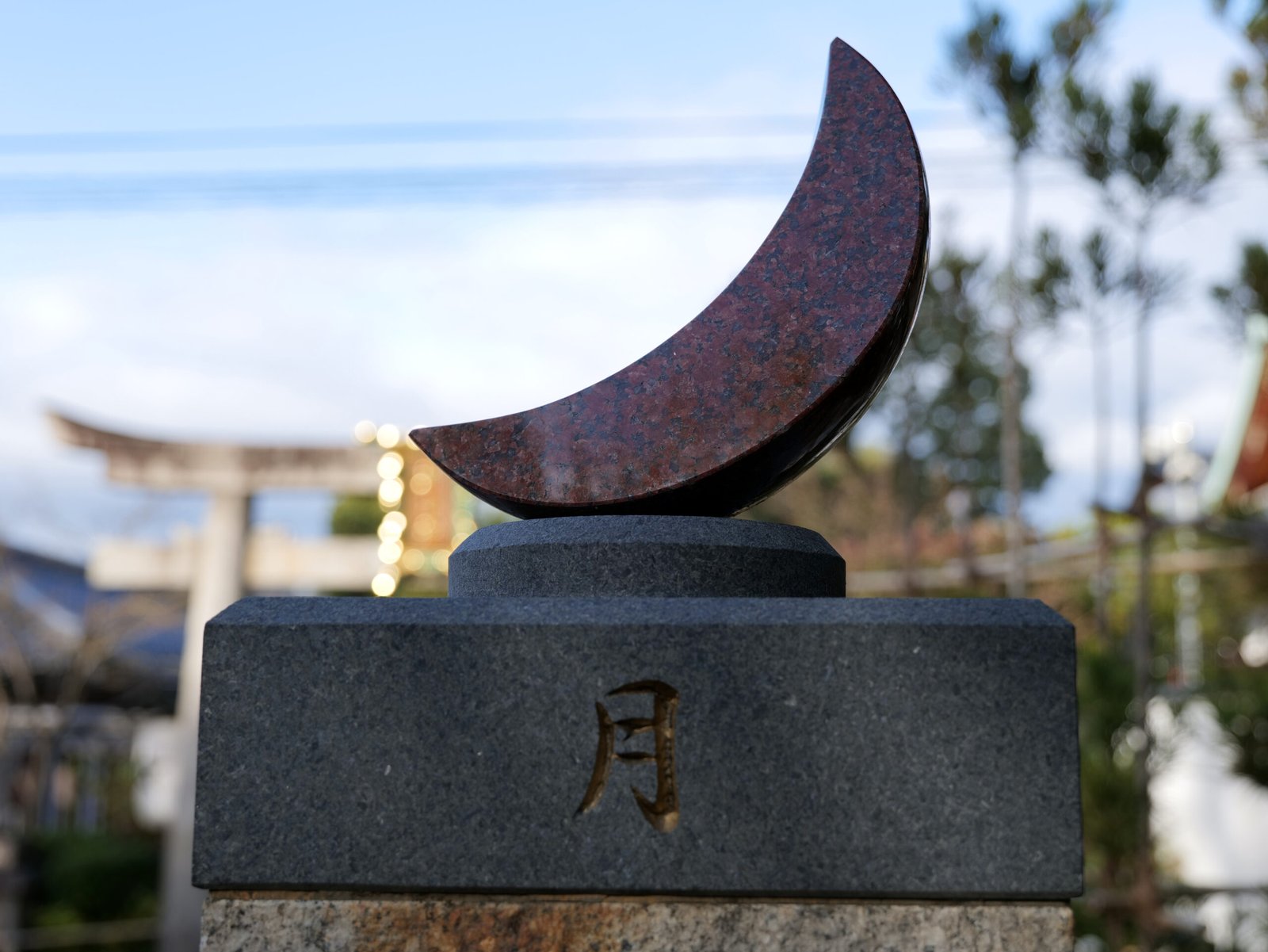
The shrine’s defining image is the five-pointed star above the main gate, used in place of the usual shrine name. It is called the Seimei Kikyo, a single continuous line representing the five Chinese elements — wood, fire, earth, metal, water — folded together with the balance of yin and yang that sits at the center of onmyodo practice. The same symbol turns up repeatedly around the grounds, worked into lanterns, roof tiles, and the shape of the bellflower (kikyo) that lends the crest its name.
Just inside the entrance, on the right, sits Seimei Well, capped with a smaller version of the same star and ringed with the twelve zodiac directions carved into its rim. Local tradition holds that the water carries some protective quality — tea master Sen no Rikyu is said to have drawn on it for his tea ceremonies — and around the spring equinox each year, shrine staff physically redirect the spout to face whichever direction is considered luckiest for the coming year. It is easy to miss if you do not know to look, but it is one of the more literal pieces of divination still being practiced anywhere in the city.
The Bridge Said to Lead Between Worlds
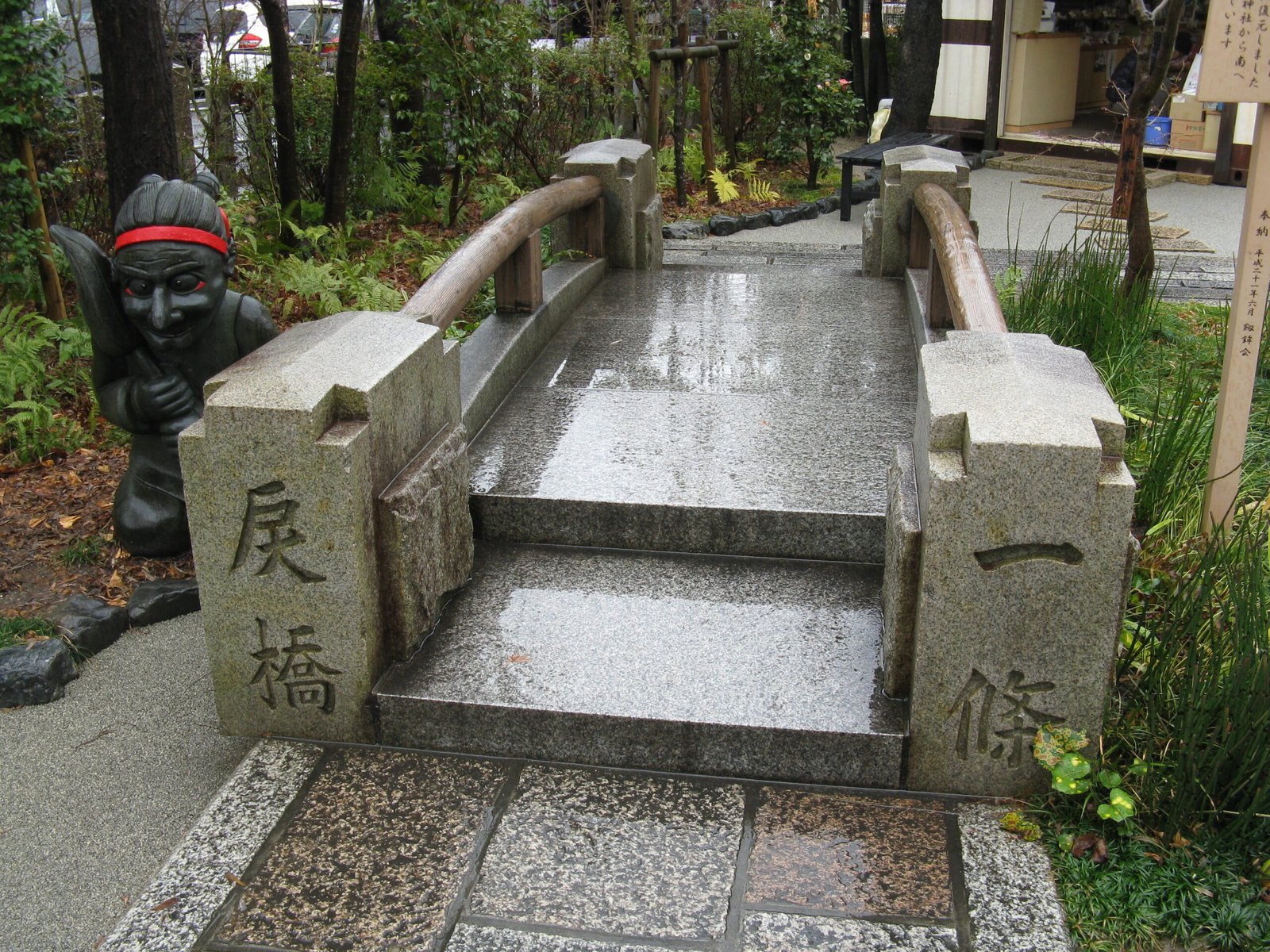
A small stone bridge on the shrine grounds recreates the Ichijo Modoribashi, the “Bridge of Return,” which once stood over the Horikawa a short walk from here and, rebuilt, still does. In folklore, it is the bridge where Seimei stationed his shikigami so they would not frighten his wife at home, and the place where a funeral procession is said to have briefly brought its subject back to life as it crossed — hence the name. The bridge later picked up a darker association as a crossing point between the human world and the realm of the dead, and for a long stretch of Kyoto’s history, soldiers heading off to war crossed the real bridge for luck, on the theory that anything named “return” was worth invoking before leaving home. The version on the shrine grounds is purely symbolic, but it is a good prompt to walk the few minutes south to see the real bridge over the Horikawa if the story has caught your interest.
Visiting the Shrine
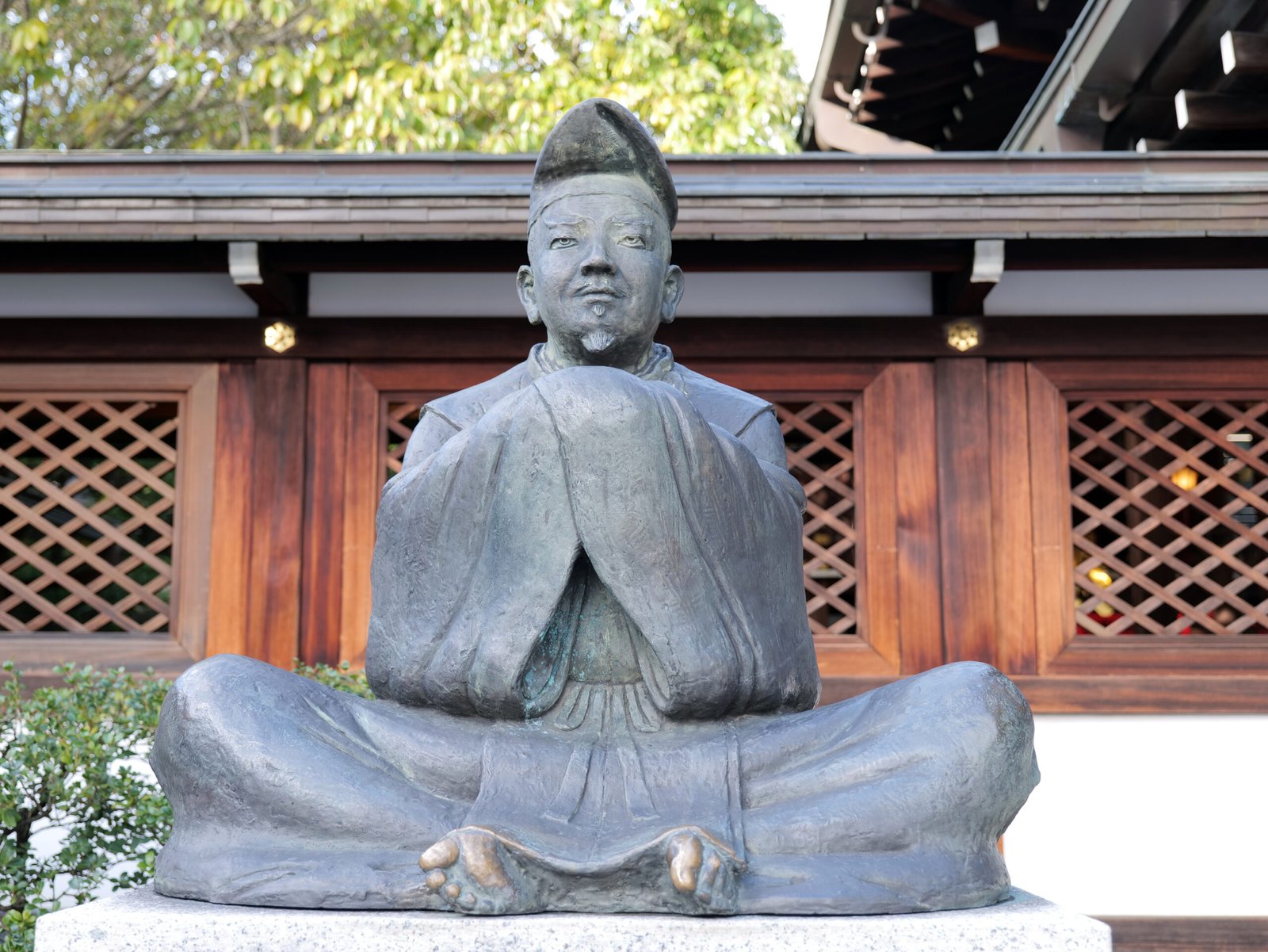
This is a small shrine, and most visitors are in and out within twenty minutes. A bronze statue of Seimei gazing up at the sky stands near the main hall, a nod to his reputation for reading the stars and the calendar. The grounds also hold an old camphor tree estimated at roughly 300 years, wrapped in a shimenawa rope, and a small counter selling omamori charms aimed specifically at warding off bad luck and illness — a fitting match for what Seimei was actually known for. If you collect goshuin stamps, the shrine issues its own, typically stamped with a small rendering of the five-pointed star. Because the grounds are compact and entirely outdoors, it folds easily into a longer walk through the area rather than asking for a dedicated stop of its own.
Pairing It With the Rest of Your Trip
Seimei Shrine sits roughly between two much larger sights, which makes it a natural detour rather than a special trip of its own. Nijo Castle is about fifteen minutes on foot to the south, and the Kyoto Imperial Palace grounds are a similar distance to the east, so either one pairs easily with a stop here on the same walk. If shrines built around a single historical figure interest you, Kitano Tenmangu, raised for the scholar-deity Sugawara no Michizane, makes a good companion a little further west — both places turn one person’s reputation into the entire reason for being there.
Getting There
The closest bus stops run along Horikawa-dori and Imadegawa-dori, served by several city bus lines, with a walk of two to five minutes to the gate depending on which stop you use. The nearest subway station is Imadegawa on the Karasuma Line, about a ten-to-fifteen-minute walk west past Doshisha University. If you are still sorting out IC cards or bus passes for the rest of your trip, Getting Around Kyoto covers how the bus and subway system fits together.
Bottom Line
Seimei Shrine will not take up much of your day, and that is rather the point. It is a quiet, specific, slightly odd little site that rewards about twenty unhurried minutes more than it needs a spot on a must-see list. If Kyoto’s temple circuit has started to blur together, a shrine built entirely around one man’s reputation for reading the stars is a good way to break the pattern.