Higanbana in Kyoto: A Practical Guide to Red Spider Lily Season Near Kameoka
Kyoto’s famous autumn color gets all the attention, but there’s a shorter, stranger season that comes first: a week or two in mid-to-late September when the rice paddies just outside the city suddenly turn red along their edges. The flower responsible is higanbana, the red spider lily, and while you’ll spot the odd cluster all over the Kyoto basin, the most dependable place to see a real field of them is a short train ride away in Sogabe, a farming district on the edge of Kameoka.
The Essentials at a Glance
| What | Details |
|---|---|
| Where | Sogabe district, about 2 km west of JR Kameoka Station |
| Best time | Roughly mid-to-late September, though the exact window shifts every year with the weather — flowers open and fade within about a week |
| Getting there | JR Sagano Line from Kyoto Station to Kameoka Station (about 20–30 minutes), then a local bus toward Anoaguchi and a 10-minute walk, or a taxi from the station |
| Admission | None — it’s open farmland along public paths, not a ticketed attraction |
| Facilities | Minimal; there is no dedicated parking near the fields, so public transport is the easier option |
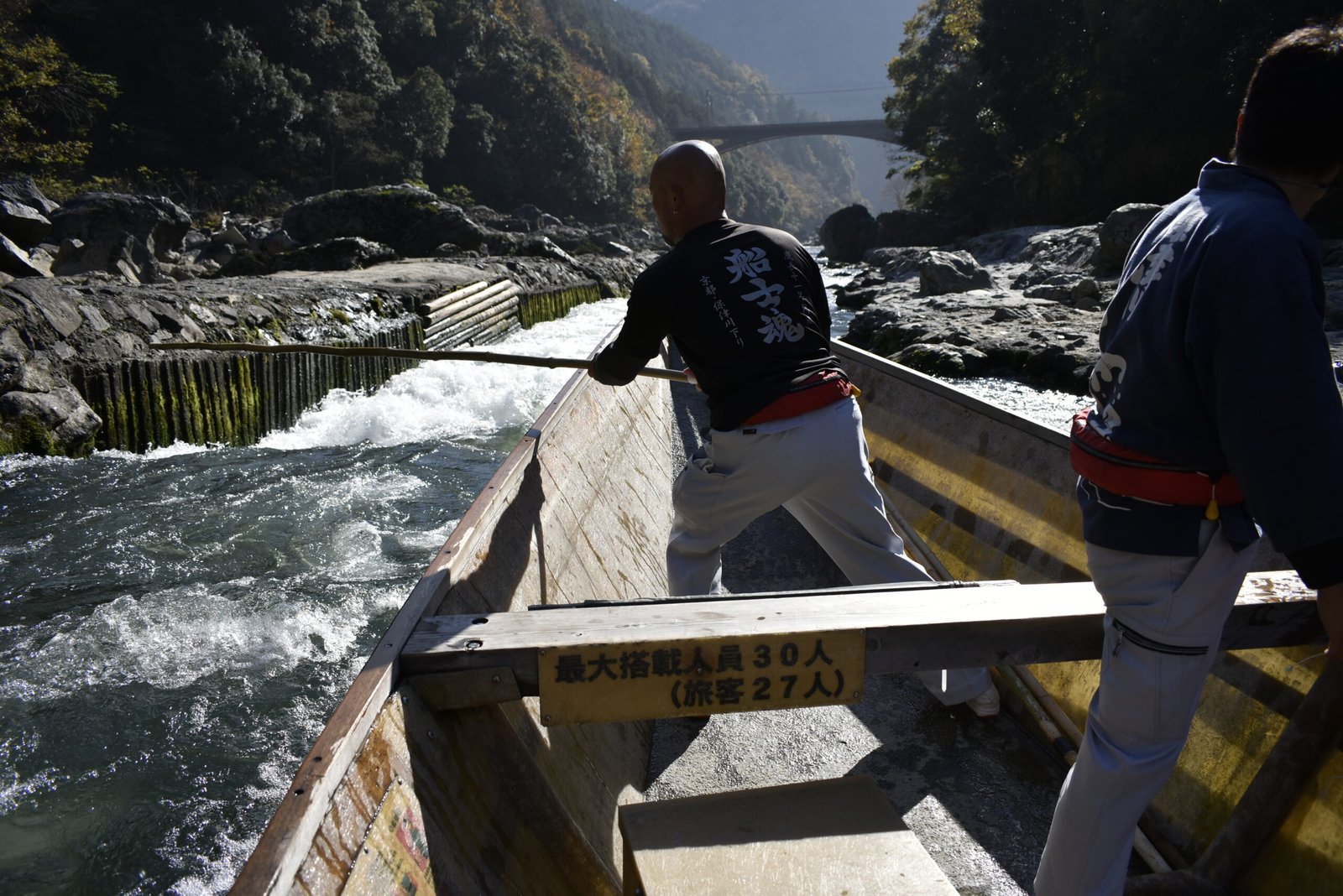
| Good to combine with | Kameoka’s Torokko Kameoka Station and the Hozugawa river boat dock |
A Flower Named for the Equinox
Higanbana takes its name from higan, the Buddhist observance held around the autumnal equinox, because the flower reliably opens right around that week regardless of what the rest of the season is doing. Botanically it’s Lycoris radiata, a plant introduced from China that naturalized across Japan centuries ago and is now found — planted or simply left alone — along rice paddy banks and graveyard edges nationwide. Farmers traditionally welcomed it at the edges of their fields because its bulbs are mildly toxic, which was thought to discourage moles, mice, and other animals from burrowing into the banks that hold the water in.
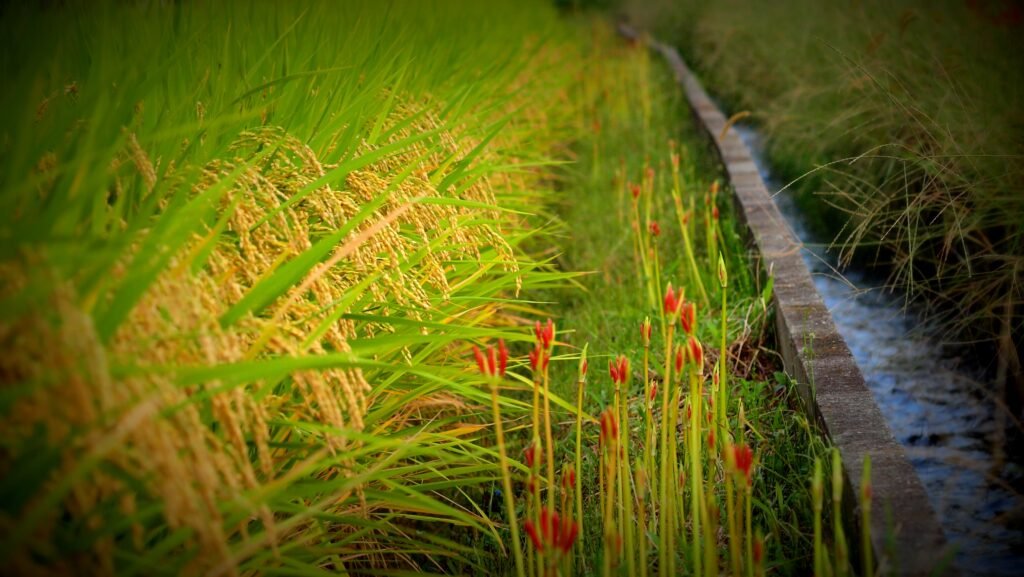
The flower itself is unmistakable: a cluster of thin, curling red petals on a bare stalk with no leaves in sight, since higanbana sends up its leaves only after the flowers have already died back. In Japanese folklore it’s also called manjushage, a word borrowed from Buddhist scripture for a flower said to appear in the afterlife, and it carries a slightly melancholy association with graveyards and farewells that Kyoto residents are generally aware of even if they don’t dwell on it while out taking photos.
Why Sogabe
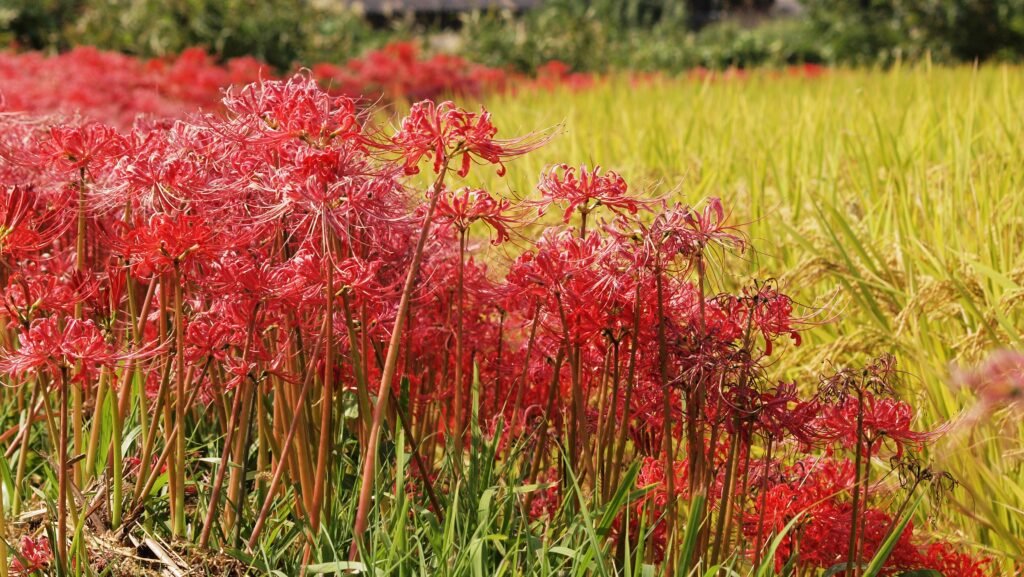
Small clusters of higanbana turn up all over greater Kyoto in September, but most are a few stems along a single path. Sogabe is different: the flowers line the raised banks between working rice paddies over a wide enough area that, at peak bloom, you get long red rows cutting through green and gradually golden rice fields with the hills of Kameoka behind them. It’s not a garden built for visitors — it’s someone’s farmland that happens to look extraordinary for about ten days a year — so the appeal is as much the setting as the flowers themselves.
Getting There
Kameoka Station is a straightforward ride on the JR Sagano Line, the same line that serves Saga-Arashiyama, taking roughly 20 to 30 minutes from Kyoto Station depending on whether you catch a rapid or local service, for about ¥410 each way. From the station, a local Keihan Kyoto Kotsu bus runs toward the Anoaguchi stop, from which the paddies are about a 10-minute walk; a taxi from the station is a reasonable alternative if you’d rather skip working out the bus schedule. Our Getting Around Kyoto guide has more on reading local bus and train schedules if this is your first time using a route outside the main city network.
There’s no dedicated parking for visitors near the fields, and the local roads are narrow farm lanes rather than proper streets, so driving in isn’t really recommended even with a rental car. This is a working agricultural area rather than a tourist facility, and the lack of infrastructure is really just a reminder of that.
Timing It Right
The hardest part of visiting higanbana anywhere is the timing. Unlike cherry blossoms or autumn leaves, which build and fade gradually over several weeks, higanbana can go from barely budding to full bloom to noticeably past its best within a single week, and the exact dates shift from year to year depending on rainfall and temperature. If your travel dates are flexible, it’s worth checking recent local reports or photos from the past few days before committing to the trip out to Kameoka, rather than aiming at a fixed date on the calendar. Treat the last third of September as a reasonable starting point rather than a guarantee.
Visiting Respectfully
Because this is active farmland rather than a park, the usual etiquette matters more than usual: stay on the paved roads and paddy banks that are clearly public, don’t step into the rice fields themselves to get a closer photo, and be mindful of residents going about ordinary life around you. The flowers grow right at the edge of someone’s livelihood, and the area has stayed pleasant to visit precisely because most people treat it that way.
Pairing It With the Rest of Kameoka
Kameoka is also the western end of the Sagano Scenic Railway, with Torokko Kameoka Station and the Hozugawa river boat dock both a short ride from the JR station, which makes it easy to build a full day around this side trip rather than treating it as a there-and-back errand. Riding the Torokko train or the river boat toward Arashiyama after a morning among the rice paddies turns a single-flower outing into a proper half-day loop, and it means you’re not backtracking through Kameoka Station twice for two unrelated reasons.
If higanbana ends up being the seed of a longer autumn trip, our Kyoto Autumn Foliage guide and Best Time to Visit Kyoto guide both cover what comes next, from the first color changes in late October through peak koyo in November.
Bottom Line
Higanbana season is easy to miss if you’re not watching for it — no festival, no set dates, just a week or two when a Kameoka rice field turns red along its edges. It’s a small, specific detour rather than a headline attraction, but for travelers already interested in Kyoto’s quieter seasonal rhythms, it’s a worthwhile reason to ride the Sagano Line a little further than Arashiyama.