Shisen-do: A Practical Guide to Kyoto’s Poet-Hermit Garden
Shisen-do sits in a quiet residential pocket of northern Sakyo-ku, far enough from the main temple circuit that most first-time visitors to Kyoto never hear its name. That’s more or less the appeal for the people who do find it: a small garden built by a retired samurai as his own home, still quiet enough four centuries later that you can sit on the veranda and listen to a bamboo pipe clack against a stone at regular intervals, which is close to the entire point of visiting.
The Essentials at a Glance
| What | Details |
|---|---|
| Admission | ¥700 adults; ¥500 high school students; ¥300 junior high and elementary school students |
| Hours | 9:00 a.m.–5:00 p.m., last entry 4:45 p.m.; closed May 23 |
| Address | 27 Ichijoji Monguchi-cho, Sakyo-ku |
| Getting there | Kyoto City Bus 5 from Kyoto Station to the Ichijoji-kudarimatsu-cho stop (roughly 40 minutes), then a 5-minute walk uphill |
| Visit length | 30–45 minutes |
| Good to know | Seating on the veranda facing the garden is part of the visit — budget time to just sit rather than treating it as a walk-through |
A Samurai’s Retirement Retreat
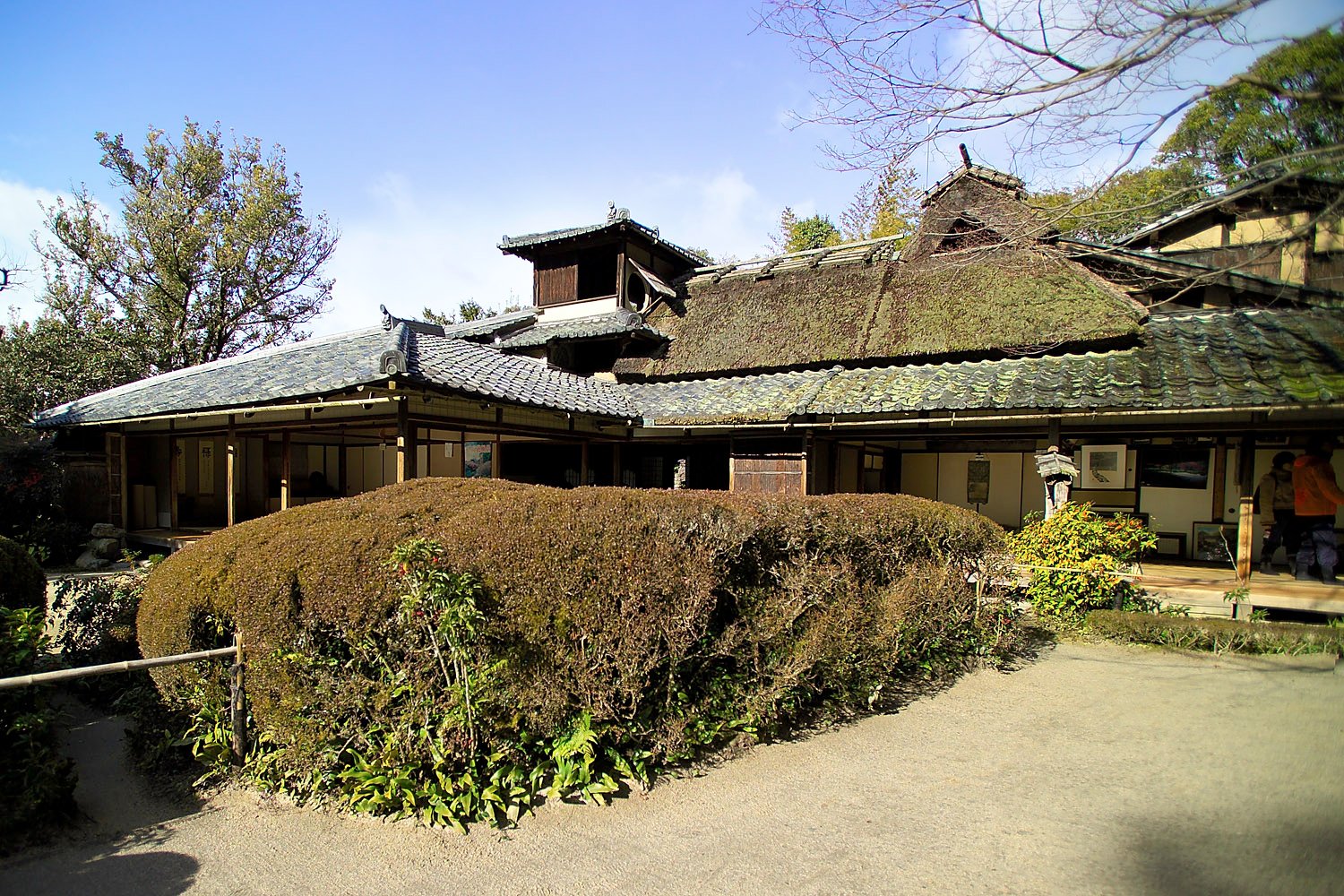
Shisen-do was built in 1641 by Jozan Ishikawa, a former vassal of the Tokugawa family who had spent his earlier life as a samurai before turning away from military service to devote himself to Chinese classical literature, calligraphy, and garden design. He was in his late fifties by the time he settled here, and he spent roughly three decades living at Shisen-do until his death in 1672, at around 90 years old. The building keeps some of that literatus sensibility in its bones — a partially thatched roof, restrained wooden architecture, and a general lack of the gilding or ornamentation you’d find at a temple built to impress rather than to live in.
The Hall of Poet Immortals
The name Shisen-do translates roughly to Hall of the Poet Immortals, and it comes from a specific room inside: Ishikawa selected thirty-six Chinese poets he admired across history and commissioned portraits of each of them, paired with a poem, to line the walls. It’s a personal canon rather than an official one, assembled by a single retired samurai working through his own reading over decades, and it says more about Ishikawa’s identity as what the Japanese call a bunjin, a scholar-artist, than it does about any Zen teaching. Shisen-do is run today as a Soto Zen temple, but its original purpose was closer to a scholar’s retirement home than a place of worship, and that history is still the more interesting thread to pull on once you’re there.
The Garden and the Sound of the Sozu
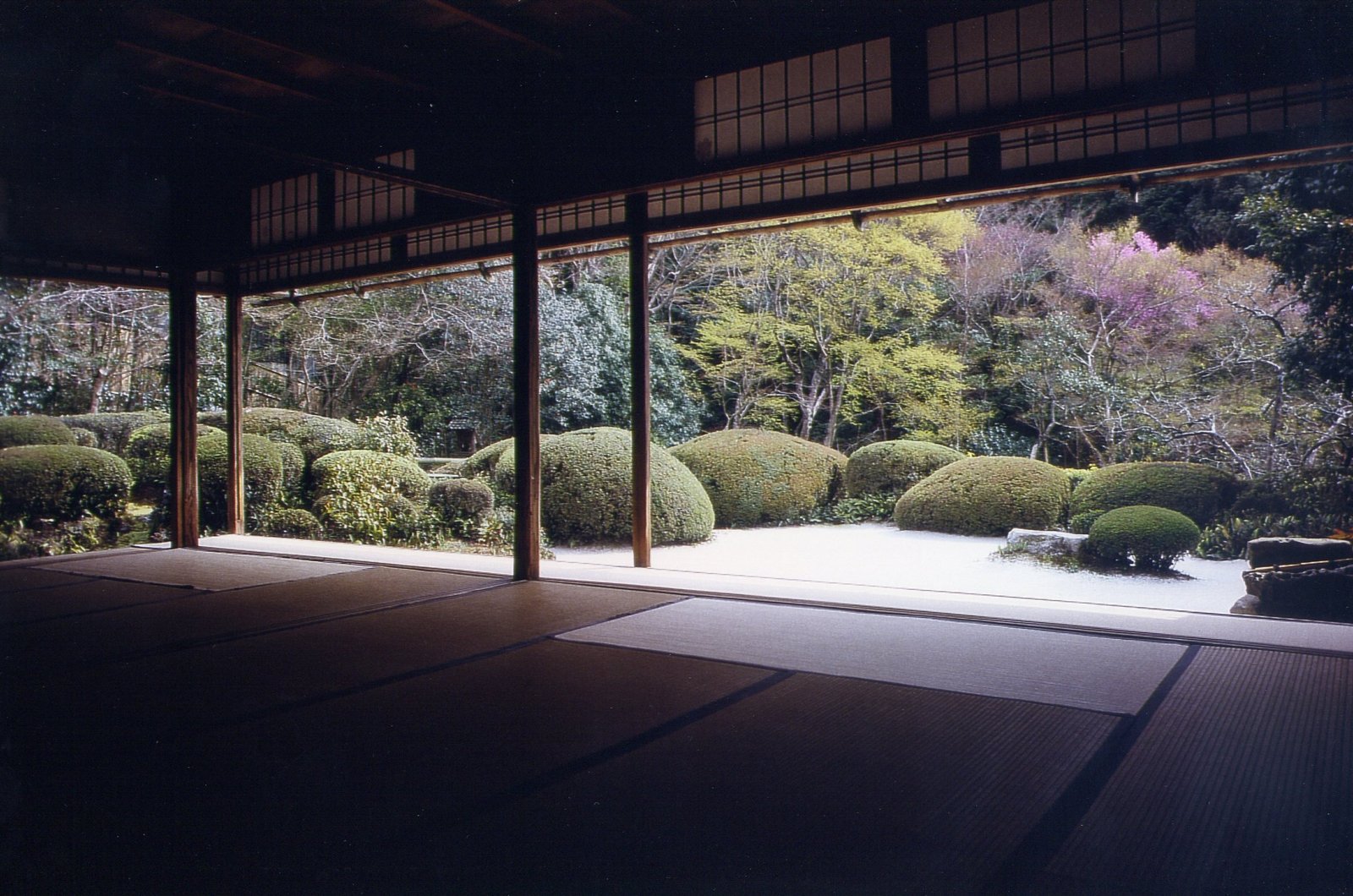
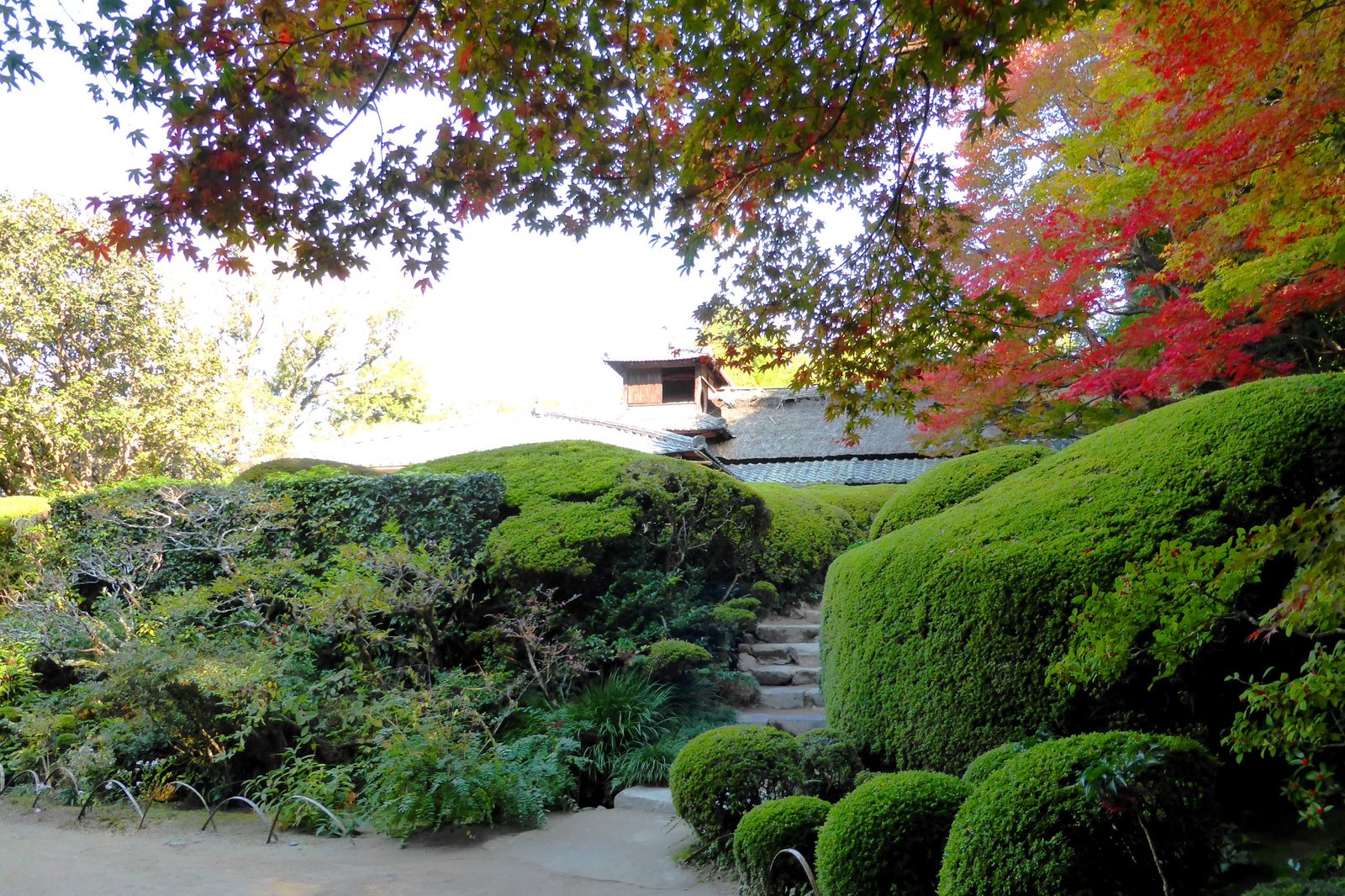
The garden Ishikawa designed breaks from typical karesansui, dry-landscape convention in one obvious way: instead of arranging stones as the main feature, he shaped azalea bushes into rounded clipped mounds that stand in for rocks or distant hills, and the paths let you walk through parts of the garden rather than only view it from a fixed veranda seat. The effect changes completely with the seasons, since the azaleas themselves are the garden’s main structural element as much as its color.
The sound that defines a visit, though, is the shishi-odoshi, a bamboo device fed by a trickle of water that slowly fills one end of a pivoting bamboo tube until it tips, empties, and swings back to knock against a stone with a sharp, hollow clack. These devices were originally built to scare deer and wild boar away from gardens and fields, not to create ambiance, but at Shisen-do the sound has become the whole atmosphere: irregular, unhurried, and loud enough in the quiet that you’ll hear it before you see it. Shisen-do is one of the temples most commonly associated with popularizing the device as a garden feature in its own right, even though the shishi-odoshi itself predates the temple by centuries.
When to Go: Azaleas, Maples, and the Off-Season
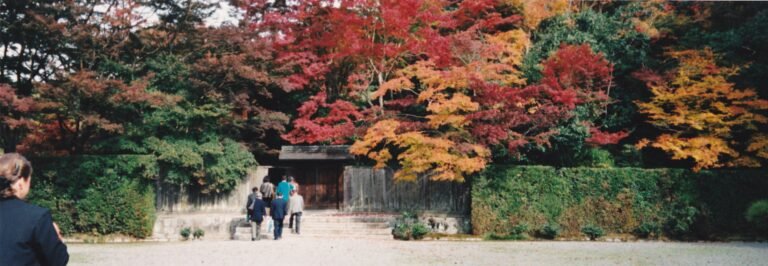
Shisen-do has two clear peak windows. Satsuki azaleas bloom in late May into early June, turning the clipped mounds a deep pink-red almost all at once, which is also roughly when the temple closes for a single day, May 23, for an annual memorial service for Ishikawa — worth checking before you plan a trip around that exact week. The other peak is autumn, typically late November into early December, when the garden’s maples color against the still-green azalea mounds; our Kyoto Autumn Foliage guide has the broader picture of how koyo season moves across the city if you’re timing a trip around it, and our Best Time to Visit Kyoto guide covers the rest of the year. Outside those two windows, Shisen-do is a genuinely quiet stop, which some visitors will prefer over chasing the bloom.
Getting There and Nearby Temples
Shisen-do is on the northern edge of the city in Ichijoji, well outside the Higashiyama and Arashiyama areas that absorb most first-time visitors, and getting there takes a genuine bus ride rather than a short walk from a train station — Kyoto City Bus 5 from Kyoto Station runs directly to the Ichijoji-kudarimatsu-cho stop in around 40 minutes, and our Getting Around Kyoto guide covers how the city’s bus passes work if this is your first time using one. The Ichijoji neighborhood itself has a handful of other quiet temples within walking distance, including Manshu-in and Enko-ji, so it’s worth turning the trip out here into a slower half-day rather than a single stop. If you’re drawn to this kind of unhurried, out-of-the-way temple, Mount Hiei and Enryaku-ji scratches a similar itch on a larger scale, though it’s a separate trip involving a cable car rather than a bus.
Bottom Line
Shisen-do rewards exactly the kind of visit its architecture was built for: sit on the veranda, let the shishi-odoshi mark time for a while, and don’t rush toward the next stop on your list. It’s not a temple that impresses you in the first thirty seconds the way a five-story pagoda or a gold-covered pavilion does — the appeal builds the longer you stay still, which also means it’s easy to underrate on a quick pass through. Give it the better part of an hour if you can, and treat the trip out to Ichijoji as part of the point rather than a detour.