Mount Hiei and Enryaku-ji: A Practical Guide to Kyoto’s Mountain Monastery
Most of Kyoto’s most famous Buddhist temples were built as symbols of imperial or shogunal power, in the city itself, on flat ground. Enryaku-ji is the opposite: a sprawling monastery complex spread across the top and flanks of Mount Hiei, founded specifically to sit apart from the capital’s politics, and for centuries one of the most powerful religious institutions in Japan.
You don’t visit Enryaku-ji the way you visit Kinkaku-ji or Kiyomizu-dera. There’s no single hall to see and leave. The complex spans three separate precincts, some of them a fair walk or a shuttle ride apart, and getting up the mountain in the first place usually means a cable car. It’s a bigger commitment than most Kyoto temples, but the payoff is cooler mountain air, real quiet, and one of the most historically important sites in Japanese Buddhism.
Here’s how to plan the trip.
The Essentials at a Glance
| What | Details |
|---|---|
| Founded | 788 CE by the monk Saicho; headquarters of the Tendai school of Buddhism |
| UNESCO status | Listed among the Historic Monuments of Ancient Kyoto |
| Admission | ¥1,000 combined ticket covers all three precincts; the treasure house is a separate ¥500 |
| Hours | 9:00 a.m.–4:00 p.m., last entry 3:45 p.m.; Saito and Yokawa open around 30 minutes later December–February |
| Getting up the mountain | Sakamoto cable car (year-round) from the Shiga side, or the Eizan cable car and ropeway (mid-March–early December) from the Kyoto side |
| Visit length | Half a day at minimum if you want to see more than one precinct |
| Note | The main hall (Konpon Chudo) is mid-renovation, with parts of the interior closed through much of 2026 and 2027 |
Getting There
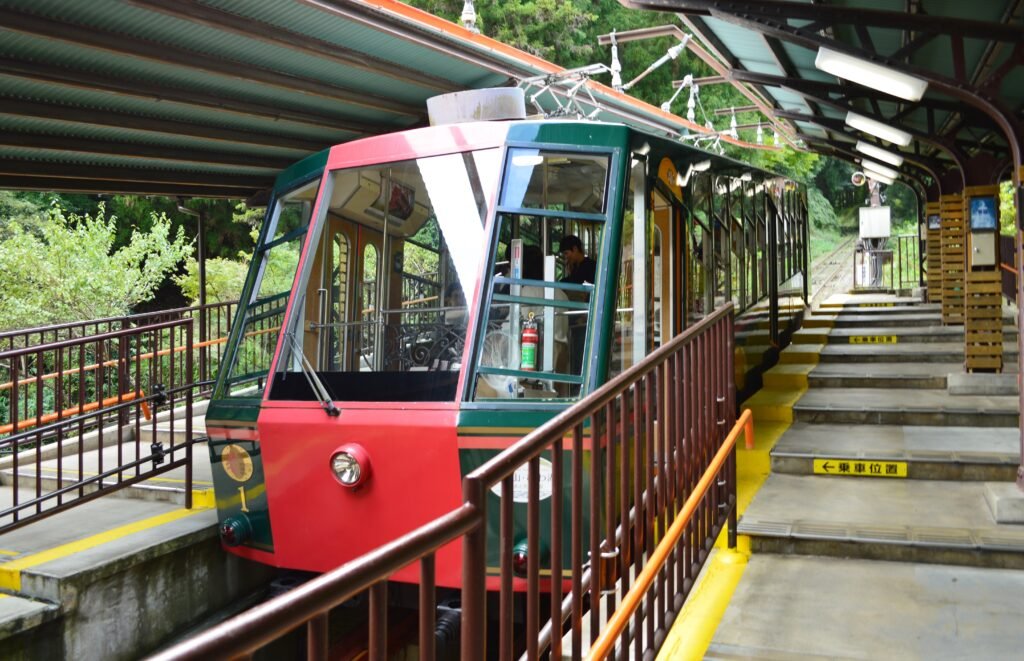
From the Shiga (Sakamoto) side. Take the JR Kosei Line from Kyoto Station to Hieizan-Sakamoto Station (about 15 minutes, roughly ¥320), then either walk about 15 minutes or catch a short bus to the cable car’s lower station. The Sakamoto Cable climbs for about 11 minutes and costs somewhere around ¥870 one-way or ¥1,660 round trip, arriving near the Todo precinct. This route runs year-round.
From the Kyoto (Eizan) side. From Demachiyanagi Station, the Eizan Main Line runs to Yase-Hieizan-guchi in about 15 minutes, where a combined cable car and ropeway (roughly 15–20 minutes total, around ¥1,000 one-way) carries you the rest of the way up. This route only operates from mid-March through early December, so it isn’t an option in the depths of winter.
By direct bus. Seasonal buses also run from Kyoto Station and Keihan Sanjo, taking about an hour for roughly ¥840, with a handful of departures a day, but these don’t run through the winter months either.
Which route makes more sense depends on the rest of your day: the Sakamoto side pairs naturally with Lake Biwa and the old town below the mountain, while the Eizan side is more direct if you’re starting from central Kyoto and traveling in season.
The Three Precincts
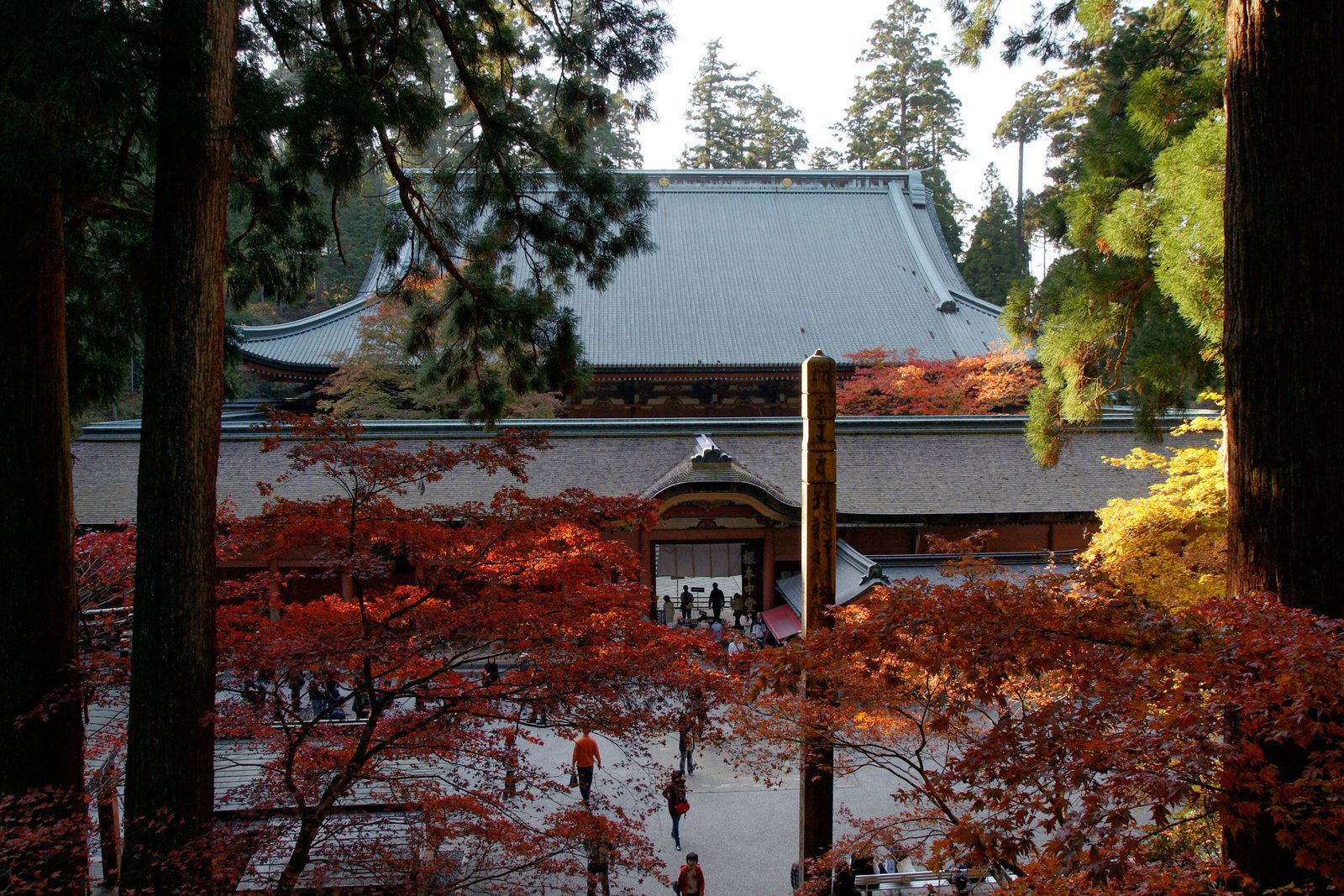
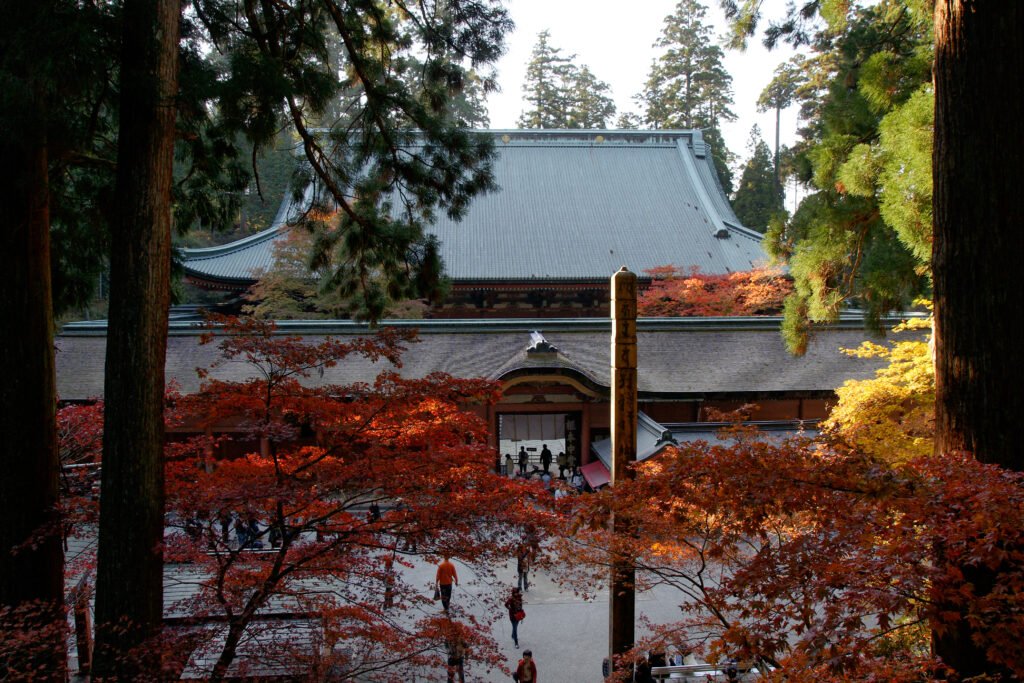
Todo (East Pagoda area). The original founding site and the main section most visitors see, home to the Konpon Chudo main hall and the Amida Hall, added in 1937. Both major cable car routes deliver you here, and it’s where most people spend the bulk of their time.
Saito (West Pagoda area). Connected to Todo by a pleasant roughly 20-minute walking trail through cedar forest, Saito holds founder Saicho’s mausoleum and the Shaka-do hall, the oldest building on the mountain.
Yokawa. Several kilometers further north again, Yokawa is the quietest of the three, rarely crowded even when Todo is busy, and notable for the Yokawa Chudo hall, built partly on a slope.
Getting Between the Precincts
Shuttle buses connect all three areas roughly every 30 minutes, with a one-way fare of around ¥700 between Todo and Yokawa, or a day pass for about ¥1,200 covering every stop. This service generally runs from spring through autumn and pauses in winter, roughly from early December to mid-March, when Saito and Yokawa become considerably harder to reach. If your time or the season is limited, seeing Todo alone is a reasonable half-visit; it holds the main hall and is what most people picture when they think of Enryaku-ji.
A Complicated History
Saicho founded Enryaku-ji in 788, choosing a mountain overlooking Kyoto specifically to keep some distance from the intrigue of the capital, and it grew into the headquarters of the Tendai school, at its peak home to a reported 3,000 sub-temples and thousands of monks. Its influence reached well beyond Tendai doctrine: several founders of Japan’s major Kamakura-era Buddhist movements, including Honen of Pure Land Buddhism, Shinran of Jodo Shinshu, Eisai of Rinzai Zen, Dogen of Soto Zen, and Nichiren, all trained on the mountain before founding their own schools elsewhere. Enryaku-ji also maintained an army of sohei, warrior monks, that made it a genuine military and political force, and in 1571 Oda Nobunaga responded by burning much of the complex to the ground. Nearly everything standing today was rebuilt afterward, mostly during the Edo period.
Before You Go
The Konpon Chudo main hall has been under restoration for several years, and work is expected to continue into the early 2030s, with parts of the interior closed through much of 2026 and 2027. The exterior and surrounding grounds remain viewable, but it’s worth checking current status before building an itinerary around seeing the hall’s interior specifically. Also worth knowing: the mountain runs noticeably cooler than central Kyoto and can turn foggy or rainy with little warning, so bring a layer even in summer, and wear shoes comfortable enough for walking between precincts.
Pairing It With the Rest of Your Trip
Enryaku-ji is a full excursion, similar in scale to Kyoto’s other half-day trips into the surrounding mountains, like the day trip to Kurama and Kifune. If you arrive via the Sakamoto side, the old lakeside town and its stone-walled temple lanes are worth an hour on their own, with Lake Biwa right there for a view. Since transit options and timing take some planning, our guide to Getting Around Kyoto is worth a look before you go, and our Best Time to Visit Kyoto rundown covers how the mountain’s weather and colors shift across the year. If you’re mapping this into a longer stay, see our 3 Days in Kyoto itinerary for how a trip like this can sit alongside the city’s more central sights.
Bottom Line
Enryaku-ji isn’t a quick stop between other sights; it’s a half-day trip built around a cable car ride and a mountain that shaped the course of Japanese Buddhism. If your schedule only allows for the big, famous, single-building temples, this one’s easy to skip. But if you’ve already covered Kyoto’s greatest hits and want somewhere with fewer crowds, real history, and a change in elevation and temperature, it’s one of the better half-day trips out of the city.