Shimogamo Shrine: A Practical Guide to Kyoto’s Ancient Forest Shrine
Most visitors who make it up to Demachiyanagi are headed for the train to Kurama or the Keihan platform toward Uji, and they walk straight past one of Kyoto’s oldest shrines without ever noticing it’s there. Shimogamo Shrine sits where the Kamo and Takano rivers meet, wrapped in a forest that’s been left alone since long before Kyoto existed — and unlike Fushimi Inari or Kiyomizu-dera, it rarely feels crowded even on a weekend.
The shrine itself predates the city. Along with its sister shrine Kamigamo further north, it was already an established religious site when the capital moved here in 794, and together the two Kamo shrines are the oldest Shinto sites within Kyoto, both inscribed as part of the UNESCO World Heritage listing for the Historic Monuments of Ancient Kyoto.
What makes it worth the detour isn’t only the shrine buildings — it’s the old-growth forest around them, a sub-shrine built around a very specific kind of wish, and a pond that gave its name to a dessert sold at festival stalls across Japan. Here’s how to actually see it.
The Essentials at a Glance
| What | Details |
|---|---|
| Admission (shrine grounds) | Free |
| Paid areas (Ohidono hall, Jingu-ji ruins & Treasure Museum) | ¥1,000 adults; free for junior high age and under |
| Hours | Grounds roughly 6:00 a.m.–5:00 p.m.; paid areas 10:00 a.m.–4:00 p.m. (last entry 3:30 p.m.) |
| From Kyoto Station | Keihan Main Line to Demachiyanagi, then a 10–12 minute walk through the forest |
| By bus | City Bus to the “Shimogamo Jinja-mae” stop, then 3–5 minutes on foot |
| Typical visit length | 45–90 minutes for the grounds and forest |
Getting There
Demachiyanagi Station is the easiest approach — it’s the northern terminus of the Keihan Main Line and also where the Eizan Railway departs for Kurama and Kifune, so if you’re combining Shimogamo with our day trip to Kurama and Kifune, this is a natural stop on the way out or the way back. From the station, the path runs north along the edge of the forest rather than along a street, which makes the walk feel shorter than it is, even in summer heat.
If you’re staying further out, the City Bus stop “Shimogamo Jinja-mae” is a few minutes’ walk from the shrine gate, and several routes from Kyoto Station stop there directly with no transfer. Cycling is popular too — the Kamo River path runs the whole way up from the station, and locals treat the ride to Shimogamo as an easy afternoon loop rather than a special outing.
Tadasu no Mori: Kyoto’s Last Old-Growth Forest
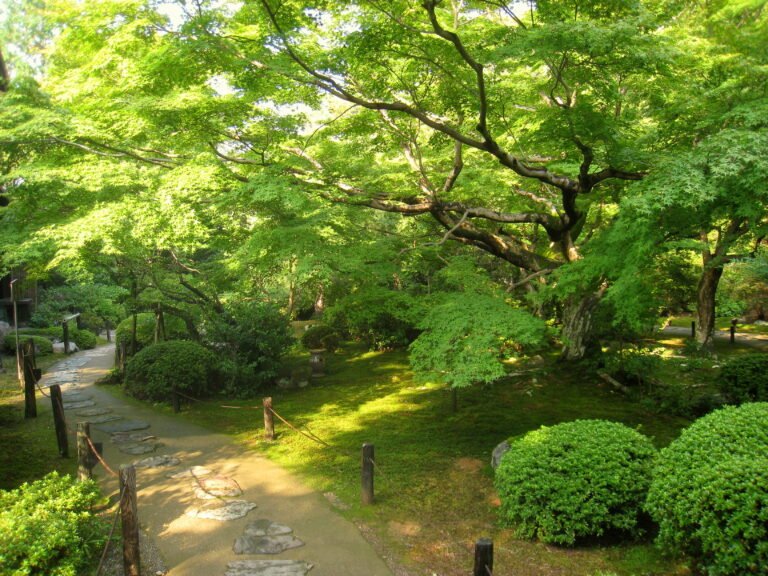
The forest surrounding the shrine, Tadasu no Mori, covers about 12 hectares — one of the only surviving fragments of the primeval woodland that once covered the entire Kyoto basin before the city was built. Some of the trees are 200 to 400 years old, and archaeological digs within the forest have turned up Jomon-period pottery and the remains of Yayoi-era dwellings, meaning people have been passing through this exact stretch of trees for several thousand years, not just since the shrine went up.
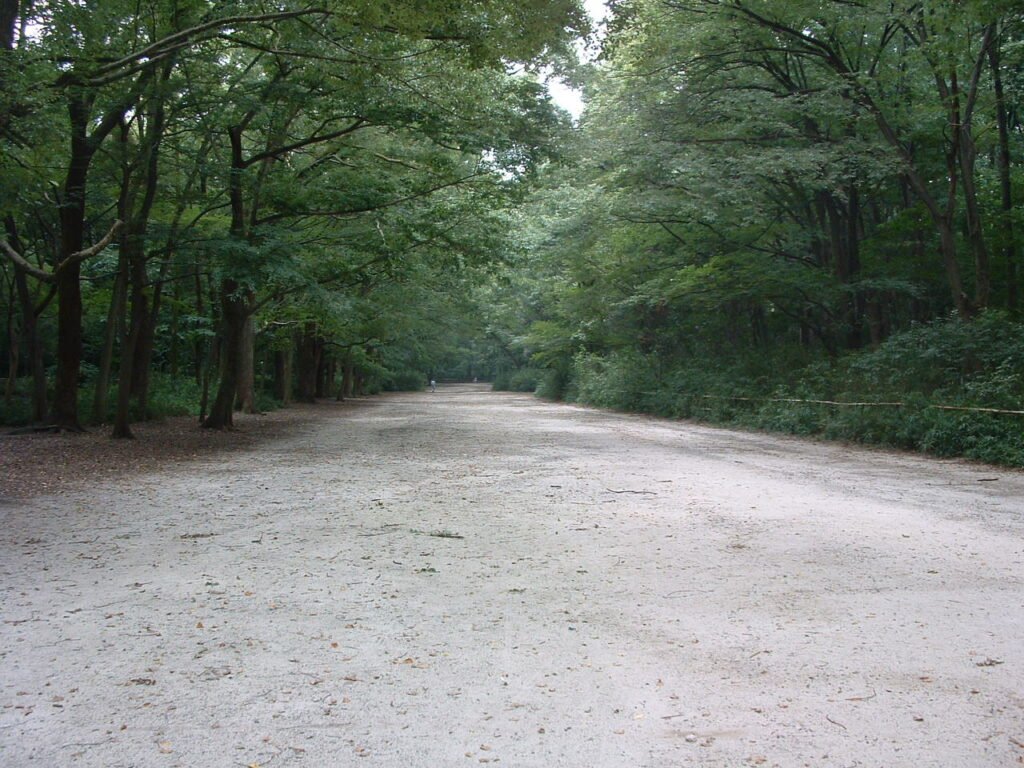
Two small rivers, the Izumigawa and the Semi-no-Ogawa, cut through the forest and cross the main approach path more than once, which is part of why it stays noticeably cooler here than on the streets nearby — a real temperature drop, not just shade. It’s a rare stretch of Kyoto where the walk to the shrine is as much the point as the shrine itself.
The Shrine Grounds and What You Can Actually See
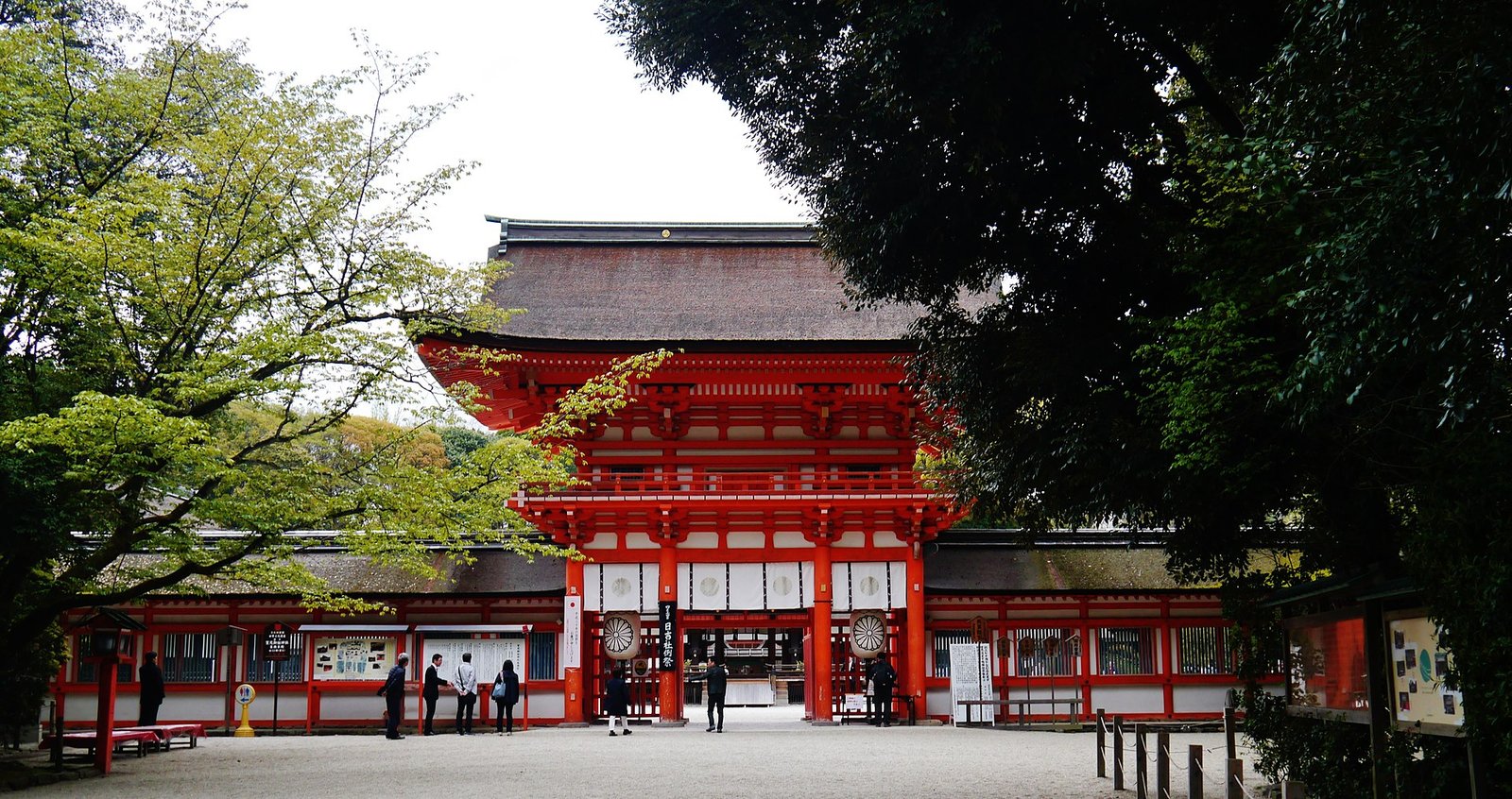
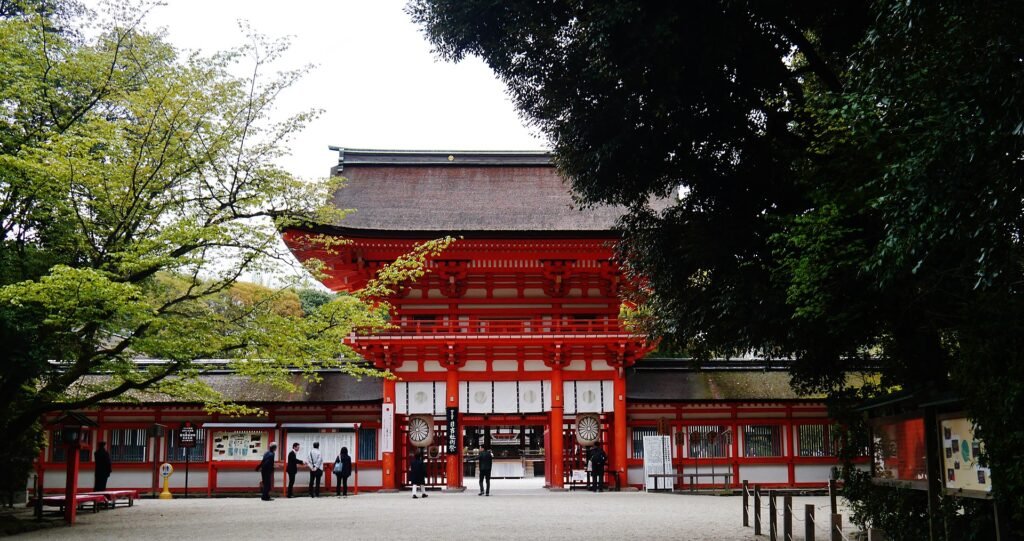
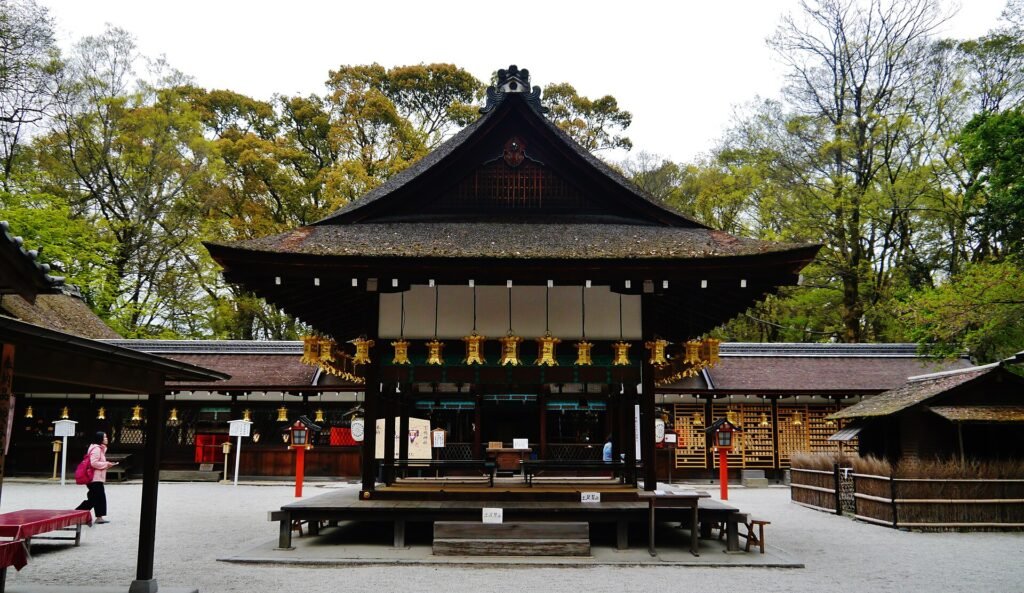
Shimogamo is dedicated to two deities, Tamayorihime and her father Kamo Taketsunumi, credited in local tradition with helping found and protect the city long before Kyoto existed. The forest path ends at the vermillion Romon gate, beyond which sit the Maidono dance hall and the two Honden main sanctuaries — both National Treasures, though like most Shinto honden they’re closed to public entry except for rare special openings. What you can see from the courtyard is still striking: the current buildings date to an 1863 rebuilding that followed the same design the shrine has used for over a thousand years, under the Shikinen Sengu tradition of periodic reconstruction that Shinto shrines have followed for centuries.
Paying for the Ohidono and Treasure Museum ticket adds a small garden and a look at ritual items and shrine treasures — worthwhile if you want more context, skippable if you’re short on time, since the free grounds and the forest are really the main event here.
Kawai Shrine and the Mirror Ema
Tucked at the southern edge of the forest, just off the main approach, Kawai Shrine is a small sub-shrine dedicated to Tamayorihime specifically in her role as a guardian of beauty. It’s known for hand-mirror-shaped ema — instead of writing a wish on a plain wooden plaque, visitors draw on or apply makeup to a printed face on the mirror-shaped board, then write a wish for inner and outer beauty on the back before hanging it up. The wall of finished ema, hundreds of individually decorated faces, is one of the more photographed corners of the shrine and easy to miss if you stick to the main path toward the Romon gate.
Mitarashi Dango, Right Where the Name Comes From
Mitarashi Pond, on the shrine grounds, is where mitarashi dango — the skewered rice dumplings glazed in sweet soy sauce and sold at festival stalls all over Japan — are said to have originated, with one version of the story holding that the dumplings were shaped to resemble bubbles rising from the pond during an imperial visit. You can get something close to the original at Kamo Mitarashi Chaya, a small shop near the shrine, or at Saruya, a rest stop inside the grounds that also serves matcha shaved ice and sweet red bean soup depending on the season.
When to Go: Aoi Matsuri and the Mitarashi Festival
Shimogamo is one of two shrines, along with Kamigamo, at the center of Aoi Matsuri on May 15, one of Kyoto’s three major festivals, when a procession in Heian-period court dress moves from the Imperial Palace through the city to both shrines. It’s one of the more elaborate Kyoto festivals and noticeably less crowded than our Gion Matsuri in July — worth planning around if your dates line up.
In midsummer, usually around the Day of the Ox in late July, the shrine holds the Mitarashi Festival: visitors wade barefoot into the cold water of Mitarashi Pond carrying a lit candle, praying for good health for the rest of the year, for a nominal offering of around ¥500. It’s a genuinely local event rather than a tourist spectacle, and one of the more memorable ways to experience the shrine outside its usual quiet routine. Outside of festival dates, Tadasu no Mori also hosts a periodic secondhand book and crafts market under the trees — worth checking the shrine’s own announcements if you’ll be in the area, since the schedule isn’t fixed. Our season-by-season guide covers how these dates stack up against cherry blossom and autumn leaf season if you’re planning a whole trip around them.
Bottom Line
Shimogamo rewards the short detour from Demachiyanagi more than almost anywhere else on this list — one of the last old-growth forests left in the city, a shrine older than Kyoto itself, a sub-shrine built around a very specific kind of wish, and the actual origin point of a dessert sold at every summer festival in Japan. Pair it with the Kurama and Kifune day trip if you’re already headed north on the Eizan line, or treat it as a calm, free morning on its own.