Chion-in: A Practical Guide to Kyoto’s Giant Temple Gate
Chion-in’s Sanmon gate is the largest wooden temple gate in Japan, and it announces the temple before you even reach the grounds — visible from well down the street in Higashiyama. The temple is the headquarters of the Jōdo-shū school of Buddhism, founded in 1234 on the site where the monk Hōnen spent his final years, and its scale reflects that status: a main hall large enough for thousands, a bell that takes seventeen monks to ring, and a hillside of connected halls behind it.
This guide covers the gate, the grounds, and how Chion-in fits into a Higashiyama day alongside Gion and Yasaka Shrine.
The Essentials at a Glance
| What | Details |
|---|---|
| Admission | Grounds and Sanmon gate area are free; the Yuzen-en and Hojo garden areas charge around ¥500 |
| Hours | 9:00–16:30 daily (last entry 16:00) |
| By bus | City Bus 206 to Chion-in-mae, a short walk uphill |
| On foot | About 5 minutes from Yasaka Shrine, 10–15 minutes from Gion |
| Typical visit length | 30–60 minutes for the grounds, longer with the gardens |
| Best for | Visitors who want to see the single largest wooden gate in the country up close |
The Sanmon Gate
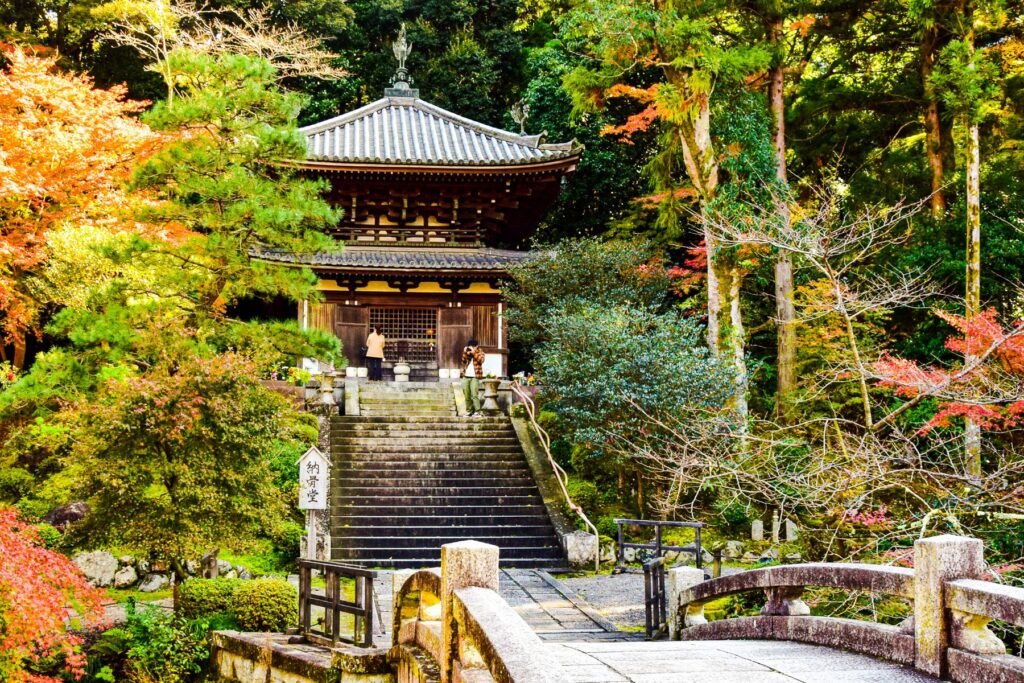
Built in 1619, the Sanmon stands about 24 meters tall and is the largest existing wooden temple gate in Japan. Visitors normally see it from ground level as they pass underneath on the way up to the main hall, which is free and requires no ticket — the gate alone is worth the stop even for a short visit.
A steep stone stairway behind the gate leads up to the main compound, which is the main physical effort involved in visiting.
The Main Halls
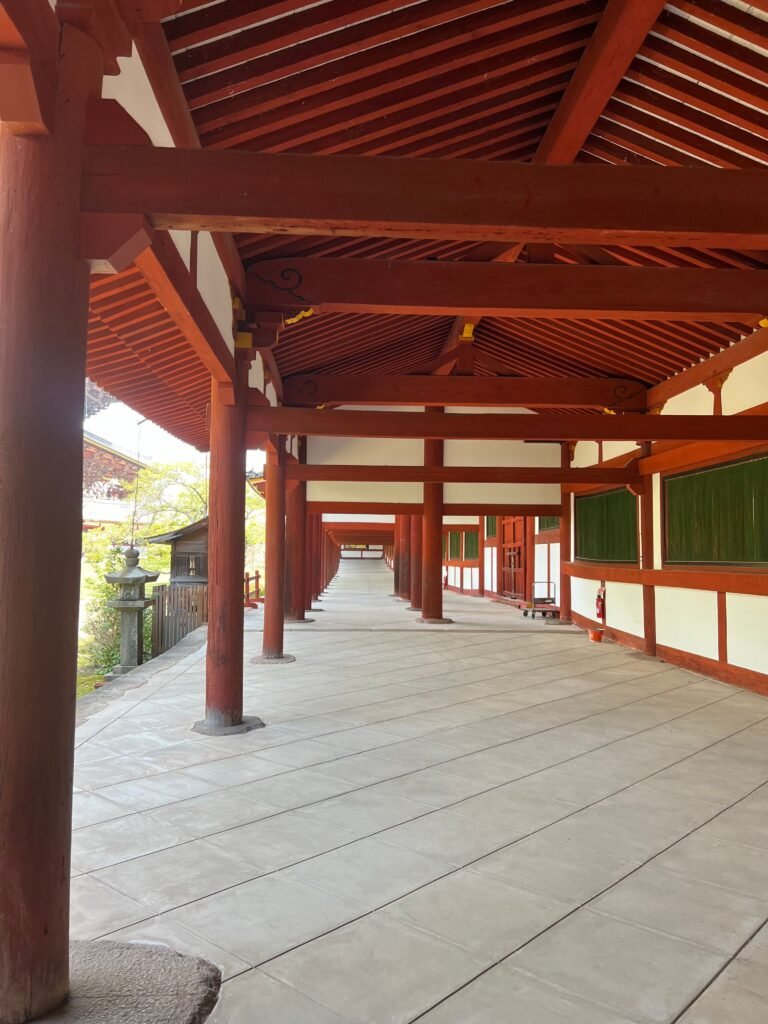
The Miei-do (founder’s hall) and Amida-do sit at the top of the stairs and are large enough to give a sense of the temple’s role as a head temple rather than a neighborhood one. Both halls are usually open to walk through in socks, and the connecting corridors include the temple’s famous ‘nightingale floors,’ which chirp underfoot as a built-in security measure against intruders.
Behind the main halls, the Hojo and Yuzen-en gardens (separate small admission) offer a quieter, more contained counterpart to the scale of the gate and halls out front.
The Giant Bell
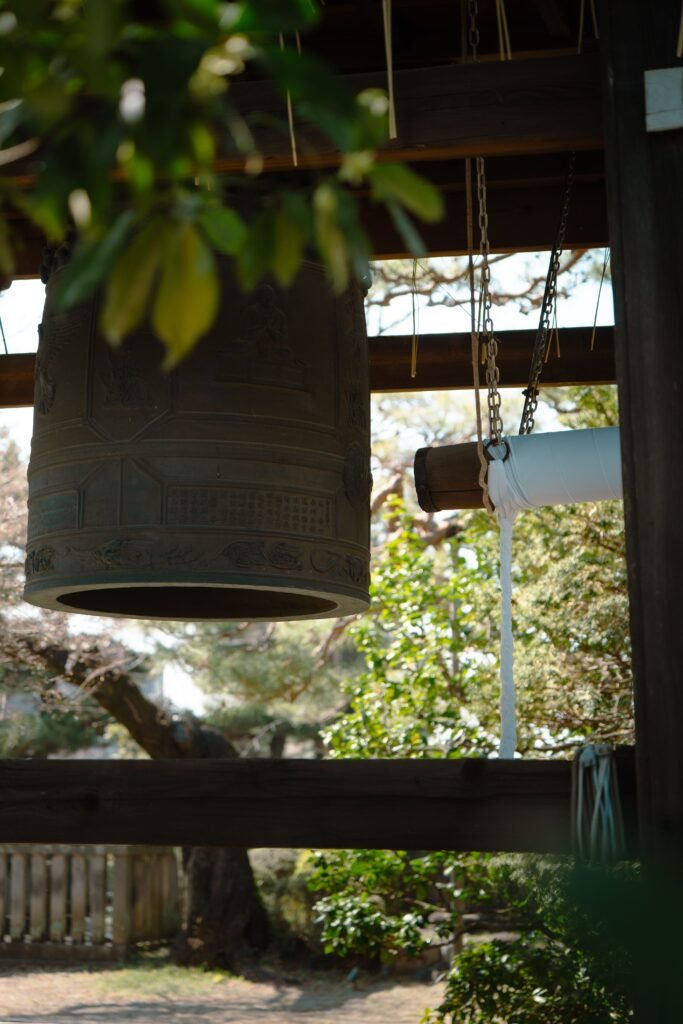
Cast in 1633, Chion-in’s bell is one of the largest in Japan, weighing around 70 tons. It is rung just twice a year — most famously on New Year’s Eve, when a team of seventeen monks pulls and pushes the log-shaped clapper together in a coordinated effort that draws crowds and broadcast cameras.
Nearby, If You Have More Time
Chion-in sits right at the edge of Higashiyama’s temple cluster — Yasaka Shrine is a five-minute walk away, and Gion and Kodai-ji are both close enough to combine into the same afternoon.
Where to Stay Nearby
Higashiyama and Gion are convenient bases for exactly this kind of temple-hopping. Our Kyoto neighborhood comparison guide covers how the area compares to the rest of the city.
Bottom Line
Chion-in is a five-minute detour that delivers an outsized payoff — the largest wooden gate in Japan, halls built at head-temple scale, and a bell most visitors only ever see rung on television. Pair it with Yasaka Shrine and Gion for a full Higashiyama afternoon.