Kyoto Botanical Garden: A Practical Guide to Japan’s Oldest Public Botanical Garden
Most Kyoto itineraries are built around temples, shrines, and the handful of streets everyone photographs, so a public garden with a few-hundred-yen admission fee can be an easy thing to skip. That’s a shame, because the Kyoto Botanical Garden, tucked along the Kamo River in the city’s north, is one of the only large green spaces here designed for an actual unhurried walk rather than a march toward a single famous view. It opened in 1924 as Japan’s first public botanical garden, and a century later it’s still doing the same basic job: wide paths, real shade, and tens of thousands of individual plants rather than one postcard shot. Here’s what’s actually there, and who it’s worth the detour for.
The Essentials at a Glance
| What | Details |
|---|---|
| Founded | 1924 — Japan’s first public botanical garden |
| Size | About 24 hectares (240,000 m²), with roughly 12,000 plant taxa on record |
| Garden hours | 9:00am–5:00pm daily (last entry 4:00pm) |
| Conservatory hours | 10:00am–4:00pm (last entry 3:30pm); occasionally closed for maintenance |
| Admission | Adults ¥500, seniors (65+) and senior-high students ¥250, free for younger children — treat this as a starting point and confirm at the gate, since pricing details aren’t always listed consistently |
| Closed | December 28 through January 4 |
| Nearest station | Kitayama Station (Exit 3), Karasuma subway line |
A Garden With a Complicated History
The garden’s early decades were fairly straightforward: it opened in the Taisho era as a research and display garden for Kyoto Prefecture, and it grew into one of the more serious plant collections in Japan, eventually holding somewhere around 12,000 species and well over 100,000 individual plants. The disruption came after the war. Allied occupation forces requisitioned the grounds in 1946 and used them as a garrison, and it took years of negotiation and rebuilding before the site was handed back and could reopen to the public again — a good portion of the original collection didn’t survive the interruption. What’s there now is largely the result of that postwar rebuilding rather than an unbroken century of continuous growth, which is worth knowing if the fairly mature, manicured look of some sections seems at odds with the “oldest in Japan” label.
What’s Actually Inside
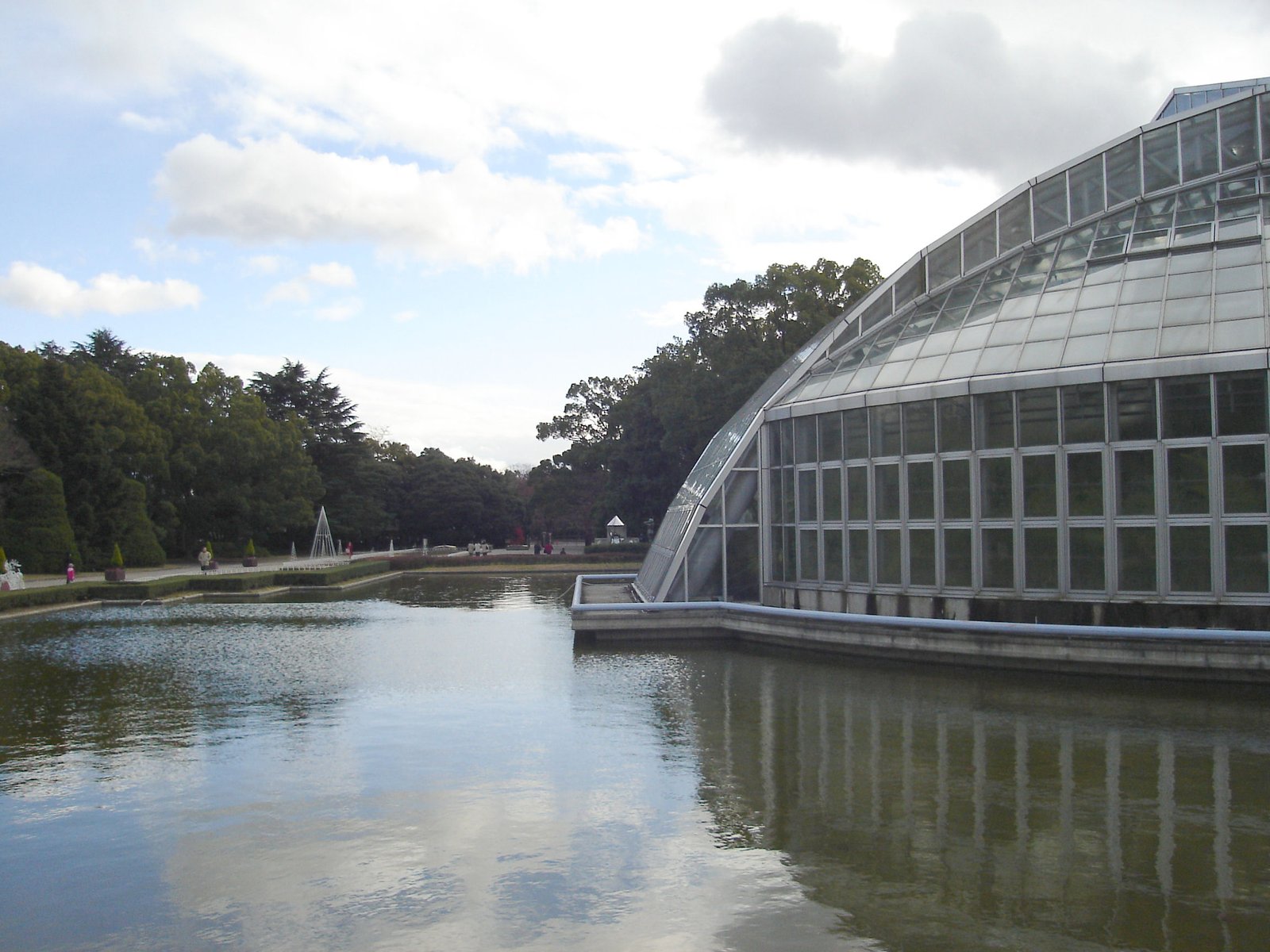
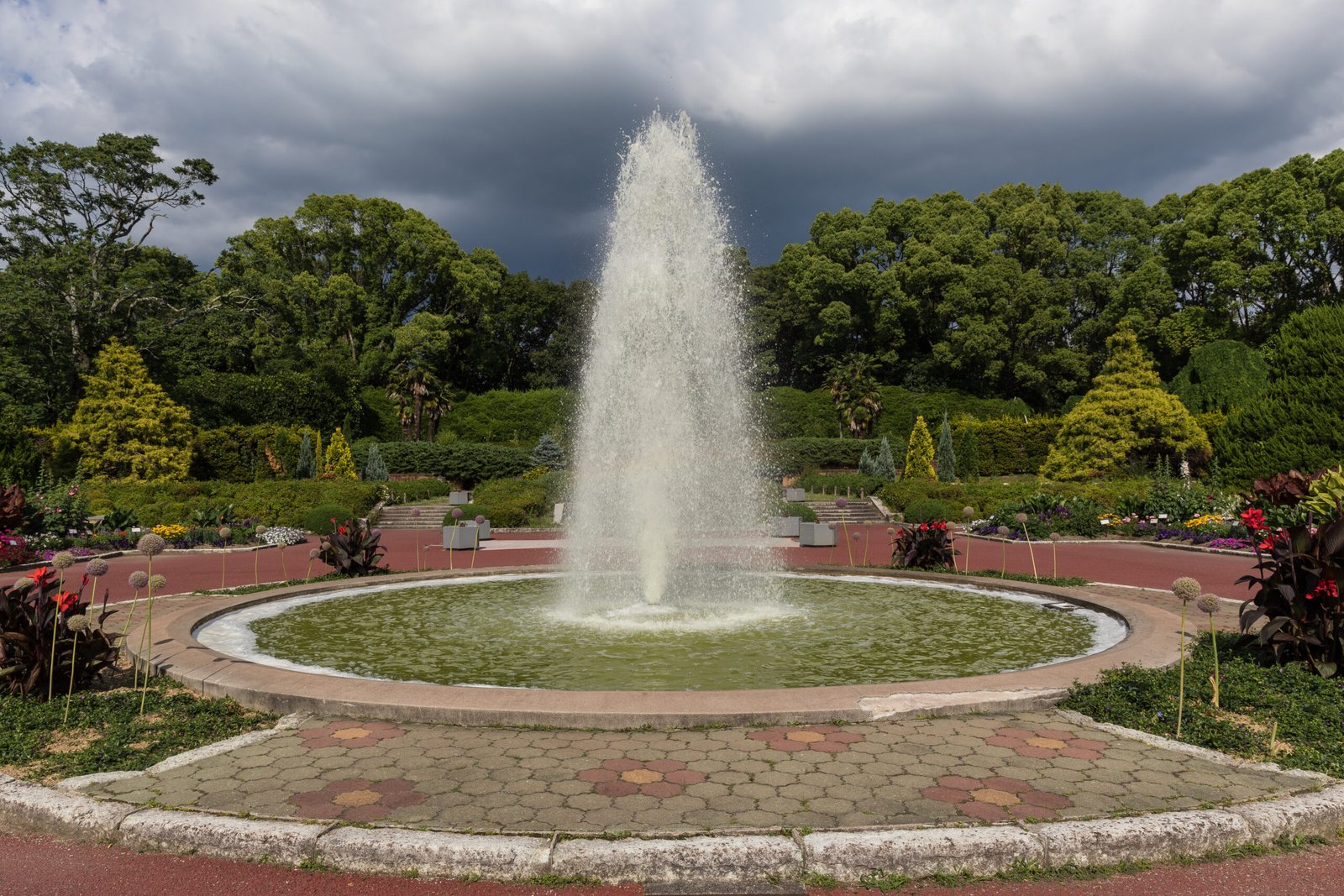
The conservatory is the obvious centerpiece on a rainy or cold day: a glass greenhouse of around 4,700 square meters, nearly 15 meters at its tallest point, divided into eight themed rooms that run from an orchid room and a bromeliad room to a dense “jungle zone” of tropical plants. It was built in 1992 and renovated again in 2013, and the design is a deliberate echo of Kinkaku-ji and the mountains that ring the city’s north — easy to miss unless someone points it out, but a nice detail once you know it. Outside, the layout spreads across a camphor-tree avenue, a dedicated cherry tree section with more than 450 trees including a well-known weeping cherry, a lotus pond, a peony garden, a bonsai display, and seasonal beds of Japanese iris. None of it is a single must-see landmark the way a temple garden can be — it’s closer to a long, varied walk where something is usually in bloom or in color depending on when you show up.
Autumn at the Garden
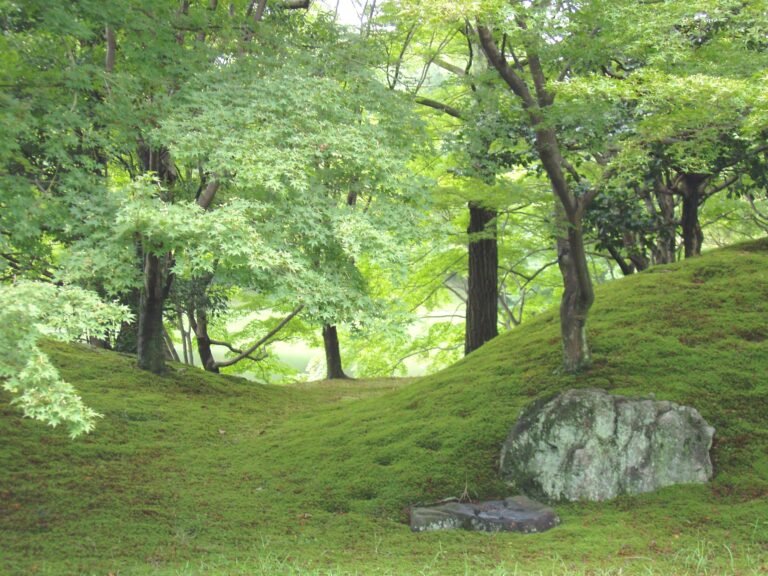
Spring gets most of the attention here thanks to the cherry trees, but autumn is the other strong season, when the deciduous trees scattered through the grounds — maples among them — start turning alongside the garden’s broader collection of trees and shrubs. It isn’t a single famous momiji view the way Eikando or Tofuku-ji are, so don’t expect a crowd of photographers lined up for one shot; it’s a quieter, more spread-out kind of color that rewards an actual walk rather than a five-minute stop. Because the garden isn’t on the usual temple circuit, it’s also a reasonable fallback on a day when Arashiyama or Higashiyama feel too crowded to enjoy — worth checking current bloom and color reports before you go, since timing shifts somewhat from year to year.
Good to Know Before You Go
A few practical notes. The garden is genuinely large — plan on an hour at minimum and two or three if you want to see the conservatory properly and sit for a while — so it pairs better with a slower day than a packed sightseeing itinerary. Parking is limited and the garden’s own guidance asks visitors to use public transport rather than drive, which lines up with how central the nearest subway stop already is. And because this is a working botanical and research garden rather than a pure tourist attraction, some sections may be closed for maintenance or special events on a given day without much advance notice — nothing that ruins a visit, but worth knowing if a specific display is the whole reason you came.
Pairing It With the Rest of Your Trip
The garden sits close enough to Shimogamo Shrine that the two make an easy half-day combination if you’re already in the city’s north — our guide to Shimogamo Shrine covers the ancient forest approach that pairs naturally with a quieter garden walk afterward. If you’re trying to fit koyo season into a broader autumn itinerary, our Kyoto Autumn Foliage guide has the fuller picture of how color moves through the city’s better-known spots over the following weeks. And since admission here is modest compared to most paid sights in the city, Kyoto on a Budget has more on where a stop like this fits into a realistic daily spend.
Getting There
The garden’s north and south gates are both a short walk from Kitayama Station on the Karasuma subway line (Exit 3) — easily the simplest way in from most parts of the city. From Keihan Demachiyanagi Station, Kyoto City Bus #1 or a Kyoto Bus bound for Shizuhara or Ichihara also gets you close, stopping at “Shokubutsuen-mae” about five minutes’ walk from the entrance. For the rest of the city’s buses, subways, and IC card basics, our Getting Around Kyoto guide covers what you’ll need for everywhere else on the itinerary.
Bottom Line
The Kyoto Botanical Garden isn’t going to replace a morning at Kinkaku-ji or an afternoon in Arashiyama, and it isn’t trying to. What it offers is a slower, cheaper, and far less crowded alternative on a day when the temple circuit feels like too much — a proper walk through Japan’s oldest public garden, with a greenhouse to retreat into if the weather turns. If that sounds like the kind of afternoon you want somewhere in a longer Kyoto trip, it’s an easy one to pencil in.