Hokan-ji: A Practical Guide to Kyoto’s Last Piece of a Vanished Temple
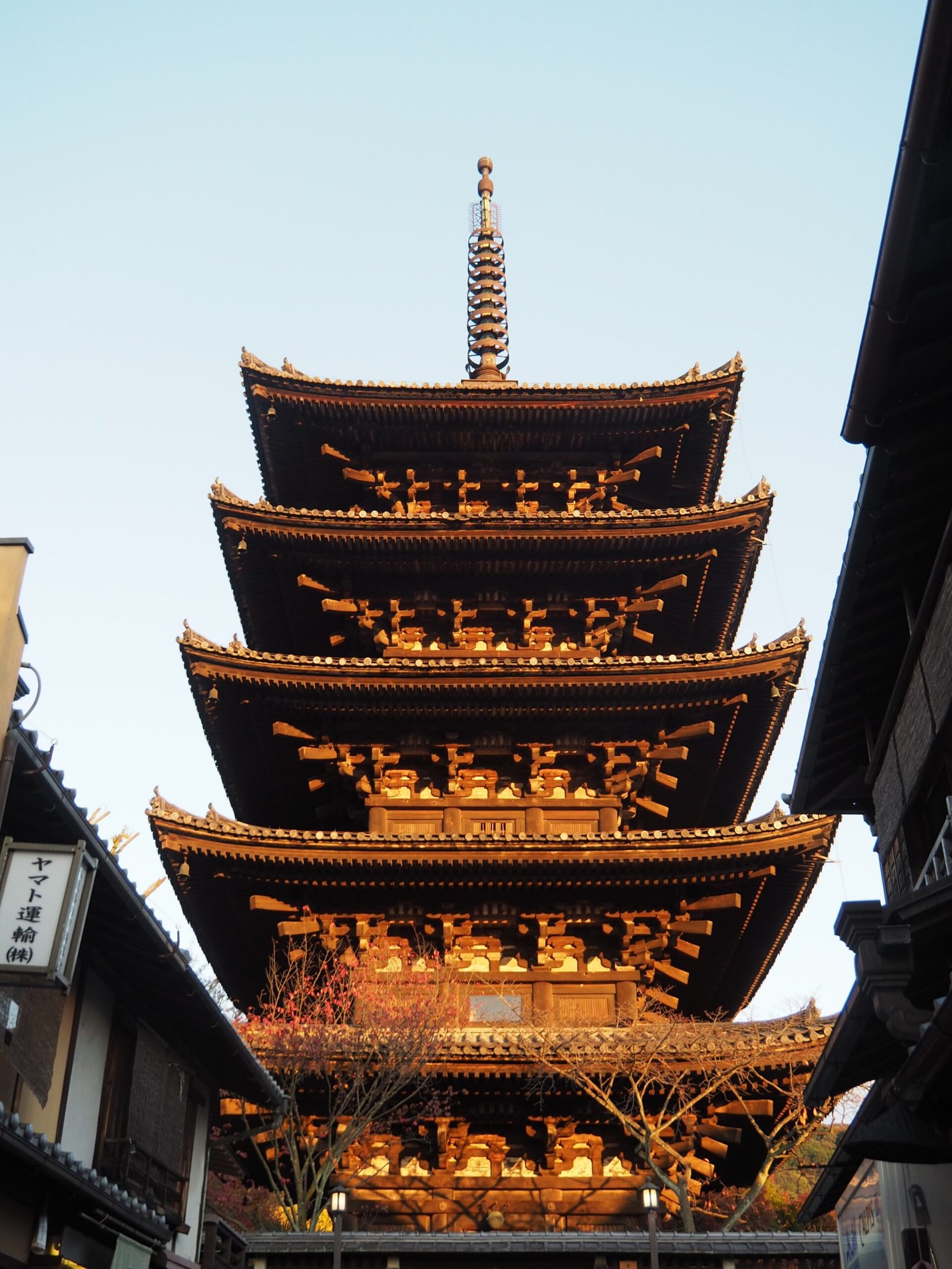
Walk up from Sannenzaka toward Kiyomizu-dera and at some point you’ll turn a corner and see it: a five-story pagoda rising directly out of a narrow street, close enough that it looks like it’s blocking traffic rather than sitting inside a temple courtyard. That’s Hokan-ji, though almost nobody calls it that — everyone just says Yasaka Pagoda, after the neighborhood around it. It’s one of the most photographed single buildings in Kyoto, and also one of the easiest to walk past without realizing there’s an actual temple attached, since the rest of Hokan-ji disappeared centuries ago and only the tower survived.
The Essentials at a Glance
| What | Details |
|---|---|
| Admission | ¥400 for the interior; viewing from the street is free |
| Hours | Roughly 10:00am–3:00 or 4:00pm when the interior is open — not every day, so check locally before counting on it |
| Interior access | Irregular; no fixed daily schedule, and children too young for elementary school aren’t admitted inside |
| Visit length | 15–20 minutes inside; the street view alone takes just a few minutes |
| Access | About a 5-minute walk from the Kiyomizu-michi bus stop (City Bus 100 or 206 from Kyoto Station) |
| Nearby | Kiyomizu-dera, Sannenzaka and Ninenzaka, Kodai-ji, and Gion are all within easy walking distance |
A Name Without a Temple
The pagoda’s own history is older and messier than its tidy street-corner presence suggests. Hokan-ji’s founding is usually traced to the seventh century, though which part of the seventh century depends on which account you read — temple tradition credits Prince Shotoku, while archaeological surveys of the site point to a slightly later date, somewhere around 678. What’s clearer is that the original temple complex was large enough to matter: it stood here for centuries as a working institution, not just a single tower.
That complex burned in 1179, during a territorial dispute between Gion Shrine (now Yasaka Shrine) and Kiyomizu-dera over who controlled this stretch of hillside — a reminder that medieval Kyoto’s big institutions didn’t always settle their disagreements peacefully. The shogun Minamoto no Yoritomo funded a reconstruction in 1191, and in 1240 the temple came under the authority of the nearby Zen temple Kennin-ji, which remains its official affiliation today. The pagoda standing here now, though, dates to a later rebuilding in 1440, after yet another fire — the same pattern of repeated destruction and patched-together survival that shows up in the history of half the famous buildings in this city.
Everything else from the original complex is gone. Fires, earthquakes, and the general wear of six centuries took the rest of it, and what’s left is the pagoda alone, standing in what’s now a fairly ordinary residential block rather than inside temple grounds in any obvious sense. It’s technically still Hokan-ji — the pagoda has a name, and so does the handful of square meters of land it occupies — but there’s no surrounding complex left to speak of, just the tower and the street.
Climbing Inside
On days when it’s open, ¥400 gets you up through the pagoda’s five levels, which is more generous access than most of Kyoto’s famous towers allow — a lot of pagodas in this city are sealed structures you can only look at from outside. Inside are a handful of Buddhist statues and some old paintings, along with wooden stairs steep enough that you’ll want both hands free. The real draw climbing up is the view out over the rooftops of Higashiyama, though the architecture and history displays on the lower levels are worth a slower look too if you’ve already paid to get in.
The catch is that the interior doesn’t keep a dependable daily schedule. It tends to open on weekends and holidays, roughly between 10am and mid-afternoon, but that pattern isn’t fixed enough to plan a trip around, and more than one visitor has shown up on an ordinary weekday to find the doors closed. Children too young for elementary school aren’t admitted inside regardless of when you go. If getting inside matters to you, it’s worth a quick search for recent visitor reports before you head over, or simply treating an open door as a pleasant surprise rather than the reason for the trip.
The View Everyone Comes For
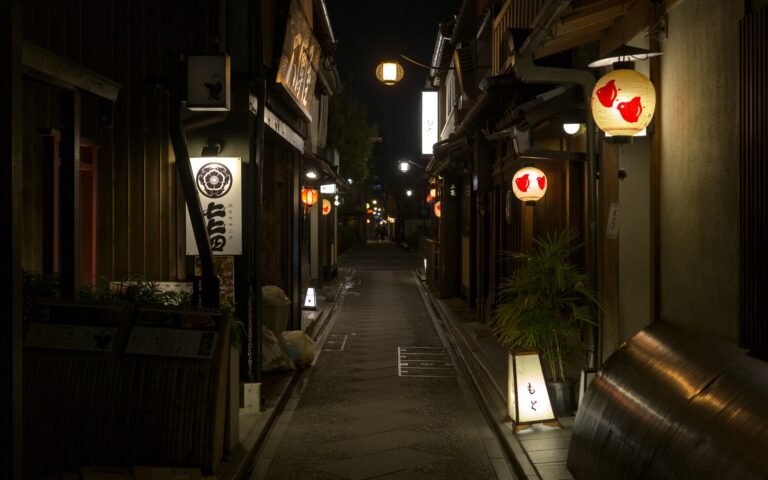
Realistically, most people who stop at Hokan-ji never go inside at all — they come for the view up Yasaka-dori, the narrow lane that frames the pagoda almost perfectly if you stand at the right spot near the top of the street. There are no overhead power lines in this particular stretch, which is rarer than it sounds in Kyoto and a big part of why this specific angle became so iconic. It photographs well at almost any hour, but it’s a genuinely different experience depending on when you show up.
Midday, especially on weekends, means sharing the street with a steady stream of other visitors doing the exact same thing you are, cameras out, waiting for a gap in foot traffic. Early morning — right around sunrise, before the shops along the street open — is close to empty, and it’s worth the early alarm if a quiet photo matters to you. The pagoda is also lit after dark, which gives the whole scene a softer, warmer look than the daytime version. Cherry blossom season is the one stretch of the year to actively plan around rather than toward; the crowds here get heavy enough in late March and early April that the quiet version of this street mostly disappears for a few weeks.

Getting There
Hokan-ji sits in the thick of Higashiyama’s temple district, an easy stop to combine with almost anything else in the area. From Kyoto Station, City Bus 100 or 206 gets you to the Kiyomizu-michi stop in about 10–15 minutes depending on traffic, and the pagoda is a five-minute walk from there, down toward Yasaka-dori from the bottom of the Ninenzaka and Sannenzaka slopes. If you’re coming on foot from Gion or Kodai-ji, it’s a straightforward 10-minute walk, and there’s no need to backtrack to a train station to reach it — this is one of those spots that works best as a stop along a longer walk rather than a dedicated trip of its own.
Pairing Hokan-ji With Nearby Sights
Hokan-ji is almost always visited as part of something bigger rather than on its own, and the geography makes that easy. It sits right along the route covered in our One Day in Higashiyama walking itinerary, between the Sannenzaka and Ninenzaka slopes and Kodai-ji, so if you’re already working through that stretch of the city, the pagoda is barely a detour. Kiyomizu-dera is a short uphill walk away, and Gion is close enough on the other side that you can treat Hokan-ji as the midpoint of a longer Higashiyama afternoon rather than a separate errand.
Bottom Line
Hokan-ji doesn’t need you to go inside to be worth the stop — the pagoda rising out of Yasaka-dori is one of the few views in Kyoto that looks almost exactly like its photographs, and it costs nothing to stand at the top of the street and see it for yourself. If the interior happens to be open when you pass by, ¥400 and the climb up are a reasonable bonus; if it’s not, you haven’t really missed the point of the visit.