Konkai Komyo-ji: A Practical Guide to Kyoto’s Kurodani Hilltop Temple
Ask a Kyoto local about “Kurodani” and they will usually point you up a hillside a few minutes’ walk from Shinnyodo and the northern stretch of the Philosopher’s Path, rather than toward anything on a typical tourist map. That is Konkai Komyo-ji, the formal name for a temple most people in the neighborhood just call Kurodani-san. It is the spot where the monk Honen settled in 1175 after leaving Mount Hiei and began teaching the form of Pure Land Buddhism that would eventually spread across Japan, and today it combines that genuinely important slice of religious history with a three-story pagoda, a hilltop graveyard with 19th-century history of its own, and a pace noticeably calmer than its more famous neighbors a short walk away.
The Essentials at a Glance
| What | Details |
|---|---|
| Hours | 9:00 a.m.–4:00 p.m. daily, no regular closing days |
| Admission | Grounds and pagoda exterior: free; the inner hall and garden open only for limited seasonal viewings (mainly autumn), with a separate fee that has varied by year, roughly ¥500 to ¥1,500 depending on what’s open |
| Access | Kyoto City Bus (routes such as 32, 93, 100, 203, or 204) to Okazaki-jinja-mae, then about a 5-minute walk uphill |
| Visit length | 45 minutes to an hour for the main grounds |
| Best time | Late November for foliage; any season for the quiet hilltop views |
| Known for | Honen’s founding site, a three-story pagoda, and a graveyard tied to the Boshin War |
Where Pure Land Buddhism Got Its Start in Kyoto
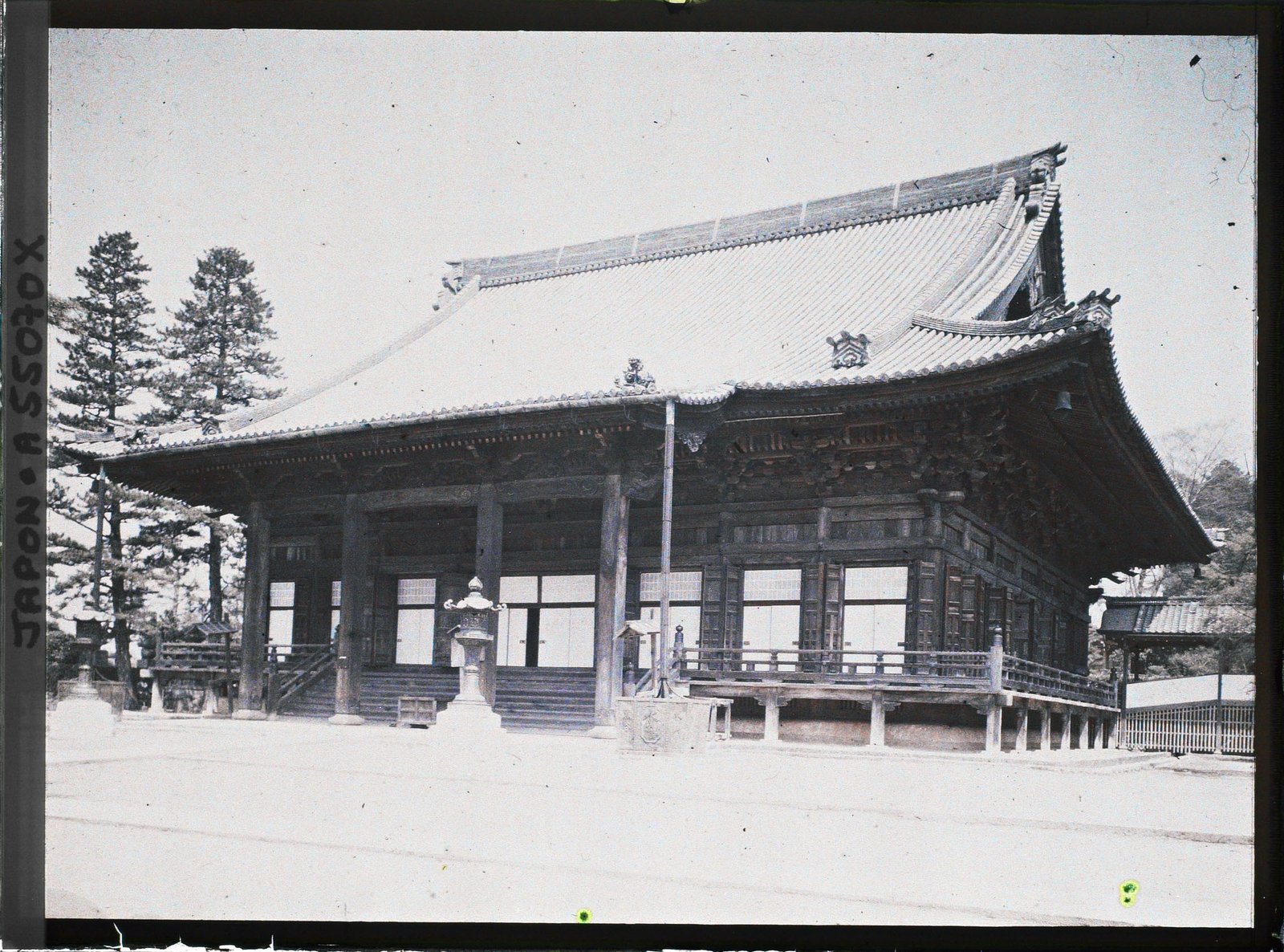
Konkai Komyo-ji traces its founding to 1175, when Honen left Enryaku-ji on Mount Hiei and settled on this hillside to teach that reciting the nembutsu, the simple invocation of Amida Buddha’s name, was enough for ordinary people to reach salvation, without needing years of monastic training. That was a genuinely radical idea for the time, and this hillside is traditionally regarded as the place where he first taught it in Kyoto, which is part of why the temple later grew into one of the Jodo sect’s major head temples. The buildings standing today are not original: the temple was damaged repeatedly during the Onin War in the 15th century, and a fire in 1934 destroyed much of what had been rebuilt since, with the current halls dating mostly from a 1942 reconstruction. What survived that string of setbacks is less the architecture than the temple’s standing as one of the places most closely tied to Honen’s own teaching career.
A Three-Story Pagoda and a Hilltop View
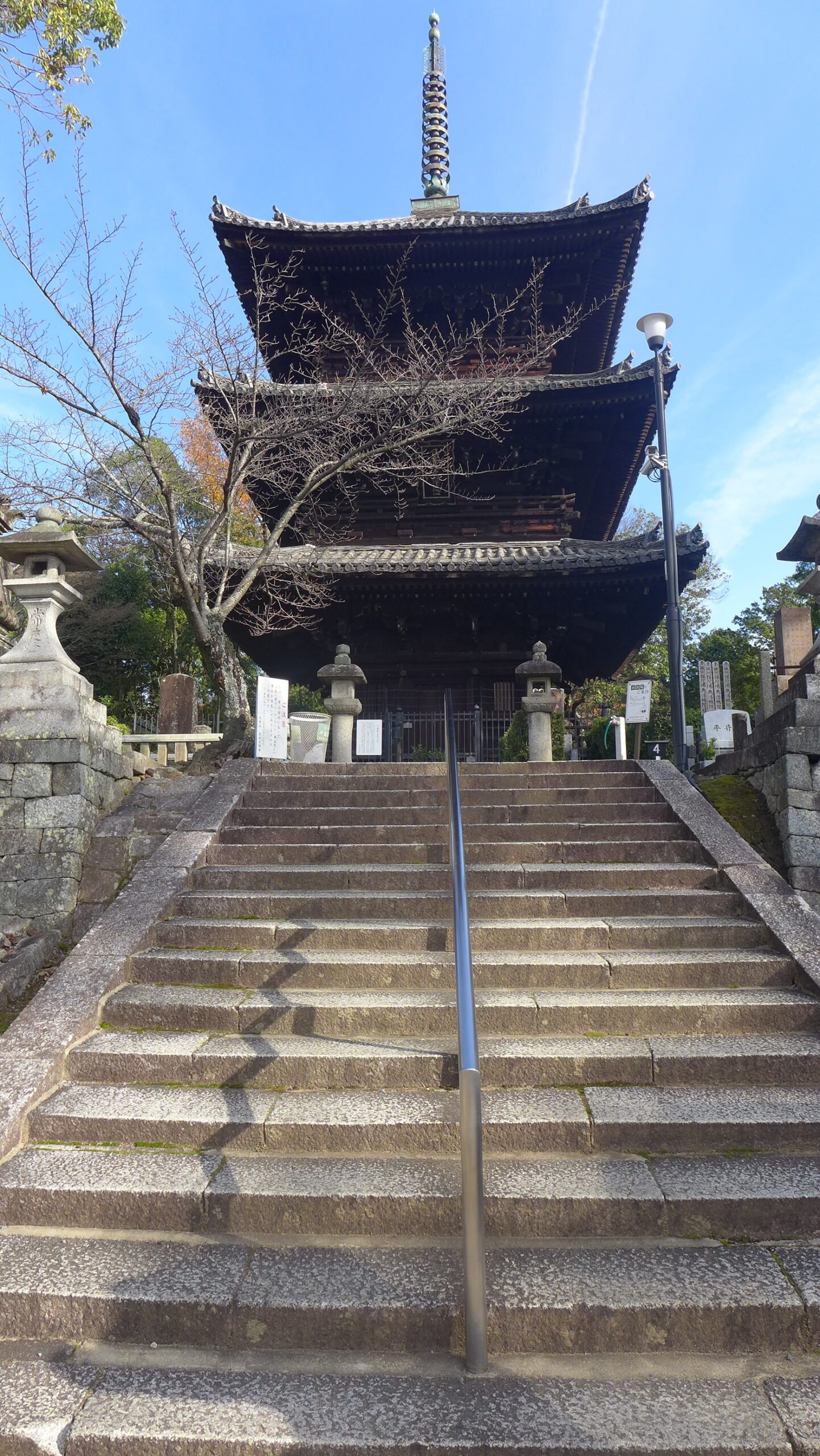
The most photogenic thing on the grounds is the three-story pagoda near the top of the hill, built to house images of Monju Bodhisattva attributed to the Kamakura-era sculptor Unkei. You can view it from several angles without paying any admission, since the outer grounds are free to walk, and the climb up from the main gate is gentle enough that it does not feel like a hike. From up near the pagoda and the adjoining cemetery, the view opens out over the rooftops of Okazaki and the wooded hills of northern Higashiyama, and on a clear day it is one of the better free viewpoints in this part of the city, with a fraction of the visitors you would find at a paid observation deck elsewhere.
A Graveyard With 19th-Century History
Walk through the cemetery behind the main hall and you will come across the graves of Aizu and Kuwana domain soldiers killed in the Battle of Toba-Fushimi in January 1868, the opening clash of the Boshin War that ended the Tokugawa shogunate. It is an unexpected thing to find at a temple better known for a 12th-century Buddhist teacher, but it reflects how much Kurodani’s hillside location mattered in the final years of samurai-era Kyoto, when the city’s outlying temples were pressed into service as strongpoints and staging areas during the political upheaval of the 1860s. The graves are simple and largely unmarked for casual visitors, more a quiet historical footnote than an attraction in their own right, but they are worth pausing at if you are the kind of traveler who likes finding the less obvious layers of a place.
The Buddha With the Unusual Hairstyle
Inside the Amidado hall sits a statue known as Goko Shiyui Amidabutsu, carved with a mound of tightly curled hair that visitors sometimes describe, not unreasonably, as looking like an afro. It represents Amida Buddha during an extended period of meditation so long that his hair is said to have grown out into that shape, and it is one of fewer than twenty such statues known to exist in Japan, dating from the middle of the Edo period. It is not the kind of thing you would necessarily seek out on its own, but it is a memorable detail for a temple that otherwise presents itself fairly plainly, and it tends to be the one thing visitors mention afterward when they describe the place to friends.
When to Go and How to Pair It
Kurodani sits close enough to two other quiet northern Higashiyama temples that the three make a natural loop. It is a short walk from Shinnyodo, connected by a path through the woods that avoids the main road entirely, and both are an easy detour from the Philosopher’s Path if you do not mind adding fifteen or twenty minutes for the uphill stretch. If you are visiting for the autumn colors, Eikan-do is another reasonable stop on the same afternoon, though its maples draw a much bigger crowd than Kurodani’s. For the wider picture on timing a Kyoto trip around the leaves, our Kyoto Autumn Foliage guide covers the citywide koyo season in more depth. None of these three temples takes long on its own, so pairing them into one loop is usually the most efficient way to see all three without feeling rushed at any of them.
Practical Tips
Wear shoes that are easy to slip off if you plan to enter the main hall, since the interior is tatami like most temple halls in Kyoto. The paths up to the pagoda and cemetery are gravel and gently sloped rather than paved, which is worth knowing if you are visiting after rain or with limited mobility. Because Kurodani is off the main tourist route, there is no English signage at every turn, so it helps to have a map or a pin dropped in advance if you want to be sure you find the pagoda and cemetery rather than only seeing the main hall. There is no real crowd to plan around here at any time of year, which is a rare thing to be able to say about a temple this close to central Kyoto.
Bottom Line
Kurodani is not going to out-draw Ginkaku-ji or Nanzen-ji for anyone’s must-see list, and that is more or less the appeal: a genuine piece of Honen’s own story, a pagoda you can view for free, a hilltop view most visitors never see, and a graveyard that quietly holds a slice of 1860s history. If you are already tracing a route between Shinnyodo and the Philosopher’s Path, the extra time it takes to climb up here is easy to justify.