Nishi Hongan-ji and Higashi Hongan-ji: A Practical Guide to Kyoto’s Twin Head Temples
Walk ten minutes north from Kyoto Station in almost any direction and you’ll run into one of two enormous temple complexes — both free to enter, both older than most of what visitors queue for elsewhere in the city, and both routinely walked past by travelers rushing to catch a bus or a bullet train.
They aren’t two unrelated temples that happen to share part of a name. Higashi Hongan-ji exists because of a deliberate political split: Toyotomi Hideyoshi granted the land for Nishi Hongan-ji in 1591, and eleven years later Tokugawa Ieyasu backed a rival successor and funded a second, competing head temple just down the road — dividing Jodo Shinshu Buddhism’s largest sect in two and weakening an organization he saw as a threat, a classic bit of Edo-period divide-and-rule that still shapes this corner of Kyoto’s map.
Here’s what each temple actually has to see, what’s free versus paid, and how to fit both into a short stop before or after a train.
The Essentials at a Glance
| What | Details |
|---|---|
| Nishi Hongan-ji hours | 5:30 a.m.–5:00 p.m., year-round |
| Higashi Hongan-ji hours | 5:50 a.m.–5:30 p.m. (Mar–Oct); 6:20 a.m.–4:30 p.m. (Nov–Feb) |
| Admission, both main temples | Free |
| Shosei-en Garden (Higashi Hongan-ji’s detached garden) | ¥700 suggested donation; 9:00 a.m.–5:00 p.m. (4:00 p.m. Nov–Feb) |
| From Kyoto Station | 10–15 minute walk north to either temple |
| Typical visit length | 45–75 minutes for both temples together |
Getting There
Both temples sit within a few minutes’ walk of each other, 10–15 minutes north of Kyoto Station’s Karasuma central exit — close enough to see both without a train or bus. If you’re arriving or departing by train, they’re an easy stop to fold into that trip; Toji Temple, a short walk south of the station instead, pairs naturally if you have time for a loop on either side.
Nishi Hongan-ji: The West Temple
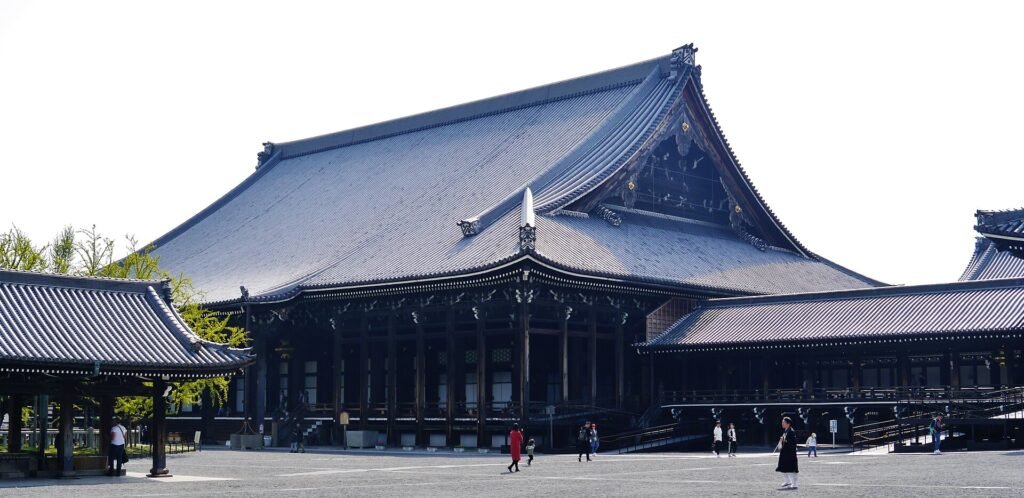
Founded in 1591, Nishi Hongan-ji is the headquarters of the Hongan-ji-ha branch of Jodo Shinshu Buddhism, with more than 10,000 subtemples across Japan — one of the largest single religious organizations in the country. The Goeido Hall, dedicated to the sect’s founder Shinran, and the neighboring Amidado Hall, dedicated to Amida Buddha, are both open to walk through for free, and both hold artwork from the Azuchi-Momoyama and early Edo periods.
It’s the only one of the two temples with UNESCO World Heritage status, listed as part of the Historic Monuments of Ancient Kyoto. Somewhere on the grounds, though rarely open to visitors, is the Hiunkaku Pavilion — considered one of Kyoto’s three great historical pavilions alongside Kinkaku-ji and Ginkaku-ji, but shown only during occasional special openings, so don’t plan a visit around seeing it.
Higashi Hongan-ji: The East Temple
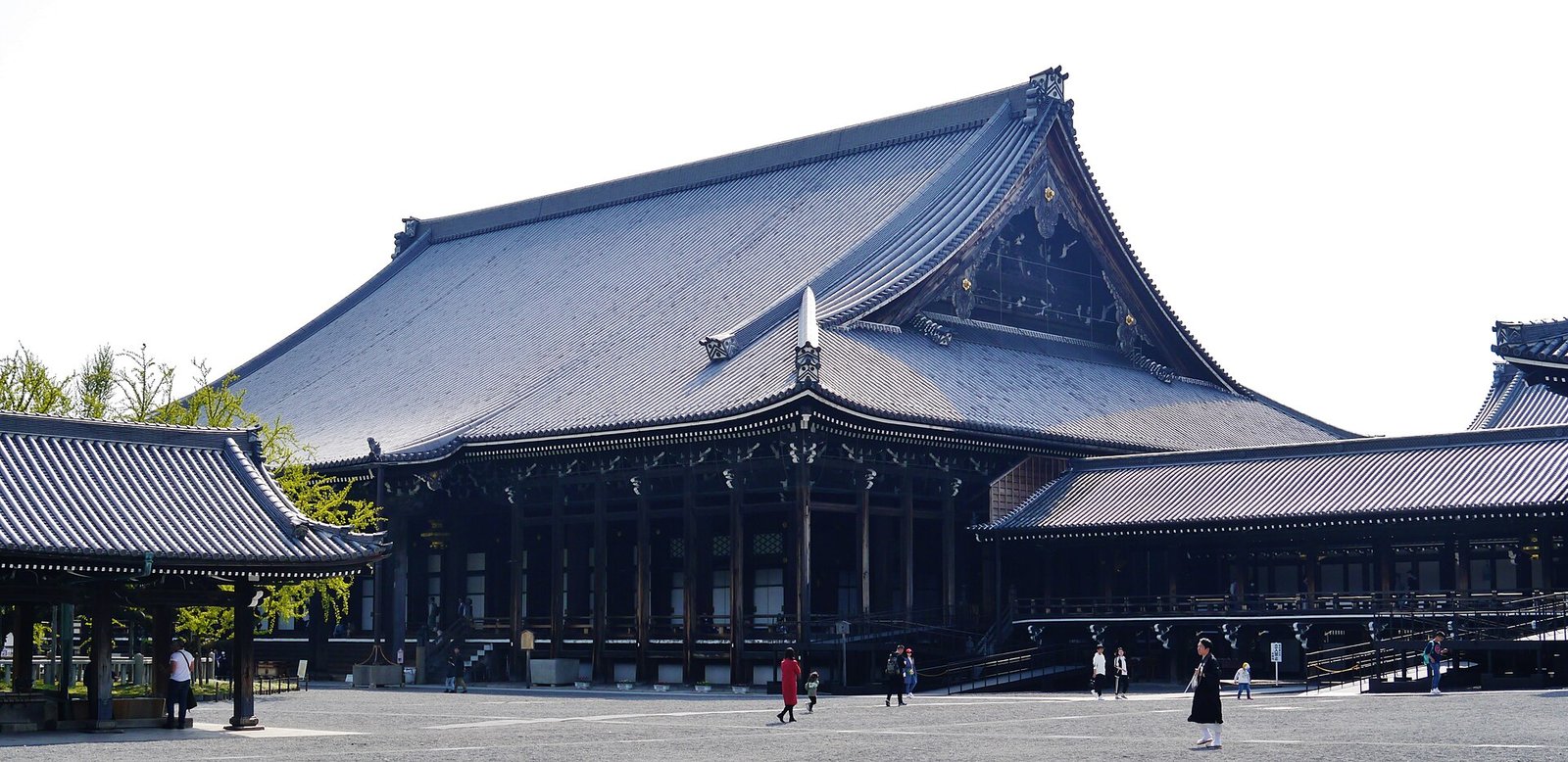
Higashi Hongan-ji was established in 1602 as head temple of the rival Otani-ha branch. Its Goeido Hall is Kyoto’s single largest wooden structure, a title it holds after being rebuilt several times following major fires — the current buildings date to the 1890s. Near the entrance, the temple displays one of the giant ropes used to haul timber during that reconstruction, woven partly from hair donated by female worshippers after ordinary rope proved too weak for the job.
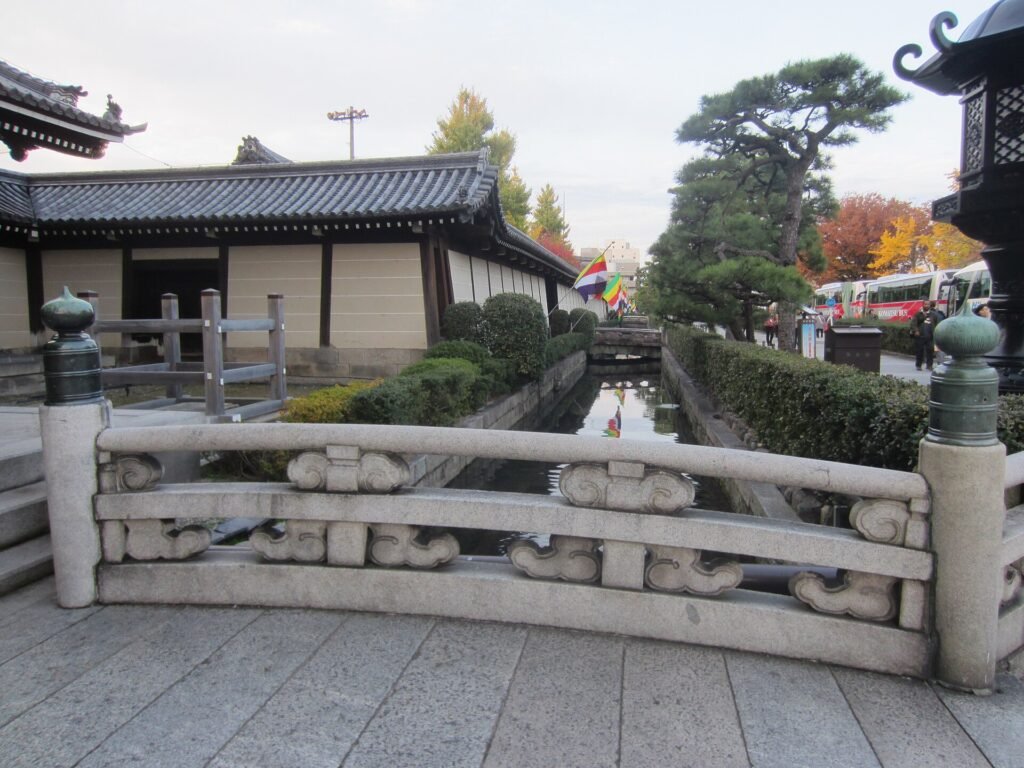
Like Nishi Hongan-ji, entry is free, and the scale of the halls — walk in and the ceiling alone makes the point — is worth the stop even if you don’t linger. Hours run 5:50 a.m. to 5:30 p.m. from March through October and 6:20 a.m. to 4:30 p.m. the rest of the year.
Shosei-en: The Garden Most Visitors Skip
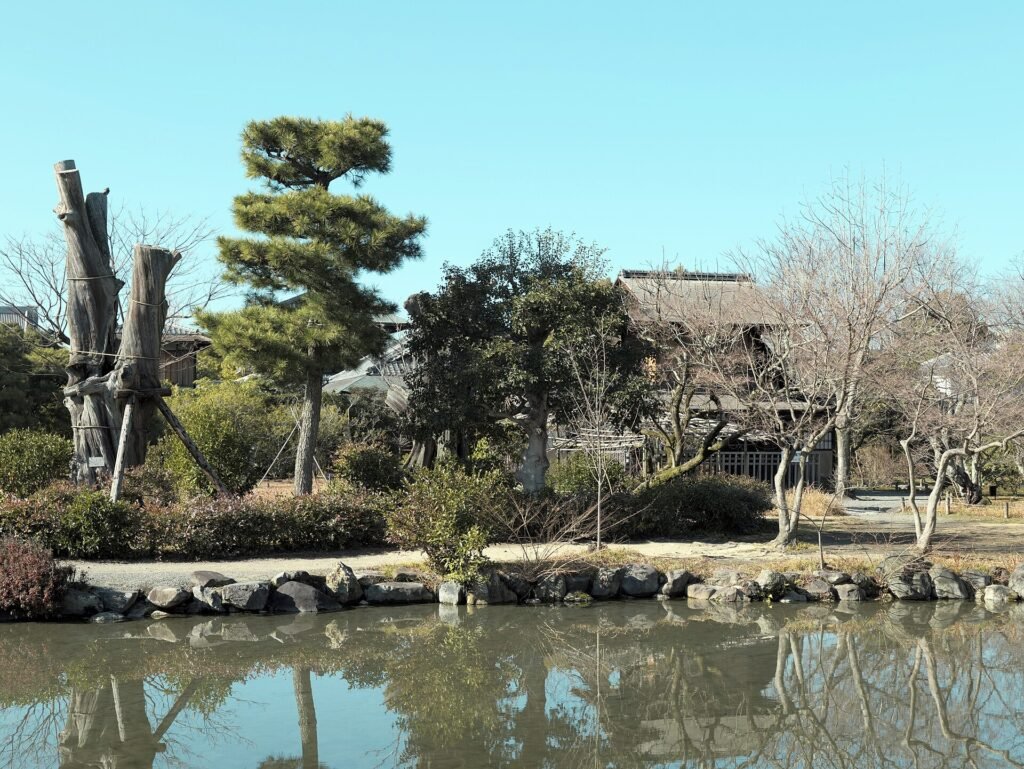
A few minutes’ walk from Higashi Hongan-ji, Shosei-en is the temple’s detached garden — a pond-centered strolling garden that’s considerably quieter than either main temple, especially useful if you want a slower fifteen minutes after two big halls. It asks for a ¥700 suggested donation, is open 9:00 a.m. to 5:00 p.m. (4:00 p.m. from November through February), and is one of the better spots downtown for autumn color without the crowds of Kyoto’s better-known maple temples.
Bottom Line
These two temples are among the easiest worthwhile stops in Kyoto to reach — free, close to the station, and rarely crowded compared to the city’s paid sights. Combine them with Toji Temple south of the station for a half-day loop, or just treat them as a free way to fill the gap before a train, covered in more depth in our guide to Kyoto on a budget.