A Day Trip to Nara: A Practical Guide to Todai-ji and Kyoto’s Favorite Deer Park
Nara sits less than an hour from Kyoto Station, has one of the largest bronze Buddhas in the world, and is home to over a thousand deer that roam free through a public park and bow for crackers — and it still gets a fraction of the day-trip traffic that Arashiyama or Uji pull in.
That’s partly geography and partly familiarity: most first-time visitors have heard of Fushimi Inari’s torii gates or Kinkaku-ji’s gold, fewer have heard of Todai-ji’s Great Buddha Hall, even though Nara was Japan’s first permanent capital, from 710 to 784, and its major temples predate almost everything else on this list by several centuries.
Here’s how to get there, what everything actually costs, and how to fit Todai-ji, the deer park, Kasuga Taisha, and Kofuku-ji into a single comfortable day.
The Essentials at a Glance
| What | Details |
|---|---|
| Round-trip from Kyoto | JR Nara Line rapid train, 45 min each way, ¥720 one-way; or Kintetsu Limited Express, 35 min, ¥1,280 one-way |
| Todai-ji admission | ¥800 (Great Buddha Hall) |
| Kasuga Taisha | Outer grounds free; inner sanctuary ¥700 |
| Kofuku-ji | Grounds free, open 24 hours; National Treasure Museum ¥900 |
| Deer crackers (shika senbei) | About ¥200 per pack, sold throughout Nara Park |
| Typical visit length | Full day, roughly 6–7 hours including travel |
Getting There
Two rail companies connect Kyoto Station to Nara, and which one you take changes how much walking you do at the other end. The JR Nara Line’s Miyakoji rapid trains run every 30 minutes, take 45 minutes, cost ¥720, and are covered by the Japan Rail Pass if you’re carrying one — but they land at JR Nara Station, a 15–20 minute walk west of the park.
Kintetsu Railway is usually the better choice if you don’t have a rail pass: the twice-hourly Limited Express takes 35 minutes for ¥1,280, or the hourly rapid Express takes 45 minutes for ¥760, and either way you arrive at Kintetsu Nara Station, an underground stop just steps from Kofuku-ji and the edge of the park. See our guide to getting around Kyoto for IC card basics that also work on this route.
Todai-ji and the Great Buddha
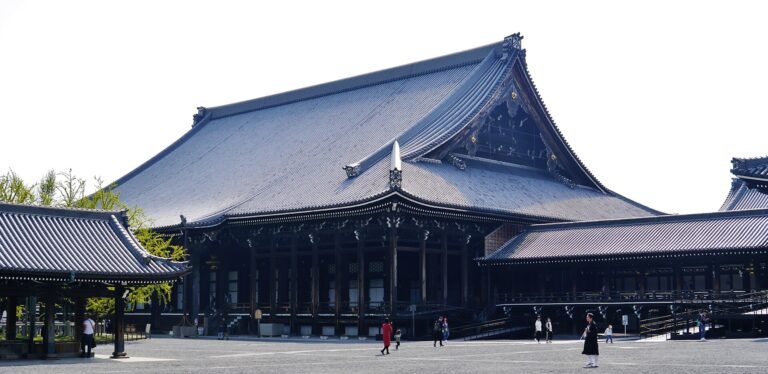
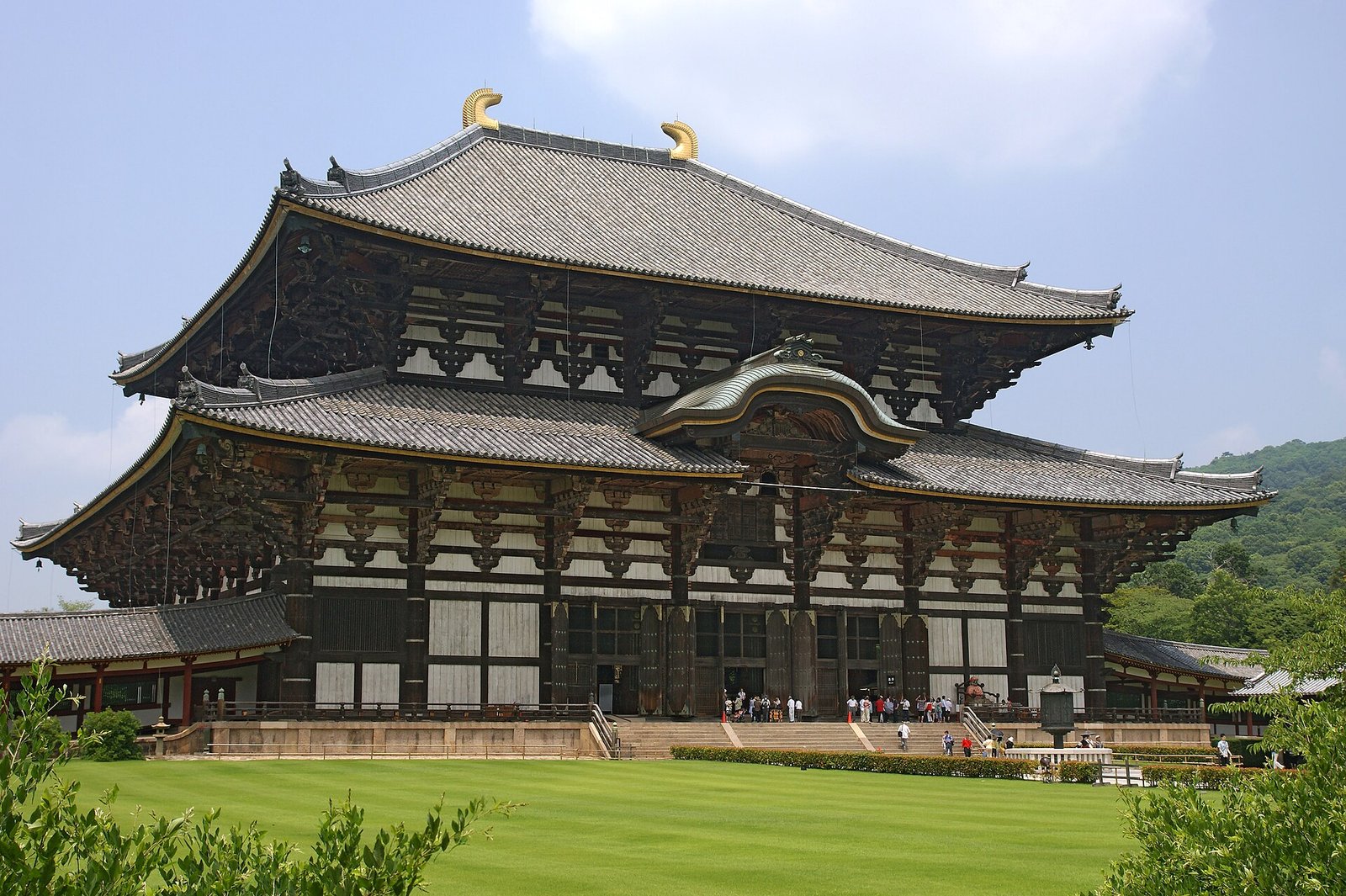
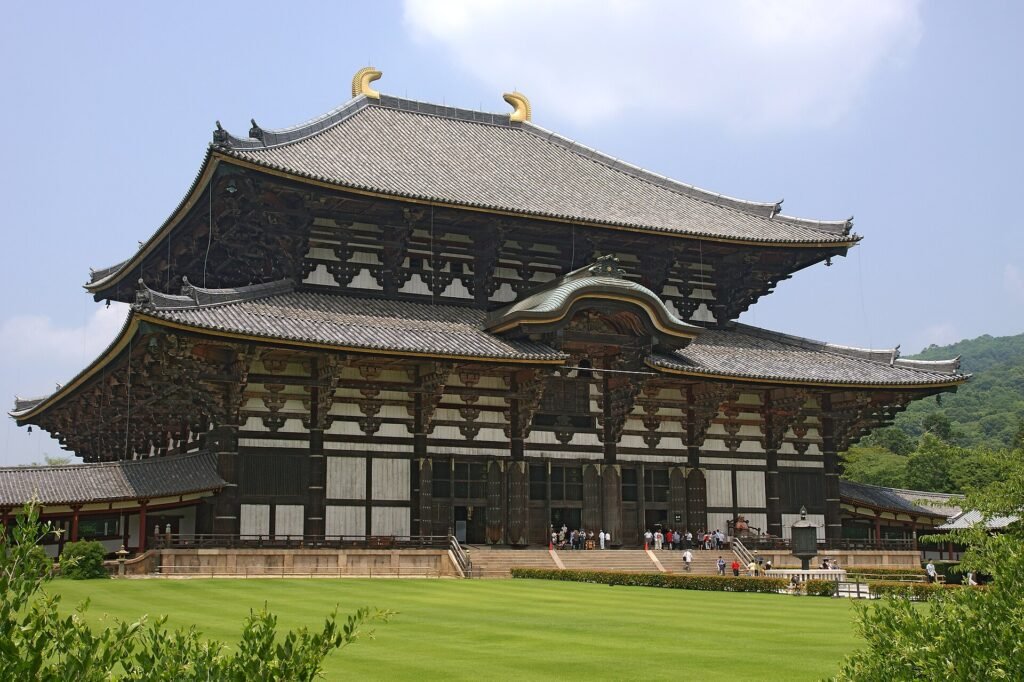
Todai-ji was built in 752 as the head temple over every provincial Buddhist temple in Japan, a level of political and religious power that reportedly factored into the capital’s move away from Nara just three decades later, in 784. The Great Buddha Hall, or Daibutsuden, is still one of the largest wooden buildings on Earth, even though the current structure is a smaller Edo-period reconstruction of the original.
Inside sits the Daibutsu, a bronze seated Buddha roughly 15 meters tall. Off to one side, a wooden pillar has a hole cut through its base said to be the same size as the statue’s nostril — squeezing through it is supposed to guarantee enlightenment in your next life, and there’s usually a short line of visitors, mostly children, waiting to try. Todai-ji is open 7:30 a.m.–5:30 p.m. April through October and 8:00 a.m.–5:00 p.m. the rest of the year; admission is ¥800.
Nara Park’s Deer
More than a thousand sika deer live wild in Nara Park, and they’ve been protected here for over a thousand years, originally as sacred messengers connected to Kasuga Taisha’s founding myth. In 1957 they were designated a national natural monument, which is part of why they’re allowed to roam freely through streets, shopfronts, and temple grounds rather than being fenced in.
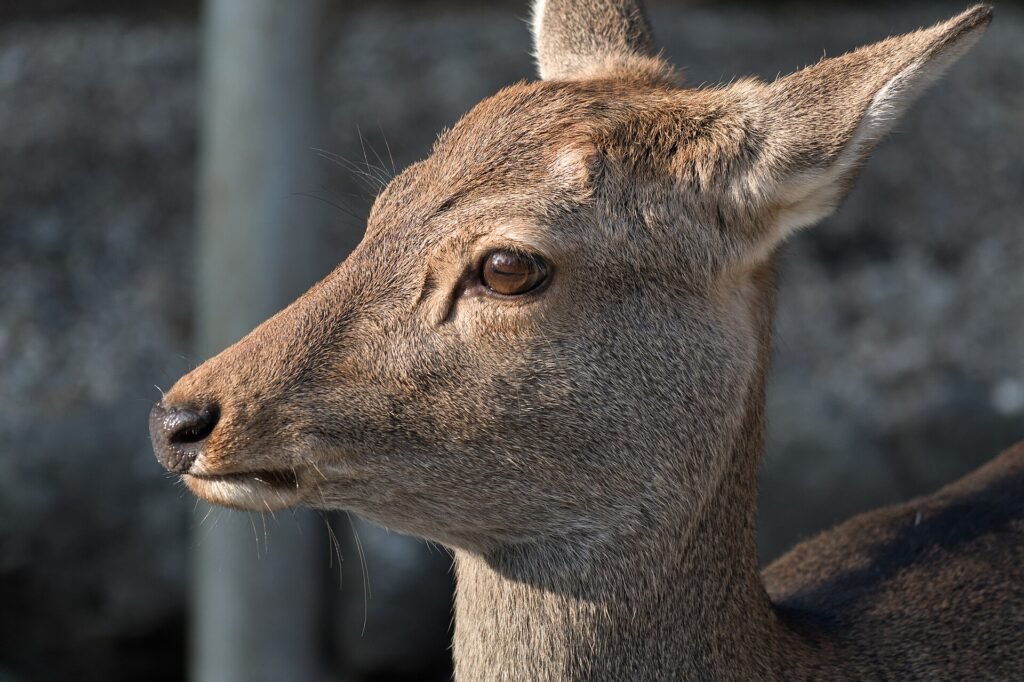
Shika senbei crackers, sold from carts around the park for about ¥200 a pack, are the reason so many of these deer have learned to bow before they’re fed — a trained response to the vendors’ training, not an innate one. They’re still wild animals: keep crackers out of sight until you’re ready to hand them over, watch small children closely, and be extra cautious in autumn rutting season, when bucks are more prone to headbutting.
Kasuga Taisha and Its Lanterns
A 15–20 minute walk beyond Todai-ji, Kasuga Taisha is Nara’s most important Shinto shrine and, along with the rest of the park, part of the UNESCO-listed Historic Monuments of Ancient Kyoto and Nara. Roughly 3,000 bronze and stone lanterns line its approach and hang from its buildings, donated by worshippers over the centuries — all of them are lit simultaneously just twice a year, during the Setsubun Mantoro in early February and the Obon Mantoro in mid-August, a genuinely striking sight if your dates line up.
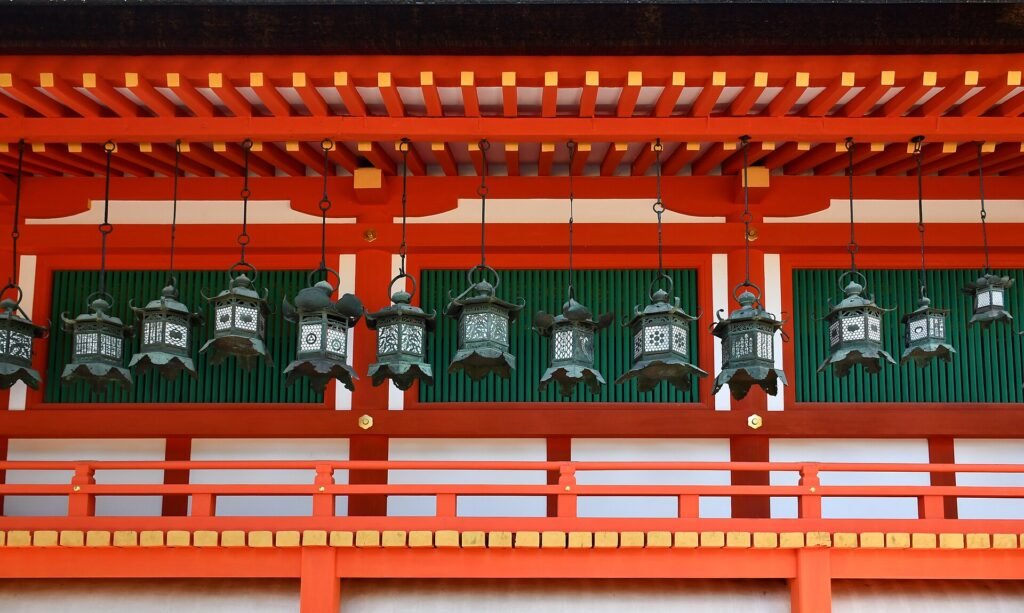
The outer shrine grounds are free and open 6:30 a.m.–5:30 p.m. from March to October (7:00 a.m.–5:00 p.m. the rest of the year). Paying ¥700 for the inner sanctuary, open 9:00 a.m.–4:00 p.m., gets you a closer look at the shrine’s distinctive Kasuga-zukuri architectural style, with its steeply sloped roofline extending out over the front of each building.
Kofuku-ji’s Pagoda and the Ashura Statue
Back near Kintetsu Nara Station, Kofuku-ji’s five-story pagoda has been Nara’s visual landmark since it was first built in 730, though the current version is a 1426 reconstruction standing about 50 meters tall — the second-tallest wooden pagoda in Japan. It’s currently wrapped in scaffolding for restoration work expected to run through March 2034, so don’t plan a trip around photographing it clean.
The temple’s real draw is inside the National Treasure Museum: the Ashura statue, a striking three-faced, six-armed dry lacquer figure from the Nara period, is one of the most famous works of Buddhist sculpture in the country. The museum costs ¥900 on its own, or ¥1,600 combined with the Central and Eastern Golden Halls; temple grounds are free and open around the clock, with the halls and museum open 9:00 a.m.–5:00 p.m. (last entry 4:45 p.m.).
Planning Your Day
A comfortable route starts at Kintetsu Nara Station, where Kofuku-ji is a five-minute walk away. From there it’s another 10–15 minutes through the park — deer included — to Todai-ji, then 15–20 more minutes to Kasuga Taisha before backtracking. Budget four to five hours for sightseeing on top of travel time, and treat Nara as its own day rather than trying to pair it with another destination — unlike the shorter trip to Uji, there’s enough here to fill the daylight hours on its own.
Autumn brings out some of the best foliage in the Kansai region across Nara Park, and our season-by-season guide covers how those dates compare to Kyoto’s own maple season if you’re timing a longer trip around it.
Bottom Line
Nara rewards the extra hour of travel more than almost anywhere else within day-trip range of Kyoto: a Buddha statue on a scale nothing in Kyoto matches, a park full of deer that have wandered freely for over a millennium, and temples old enough to make Kyoto’s own look comparatively young. Pack good walking shoes, bring small bills for deer crackers, and give it a full day rather than a rushed half one.