Ginkaku-ji: A Practical Guide to Kyoto’s Silver Pavilion
Ginkaku-ji is the temple most visitors get wrong before they’ve even arrived. The name means Silver Pavilion, and the mental image that goes with it — something gleaming, something like its more famous sibling Kinkaku-ji across town — sets up a small disappointment for a lot of first-time visitors. There’s no silver here. There never was.
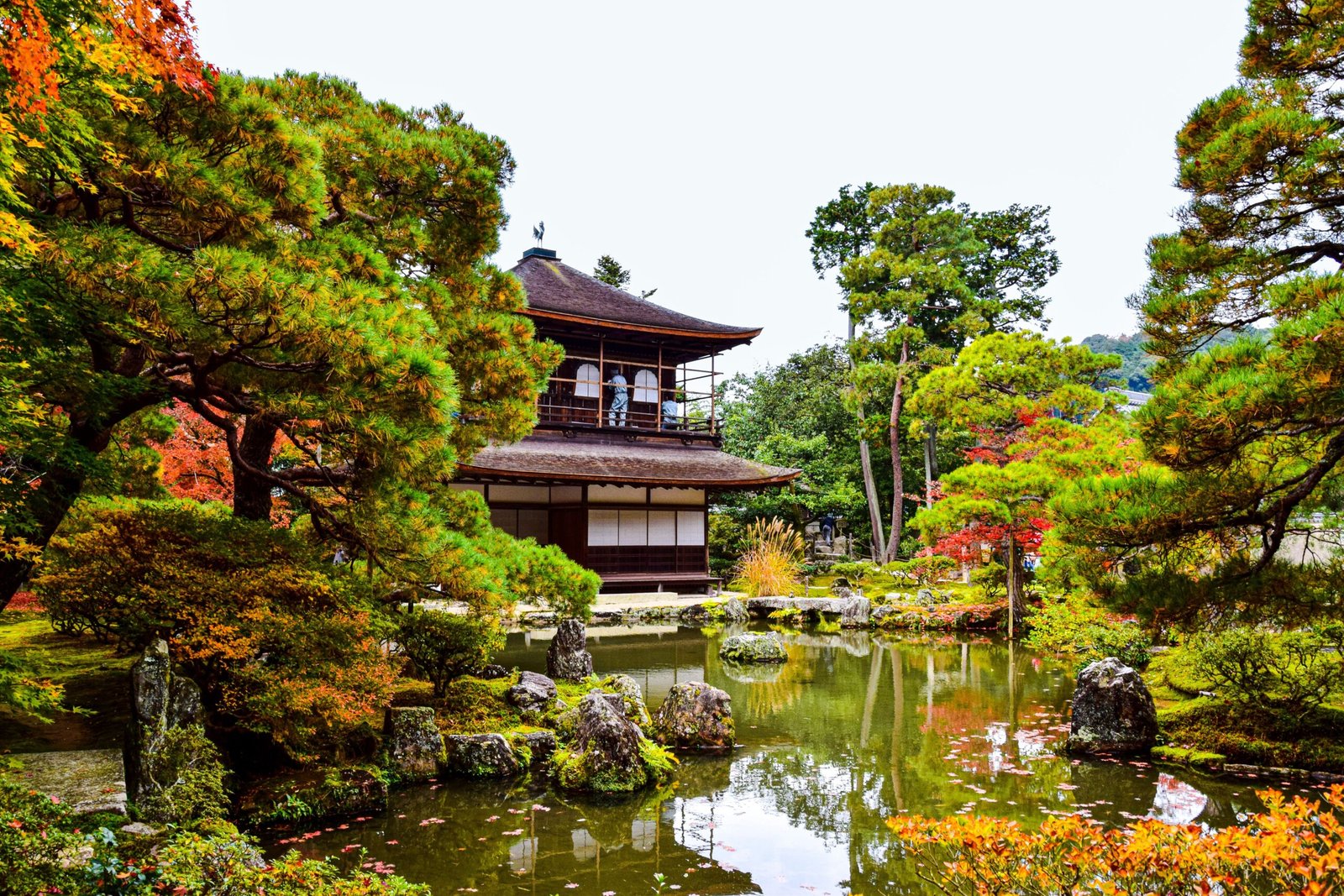
Ashikaga Yoshimasa built this as his retirement villa in 1482, modeling it on his grandfather’s golden pavilion, and either ran out of money before applying silver leaf or, as some historians now argue, never intended to cover it at all. Whichever version is true, what’s left is a plain, weathered wooden building that’s aged into something quieter and, honestly, more interesting than a shiny reproduction would have been.
The pavilion itself takes about thirty seconds to look at. The reason people spend forty minutes here is the garden around it, and specifically two features you won’t see anywhere else in Kyoto: a flat sea of raked white sand, and a cone of sand shaped like a small mountain.
The Essentials at a Glance
| What | Details |
|---|---|
| Admission | ¥500, cash only at the gate |
| Hours | 8:30 a.m.–5:00 p.m. (March 1–November 30), 9:00 a.m.–4:30 p.m. (December 1–end of February) |
| Typical visit length | 40–50 minutes |
| Interior access | None — viewed from the garden path only, same as Kinkaku-ji |
| By bus from Kyoto Station | Bus 5 or 17, about 35–40 minutes, 230 yen |
| On foot | Northern end of the Philosopher’s Path — a 30–40 minute walk from Nanzen-ji |
| Least crowded time | Right at opening, or a weekday outside cherry blossom and autumn foliage season |
Getting There
Bus 5 or 17 from Kyoto Station is the direct option, though like most cross-town buses in Kyoto it can crawl during the morning rush. Get off at the Ginkakuji-michi stop and it’s a five-minute walk uphill from there, past a short stretch of souvenir shops that make for a decent warm-up.
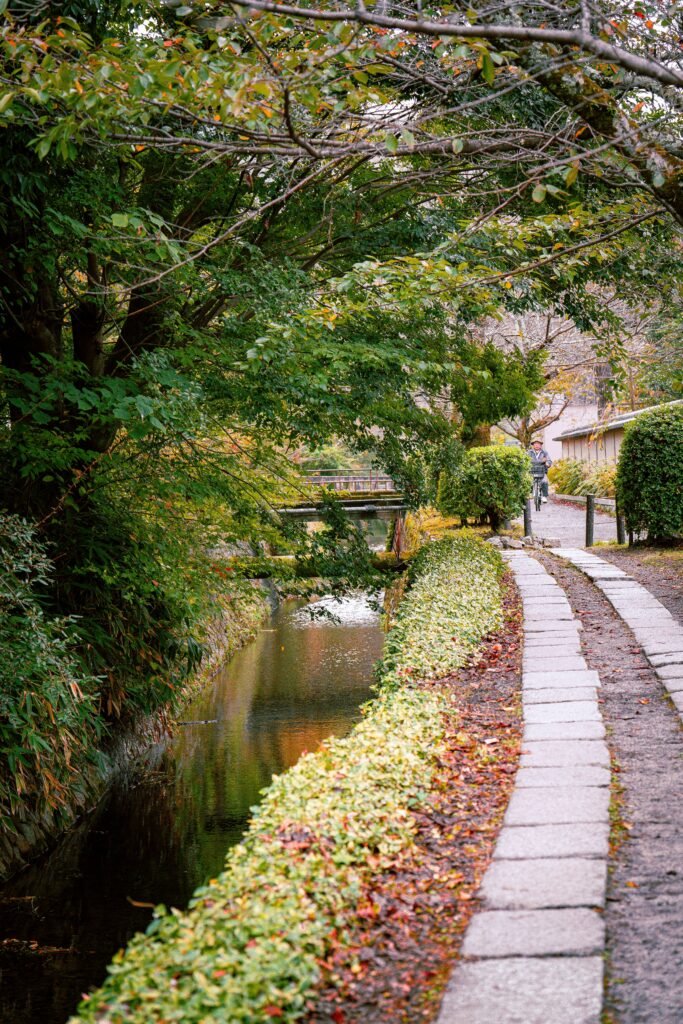
The nicer approach, if you have the time, is on foot from the south. The Philosopher’s Path starts near Nanzen-ji and runs about two kilometers north along a quiet canal, ending almost exactly at Ginkaku-ji’s gate. It’s an easy, flat walk, shaded by cherry trees that are spectacular in early April and pleasant the rest of the year, and it turns a single temple stop into a proper half-day outing.
Taxis from central Kyoto run 20–30 minutes depending on traffic and typically cost 2,000–2,500 yen — reasonable if you’re combining this with an early Philosopher’s Path walk in reverse, starting here and heading south.
When to Go
Ginkaku-ji opens later and closes earlier than some of Kyoto’s other big sights, and the seasonal hours are worth double-checking before you go since they shift twice a year. Within those hours, the same rule that applies almost everywhere in this city applies here: get there at opening. The gravel paths are narrow in places, and it doesn’t take many tour groups to turn a peaceful walk into a shuffle.
Cherry blossom season and the two or three weeks of peak autumn color in November are the worst times for crowds, worse here in some ways than at the bigger-name temples, because the garden paths are genuinely narrow and there’s nowhere to step aside. A weekday morning outside those windows is a completely different, much calmer experience.
What You’re Actually Walking Through
The sand garden. Ginshadan, the “sea of silver sand,” is a flat expanse of raked white gravel running along the front of the pavilion, and Kogetsudai, the moon-viewing platform, is a two-meter cone of the same sand sitting beside it. Nobody knows for certain when either was added — they’re a later Edo-period addition, not part of Yoshimasa’s original 15th-century design — but they’re maintained daily and re-raked by hand, which is part of what makes them worth slowing down for.
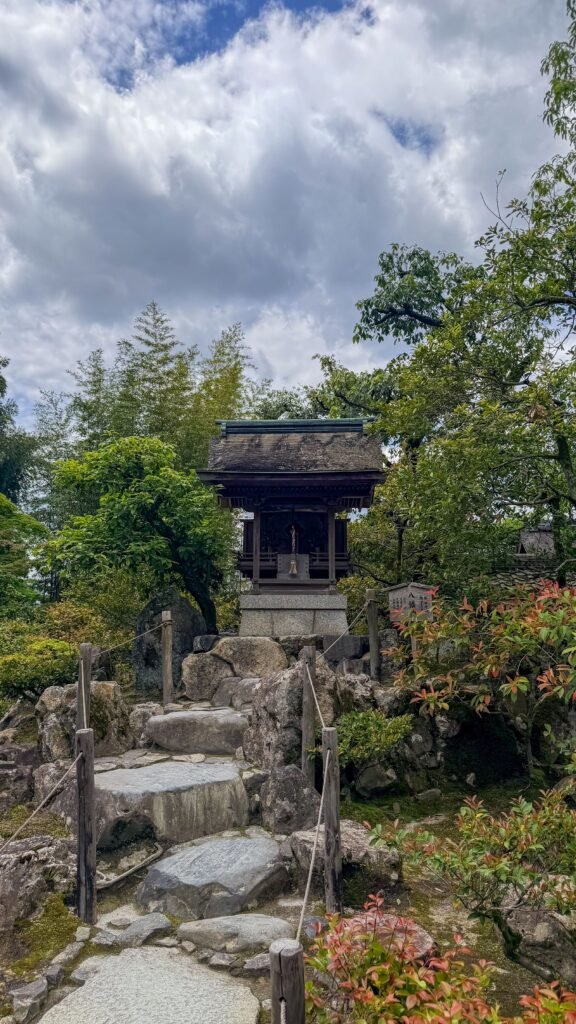
The moss garden and the hill path. Behind the sand garden, a pond garden planted with moss, pine, and maple leads to a path that climbs a short hill behind the temple. It’s the one part of the visit that takes real effort, but the payoff is a clearing that looks back down over the pavilion roofline with the city spread out beyond it — the best photo spot on the property, and one a fair number of visitors skip because they don’t realize the path continues past the main garden.
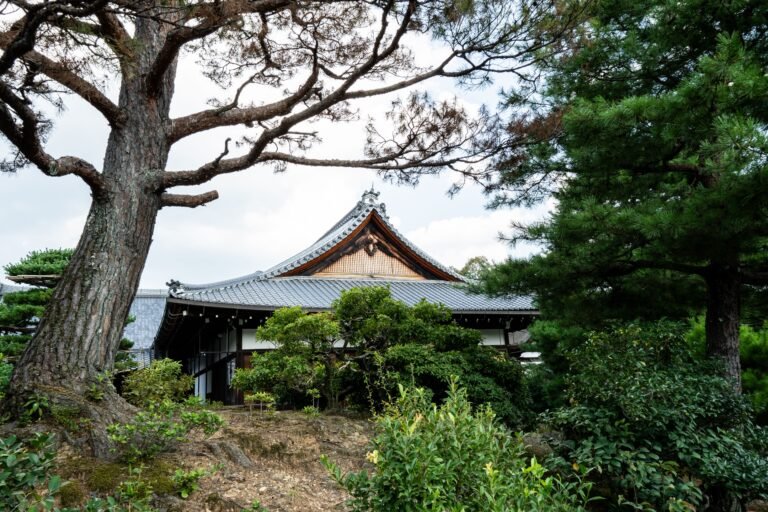
The pavilion itself. Kannon-den, the two-story hall people come to see, keeps its original unpainted wood, weathered to a soft grey-brown rather than the black or gold you might expect from photos of other Kyoto temples. It’s a genuinely small building. Most of your time here goes to the garden around it, not the structure itself.
Nearby, If You Have More Time
Honen-in, a small temple a short walk south along the Philosopher’s Path, gets a fraction of Ginkaku-ji’s visitors despite a genuinely beautiful mossy gate and grounds — worth the ten-minute detour if you want a few minutes of actual quiet. Further south, the path ends at Nanzen-ji, a much larger temple complex with its own brick aqueduct and sub-temples, easily combined into the same outing. And if you’re pairing this with its golden counterpart, our guide to Kinkaku-ji covers the other half of the comparison, though the two sit on opposite sides of the city and aren’t practical to combine in a single trip.
Where to Stay Nearby
Ginkaku-ji sits at the northern tip of Higashiyama, and while it’s not a hotel hub itself, it’s a manageable bus or taxi ride from most of central Kyoto. Our Kyoto neighborhood comparison guide breaks down the main areas to base yourself in, and southern Higashiyama or Gion put you within a short bus ride while keeping you close to the rest of the city’s sights.
For an early, quiet start, there are also a handful of small guesthouses scattered near the Philosopher’s Path itself. Booking.com is a reasonable place to check what’s actually available in this specific stretch of the city on your dates.
Bottom Line
Come to Ginkaku-ji expecting a quiet, unglamorous building and a genuinely well-kept garden, not a rival to Kinkaku-ji’s shine, and it delivers. Walk the Philosopher’s Path to get here if your schedule allows it, show up close to opening, and don’t skip the hill path behind the sand garden — it’s the one part of the visit that’s easiest to miss and hardest to regret.