Honen-in: A Practical Guide to Kyoto’s Temple of Writers and Moss
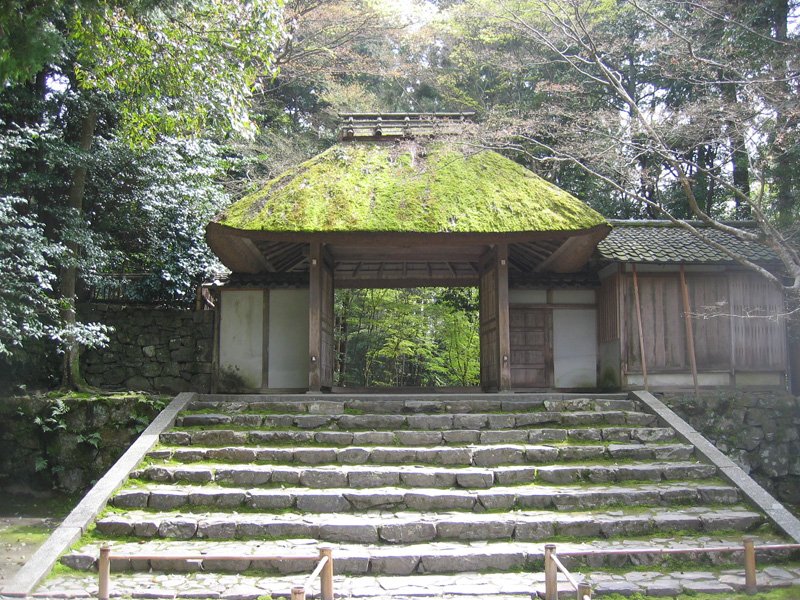
Turn off the Philosopher’s Path just north of Ginkaku-ji and follow the narrow lane past a handful of guesthouses, and you’ll reach a flight of stone steps leading up to a gate roofed entirely in moss. That’s Honen-in, one of the quieter stops in northern Higashiyama, and the kind of place that rewards the small detour precisely because most people walking the canal path never make the turn. There’s no admission fee for the grounds, no ticket booth, and often no other visitors at all if you arrive early — just a moss garden, a pair of raked white sand mounds, and a cemetery where some of modern Japan’s best-known writers and thinkers are buried.
The Essentials at a Glance
| What | Details |
|---|---|
| Hours | 6:00 a.m.–4:00 p.m. daily (grounds); the main hall is closed most of the year |
| Admission | Free for the grounds; a fee applies only during the main hall’s limited spring and autumn openings |
| Access | About a 10-minute walk from the Ginkaku-ji-michi bus stop (City Bus 5 or 17), or roughly 15 minutes on foot from Ginkaku-ji itself |
| Visit length | 15–25 minutes for the grounds |
| Best time | Early morning for a near-empty garden; the brief main hall openings in early April and again in autumn for a look inside |
| Known for | A moss-covered thatched gate, twin white sand mounds (byakusadan), and a cemetery holding several noted 20th-century writers |
A Gate You Notice Before Anything Else
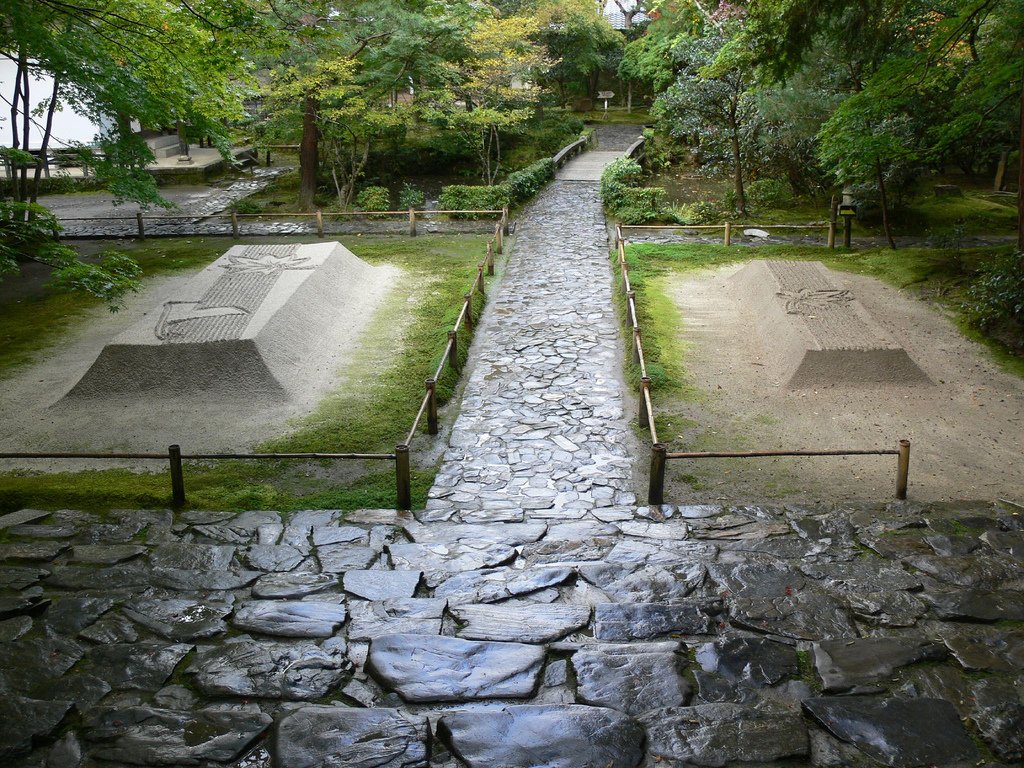
The approach sets the tone. A short stone stairway climbs under a canopy of maples to a thatched, sukiya-style gate so heavily covered in moss that it barely reads as a built structure anymore — it looks more like something the hillside grew on its own. Step through it and you’re met immediately by two long, rectangular mounds of raked white sand flanking the path, known as the byakusadan. They’re traditionally understood as a kind of purification the visitor walks between, and their surface is redesigned periodically through the year with different patterns — water, plants, the odd seasonal motif — so the exact design you see depends on when you happen to visit. It’s a small, quiet piece of theater before you’ve even reached the main grounds, and it’s the image most people who know Honen-in picture first.
From a Kamakura-Era Hut to an Independent Temple
Honen-in’s roots go back to the late twelfth century, when a simple hermitage was built on this spot for the monk Honen — founder of the Jodo-shu, or Pure Land, school of Buddhism — and his disciples to practice the nembutsu chant. That original structure didn’t survive intact, and the temple as it stands today dates to 1680, when it was rebuilt by Manmin, the 38th head priest of the nearby Chion-in. For most of its history since then, Honen-in operated as a sub-temple within that larger Jodo-shu hierarchy; it only became an independent religious corporation in 1953. That relatively recent independence seems to have shaped the place: rather than settling into a purely conventional role, Honen-in has spent the past several decades under an unusually open-minded line of abbots who’ve used the temple’s small storehouse to host rotating exhibitions by contemporary artists and intellectuals, an arrangement that’s fairly unusual for a working Buddhist temple in Kyoto.
A Cemetery Where Novelists Rest
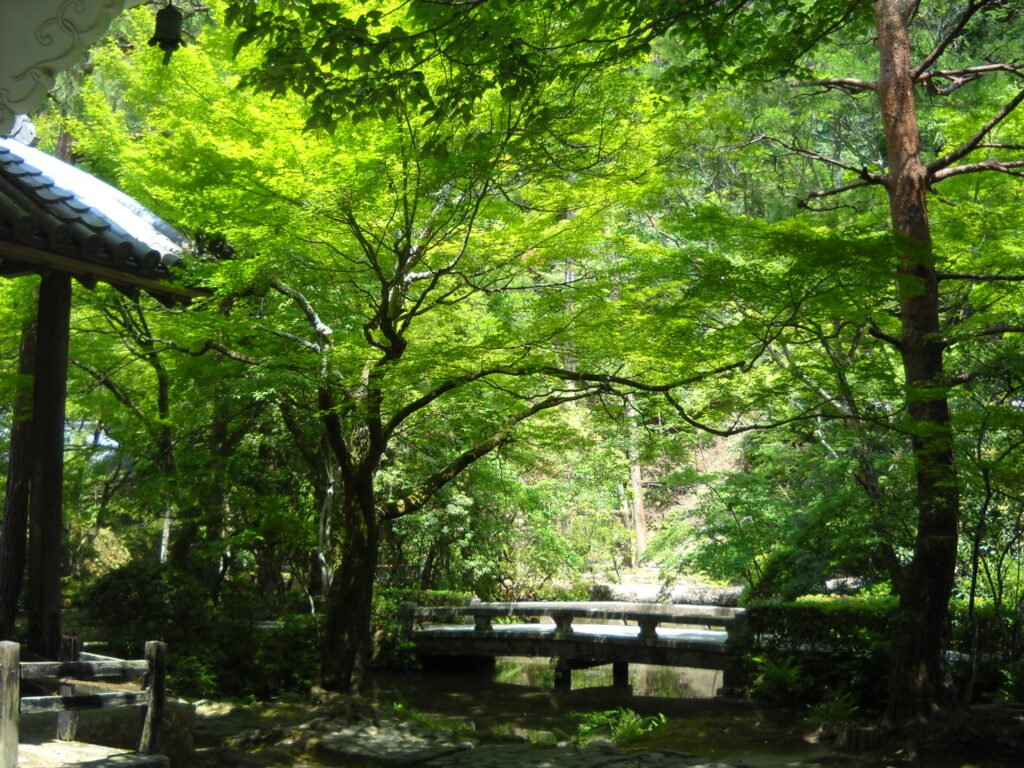
Cross a small stone bridge over the pond behind the sand mounds and the path winds through a moss garden shaded by maples before reaching Honen-in’s cemetery, which is where a fair number of visitors are actually headed. Several notable figures from twentieth-century Japanese literature and thought are buried here, most prominently the novelist Junichiro Tanizaki, along with the philosopher Kuki Shuzo and the economist Hajime Kawakami. It gives an otherwise unassuming residential-neighborhood temple an outsized place in Japan’s modern cultural history, and it’s part of why Honen-in shows up so often in accounts of Kyoto written by people who lived here rather than just passed through — this is the kind of temple locals tend to have a personal attachment to, rather than one built primarily around tour-group logistics.
Two Short Windows Inside the Main Hall
For most of the year, Honen-in’s main hall stays closed and you’re limited to the grounds — which, to be clear, is most of what makes the temple worth visiting anyway. But the hall does open to the public for a short stretch in spring and again in autumn, roughly the first week or so of April and a similar window later in the year; exact dates shift slightly from year to year, so it’s worth checking current signage or the temple’s own announcements if the inside is what you’re after. During those openings, a small admission fee applies, and visitors can see a black-lacquered image of Amida Buddha along with fusuma sliding-door paintings that aren’t otherwise on view. It’s a genuinely worthwhile add-on if your trip happens to line up with one of these windows, but it’s not something to build a Kyoto itinerary around — the garden and gate are the reason to come, and they’re accessible daily.
Part of a Longer Northern Higashiyama Walk
Honen-in sits just off the Philosopher’s Path, close enough to Ginkaku-ji that most visitors fold it into the same outing. If you’re willing to keep walking south along the canal, the path eventually passes Eikan-do and continues on to Nanzen-ji, which makes for a full half-day of temple-hopping with almost no backtracking required. Honen-in works well as the first or last stop on that stretch, since it’s small enough not to eat into your time at the bigger sites, and quiet enough to be a nice place to end the walk if you save it for last, once the crowds at the more famous temples have worn you down a little.
Planning Your Visit
Honen-in is still a working temple, and the grounds occasionally close for funerals or private ceremonies, so it’s worth having a backup plan if you show up and find the gate roped off. Otherwise, the grounds are open every day from 6:00 a.m. to 4:00 p.m. with no ticket required, which makes an early visit genuinely easy to fit in before breakfast, particularly if you’re staying anywhere near the Ginkaku-ji end of the Philosopher’s Path. Bring comfortable shoes for the stone steps and gravel paths rather than sandals, and treat the moss and sand mounds the way you would at any other Kyoto garden: admire from the path, and don’t step off it. If you’re timing a Kyoto trip more broadly, our Best Time to Visit Kyoto guide is a useful starting point for deciding when to come, since a quiet temple like this one is at its best outside the peak spring and autumn weekends when everywhere else in the city is at its busiest.
Bottom Line
Honen-in isn’t going to be the temple that defines someone’s first trip to Kyoto, and it doesn’t try to be. What it offers instead is a genuinely peaceful few minutes just off one of the city’s most popular walking routes: a moss-covered gate, a pair of quietly striking sand mounds, and a cemetery with more literary weight than its size would suggest. If you’re already walking the Philosopher’s Path, there’s very little reason not to make the short climb up to see it.