Jidai Matsuri and Kurama Fire Festival: A Practical Guide to Kyoto’s October 22 Double Bill
October 22 is the one day a year when Kyoto runs two of its most distinctive festivals at once, on opposite ends of the city and in opposite moods. In the afternoon, a slow procession of roughly 2,000 people in costume walks from the Imperial Palace to Heian Jingu, each dressed for a different century of the city’s history. After dark, a small mountain village 40 minutes north lights hundreds of blazing torches and carries them through its streets until close to midnight.
Neither festival requires a ticket to watch from the street, and with the right timing it is possible, if tiring, to catch pieces of both in a single day.
The Essentials at a Glance
| What | Details |
|---|---|
| Jidai Matsuri | Oct 22, procession departs the Imperial Palace around midday and takes about 2 hours to pass any one viewing point, ending at Heian Jingu |
| Kurama Fire Festival | Oct 22, starts around sunset (roughly 6 p.m.) and continues until close to midnight, at Yuki-jinja Shrine in Kurama village |
| Cost | Free to watch from the street at both; reserved Jidai Matsuri seating ¥4,500–¥6,500 |
| Getting to Kurama | JR Nara Line to Tofukuji, transfer to the Keihan Main Line to Demachiyanagi, transfer to the Eizan Kurama Line to Kurama Station |
| Combining both | About 40 minutes from central Kyoto to Kurama; plan to leave the parade route by mid-afternoon |
Jidai Matsuri: A Costume Parade Through History
Jidai Matsuri, the Festival of the Ages, began in 1895 to mark the 1,100th anniversary of Heian-kyo’s founding, the city’s original name when Emperor Kanmu moved the capital there in 794. It was created alongside Heian Jingu, the shrine built that same year to enshrine Kanmu, and later Emperor Komei, the last emperor to reign from Kyoto before the capital moved to Tokyo.
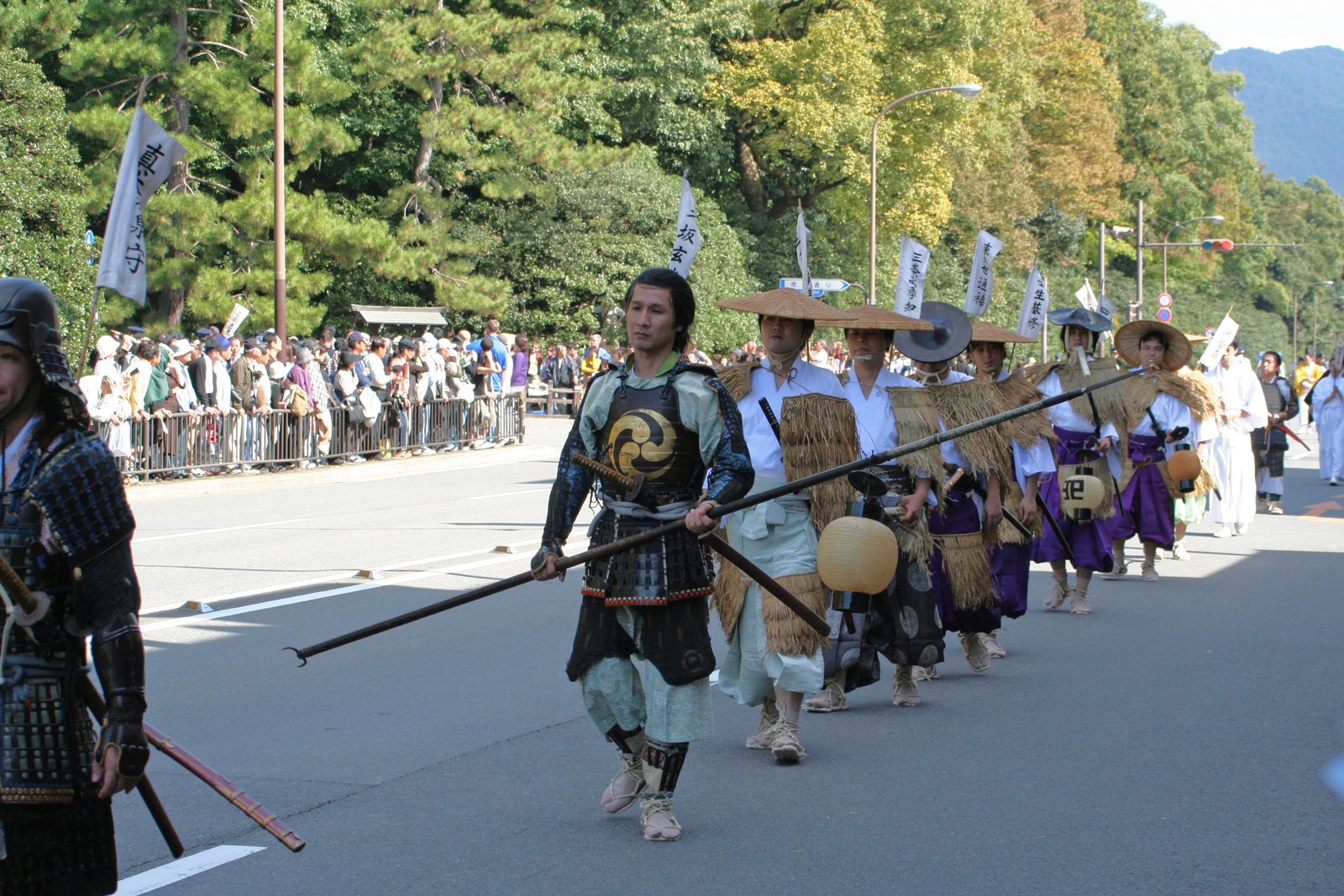
About 2,000 participants walk the roughly 5-kilometer route in reverse chronological order: the parade opens with Meiji Restoration-era troops and works backward through samurai, monks, and court officials, ending with Heian-period nobility in twelve-layered juni-hitoe robes, the earliest and most elaborate costumes in the procession. Many of the costumes are the product of decades of historical research, recreated using traditional materials and techniques. Two mikoshi carrying the spirits of Emperor Kanmu and Emperor Komei travel partway through the procession, flanked by a costumed band playing gagaku, Japan’s ancient court music.
The parade departs the Kyoto Imperial Palace grounds around midday and follows Oike-dori and Sanjo-dori before finishing at Heian Jingu, a route long enough that the full procession takes roughly two hours to pass any single point along the way.
Where to Watch Jidai Matsuri
Reserved seating (¥4,500–¥6,500) is available at three points along the route: the Imperial Palace, Kyoto City Hall, and near Heian Jingu, and typically needs to be booked online or at a convenience store ahead of time. Watching for free from the street works well anywhere along Oike-dori or Sanjo-dori, though the start near the Imperial Palace and the finish near Heian Jingu draw the thickest crowds, so arrive at least 30 to 60 minutes early for either.
Jidai Matsuri is one of Kyoto’s three major annual festivals, alongside the summer-long Gion Matsuri and the spring Aoi Matsuri, though its costume-parade format makes it the easiest of the three to watch as a casual spectator.
Kurama Fire Festival: Torches on the Mountain
The festival’s origins go back to the year 940, when the deity Yuki Myojin was moved from the Imperial Palace to Kurama by order of Emperor Suzaku. Villagers are said to have lined the road with torches to light the deity’s way to its new mountain home, and the annual re-enactment of that welcome has continued ever since; Kyoto City designated it an Intangible Folk Cultural Property in 1983.
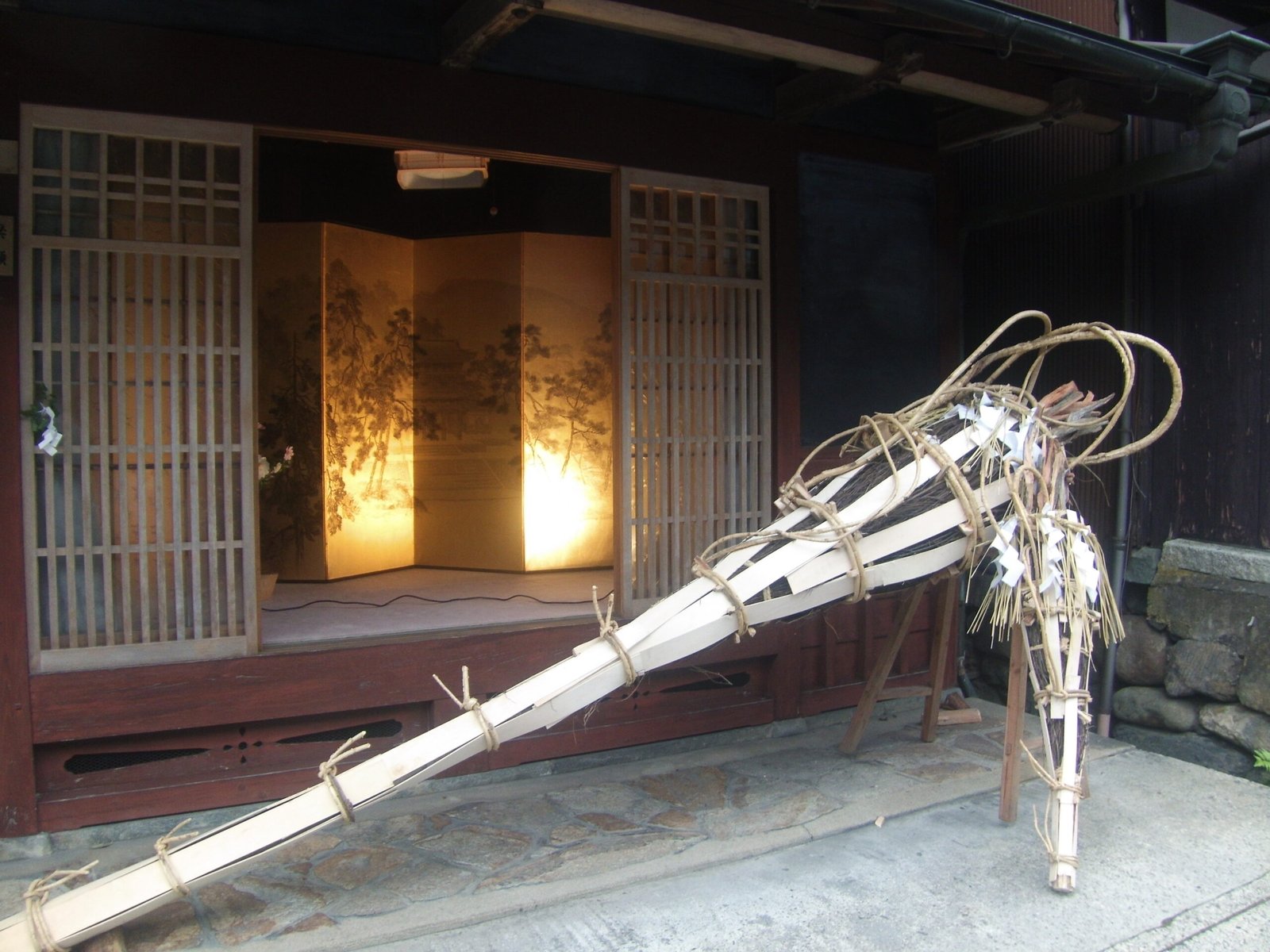
While Jidai Matsuri winds down in the city center, Kurama, the small village to the north also home to the Kurama and Kifune day trip, prepares for something far less formal. As dusk falls, kagaribi bonfires are lit along the village’s main street, and locals, including small children, begin carrying pine torches, some no bigger than a broom handle, others large timber constructions that take several men to lift, from house to house before gathering at the base of the stone steps leading up to Yuki-jinja Shrine.
Later in the evening, two mikoshi are carried up the steep stairway to the shrine by teams of men in loincloths, a physically demanding climax that draws the festival’s biggest crowds. Events run from roughly sunset until close to midnight, and the whole affair takes place on the narrow streets of a residential village, so visitors are expected to stay out of the way of the torch-bearers and keep noise down between the main events.
Getting to Kurama
From Kyoto Station, the route is the JR Nara Line to Tofukuji Station, a transfer to the Keihan Main Line to Demachiyanagi Station, then the Eizan Railway’s Kurama Line to Kurama Station, the same stretch of track covered in our guide to a daytime visit to Kurama and Kifune. Admission to the festival is free, but the village and its trains are known to get seriously crowded on the night, so budget extra time and expect slow-moving lines at the station on the way back, especially after 9 or 10 p.m. Check current transport advisories before you go, since operators sometimes adjust service on the night to manage crowding.
Doing Both in One Day
Combining them takes some planning, since they sit on opposite sides of the city and in opposite registers. A workable plan: watch the Jidai Matsuri procession pass along Oike-dori or near the Imperial Palace in the early afternoon, then head north to Kurama by mid-to-late afternoon, well before the evening crowds build and while the Eizan line is still running normal service. Grab an early dinner before heading out, since food options in the village fill up fast once the festival crowds arrive, watch the torches for an hour or two, and plan to leave by 9 or 10 p.m. rather than staying for the midnight finish if you want a realistic chance at a seat on the train back.
Bottom Line
October 22 packs two of Kyoto’s most distinctive festivals into one day: a stately imperial procession through the city center, and a fire festival in a mountain village that feels like nothing else in Japan. See one and you will have had a full day in Kyoto. See pieces of both and you will have seen just how different the city’s festival calendar can be within the same twelve hours.