Heian Jingu: A Practical Guide to Kyoto’s Vermillion Shrine
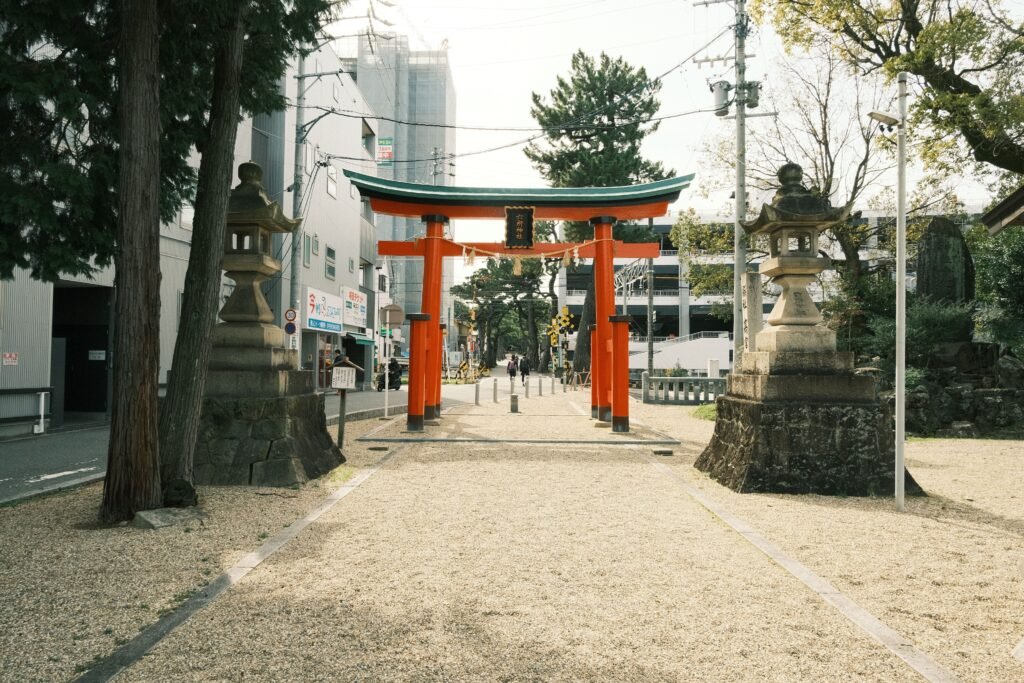
The vermillion torii gate standing over the approach to Heian Jingu is one of the largest in Japan — tall enough to see from several blocks away in the Okazaki neighborhood — and yet the shrine itself is younger than some of Kyoto’s guesthouses. Built in 1895 to mark the 1100th anniversary of the city’s founding, it is a scaled-down replica of the original Imperial Palace, paired with one of the best strolling gardens in Kyoto.
This guide covers the free shrine grounds, whether the paid garden is worth the extra time, and how Heian Jingu fits into a day around Okazaki and northern Higashiyama.
The Essentials at a Glance
| What | Details |
|---|---|
| Shrine grounds | Free |
| Shinen Garden | ¥600 |
| Shrine hours | Roughly 6:00–18:00, shorter in winter |
| Garden hours | 8:30–18:00, shorter in winter; admission ends 30 minutes before closing |
| By subway from Kyoto Station | Tozai Line to Higashiyama Station (about 20 minutes, ¥260), then a 10-minute walk |
| By bus | City Bus 5, about 30 minutes |
| Typical visit length | 30–60 minutes on the grounds, plus 20–45 minutes for the garden |
Getting There
The Tozai subway line runs from Kyoto Station to Higashiyama Station in about 20 minutes, followed by a 10-minute walk north through Okazaki Park. That walk passes the Kyoto City Zoo, the National Museum of Modern Art, and the Kyoto Municipal Museum of Art, so it is easy to build an entire museum-and-shrine morning around this one subway ride.
City Bus 5 also connects Kyoto Station to the area in about 30 minutes if you would rather avoid the subway transfer, stopping close to the giant torii itself.
Is the Garden Worth It?
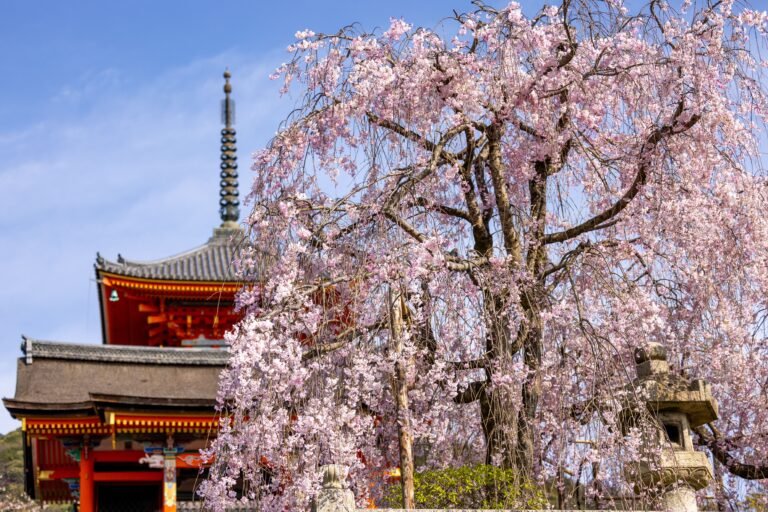
The shrine grounds and the giant torii are free, and for a quick stop, that is enough — most of what makes Heian Jingu photogenic from the outside costs nothing to see. The ¥600 Shinen Garden behind the main hall is a separate decision, and it comes down to season: in mid-to-late April, when the garden’s weeping cherry trees bloom later than most of the city’s other sakura, and again in early June for the irises, it is one of the better garden visits in Kyoto. Outside those windows, it is a pleasant but not essential add-on.
The shrine is also the endpoint of the Jidai Matsuri, one of Kyoto’s three great festivals, held every October 22 with a procession of costumes spanning more than a thousand years of Japanese history — worth checking your dates against if you are visiting in autumn, since the surrounding streets get busy.
What You’ll See
The Otorii. At roughly 24 meters tall, this is one of the largest torii gates in Japan, built in 1928 and standing several blocks south of the shrine itself along the main approach through Okazaki. Most visitors photograph it from the crosswalk below without realizing it is a separate structure from the shrine complex ahead.
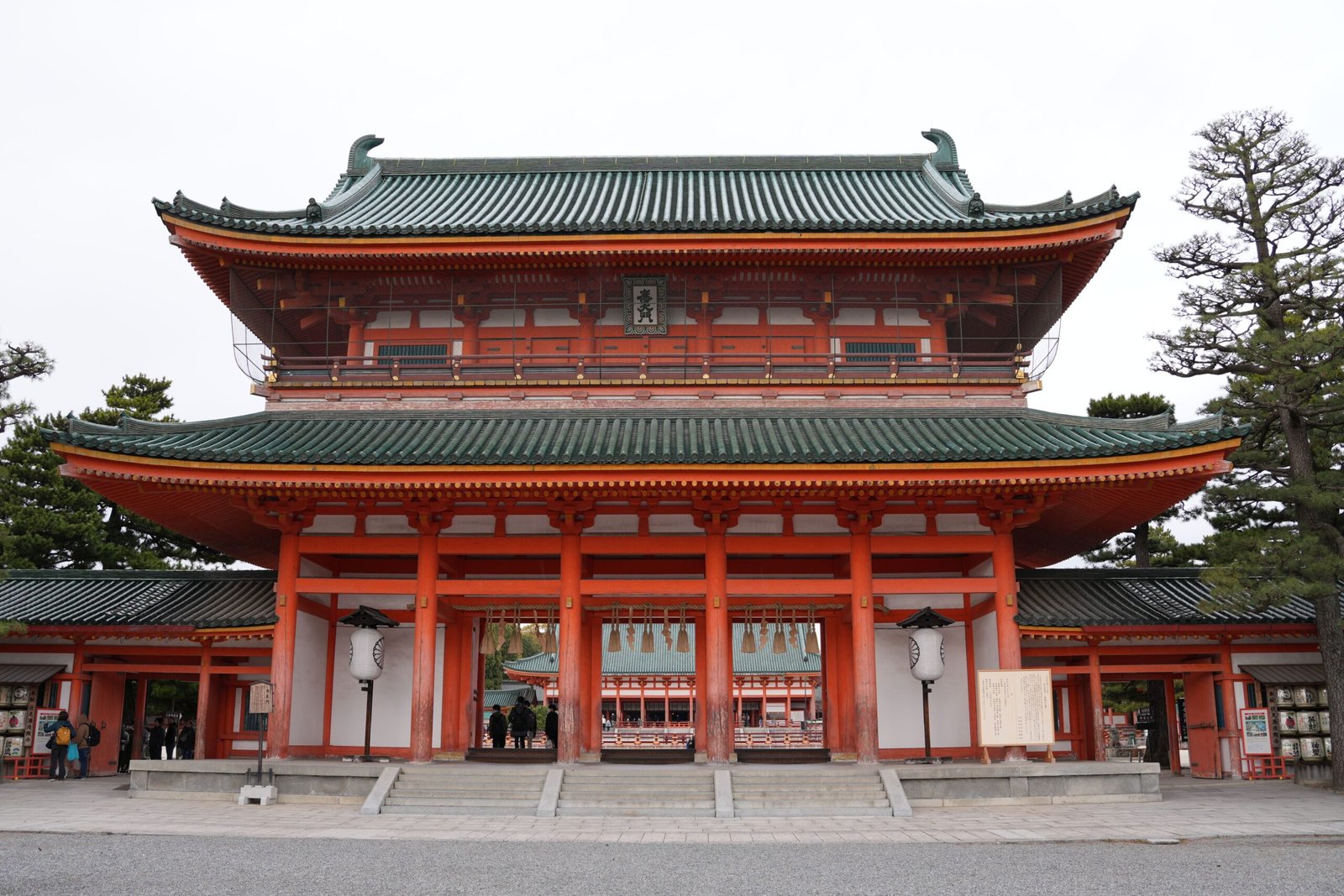
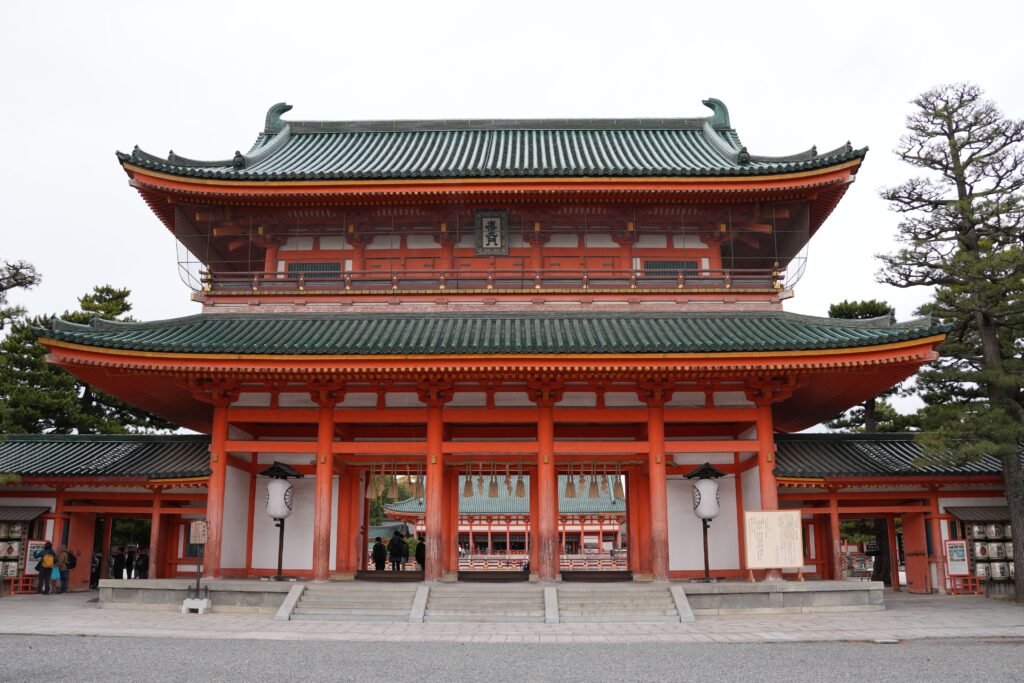
The Daigokuden. The shrine’s main hall is a 5/8-scale reproduction of the Chodoin, the original state hall of the Heian-era Imperial Palace, painted in the same vermillion and green color scheme and flanked by two symmetrical towers, the Byakko-ro and Soryu-ro. Unlike the original, which burned centuries ago, this version has stood since 1895.
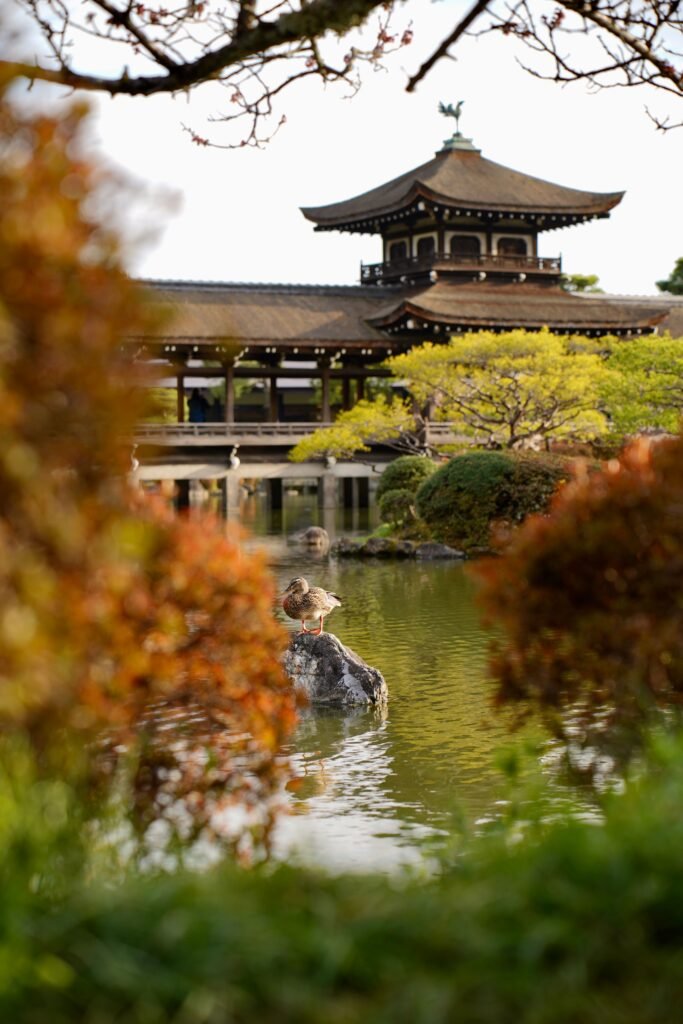
The Shinen Garden. Split into four connected sections circling the back of the shrine, the garden was designed by Ogawa Jihei, one of the most influential landscape gardeners of the Meiji era, and centers on a large pond crossed by stepping stones made from the pillars of an older Kyoto bridge.
Nearby, If You Have More Time
Heian Jingu sits at the northern edge of the same Okazaki and Higashiyama cluster as two of our other guides: Nanzen-ji, a short walk east, and the Philosopher’s Path, which starts near Nanzen-ji and ends close to Ginkaku-ji. All three can reasonably fit into one afternoon.
Where to Stay Nearby
Okazaki is quiet and museum-heavy rather than packed with hotels, so most visitors base themselves closer to the city center and treat this as a half-day stop. Our Kyoto neighborhood comparison guide covers the more central areas worth staying in instead.
Booking.com is a reasonable place to check availability in those more central neighborhoods.
Bottom Line
Heian Jingu is worth the trip for the free giant torii and shrine grounds alone, and worth the extra ¥600 for the garden specifically in cherry blossom and iris season. Pair it with Nanzen-ji and the Philosopher’s Path to make a full afternoon out of the Okazaki area.