Ninna-ji: A Practical Guide to Kyoto’s Omuro Imperial Temple
Most visitors to this corner of northwest Kyoto get off the bus, walk straight to Ryoan-ji for the rock garden, and call it a day. That skips over Ninna-ji, which sits just up the road and has a real claim to the neighborhood: it was the temple of a retired emperor, its five-story pagoda has stood since the early Edo period, and it grows a variety of cherry tree found almost nowhere else in Japan. It doesn’t pull the crowds that Kinkaku-ji does a few minutes further on, which is either the appeal or the drawback depending on what kind of temple visit you’re after.
The Essentials at a Glance
| What | Details |
|---|---|
| Admission | Temple grounds free most of the year; during the Omuro cherry season (mid-to-late April) a separate fee applies to enter the cherry grove, roughly ¥500; Goten Palace around ¥500; Reiho-kan Treasure Museum around ¥500 (open only in spring and autumn) — fees have varied by source, so check the temple’s official site before you go |
| Hours | 9:00 a.m.–5:00 p.m. (March–November); 9:00 a.m.–4:30 p.m. (December–February); ticket booths close 30 minutes before closing |
| Address | 33 Omuroouchi, Ukyo-ku |
| Getting there | Direct JR bus from Kyoto Station to the Omuro Ninnaji stop (about 30 minutes, ¥230); or Keifuku Kitano Line to Omuro-Ninnaji Station, a few steps from the gate |
| Visit length | 45 minutes for the grounds and pagoda alone; add 30–45 minutes if you go into the Goten |
| Good to pair with | Ryoan-ji, a 10-minute walk away, or Kinkaku-ji, a short bus ride further east |
A Temple Built Around an Emperor
Ninna-ji was founded in 888, commissioned by Emperor Uda, who later abdicated and became its first head priest. From that point on, the temple was traditionally led by a member of the imperial family, usually a retired emperor or a prince who had taken Buddhist vows, and it earned the nickname Omuro Gosho, the Omuro Imperial Palace, because of it. It’s the head temple of the Omuro school of Shingon Buddhism, a branch with temples across Japan, and it holds UNESCO World Heritage status as one of the Historic Monuments of Ancient Kyoto, the same designation covering Kinkaku-ji, Ryoan-ji, and a handful of other sites in this part of the city.
Almost none of the original 9th-century buildings survive; most were lost in the Onin War, the decade of fighting in the 1460s and 70s that leveled large parts of Kyoto. What stands today mostly dates from a rebuilding project in the 1630s, during which several structures were relocated to Ninna-ji from the Kyoto Imperial Palace rather than built from scratch — the temple’s main hall began its life as a ceremonial hall at the palace before it was moved here and reassigned as a Buddhist worship space.
The Kondo and the Five-Story Pagoda
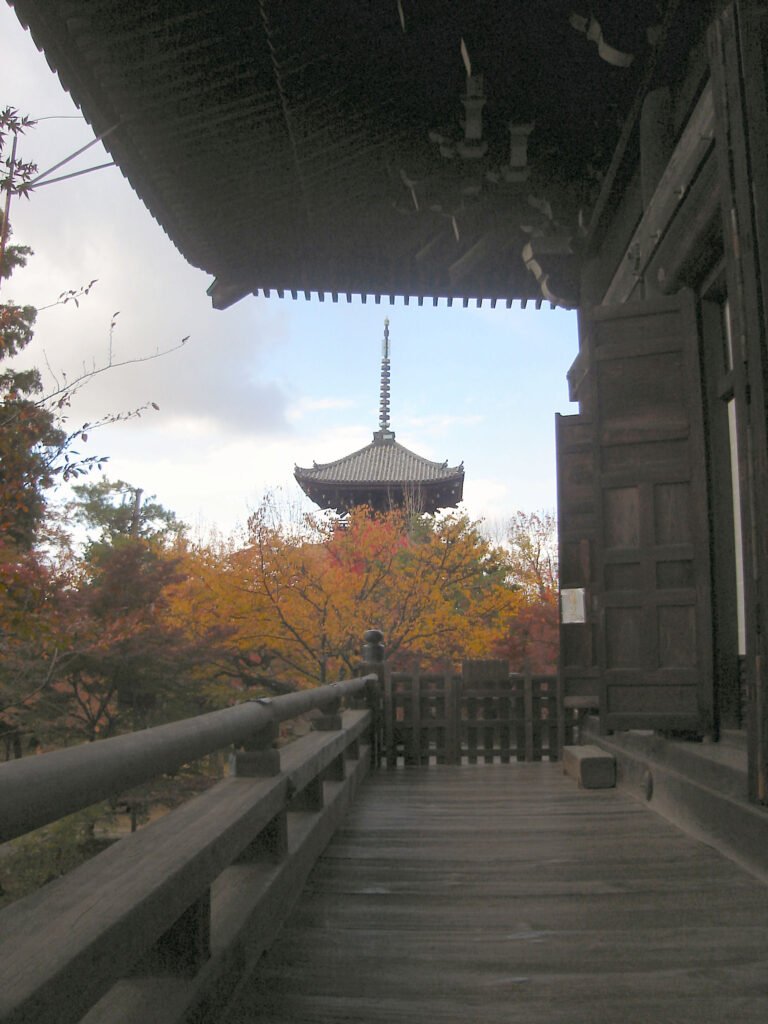
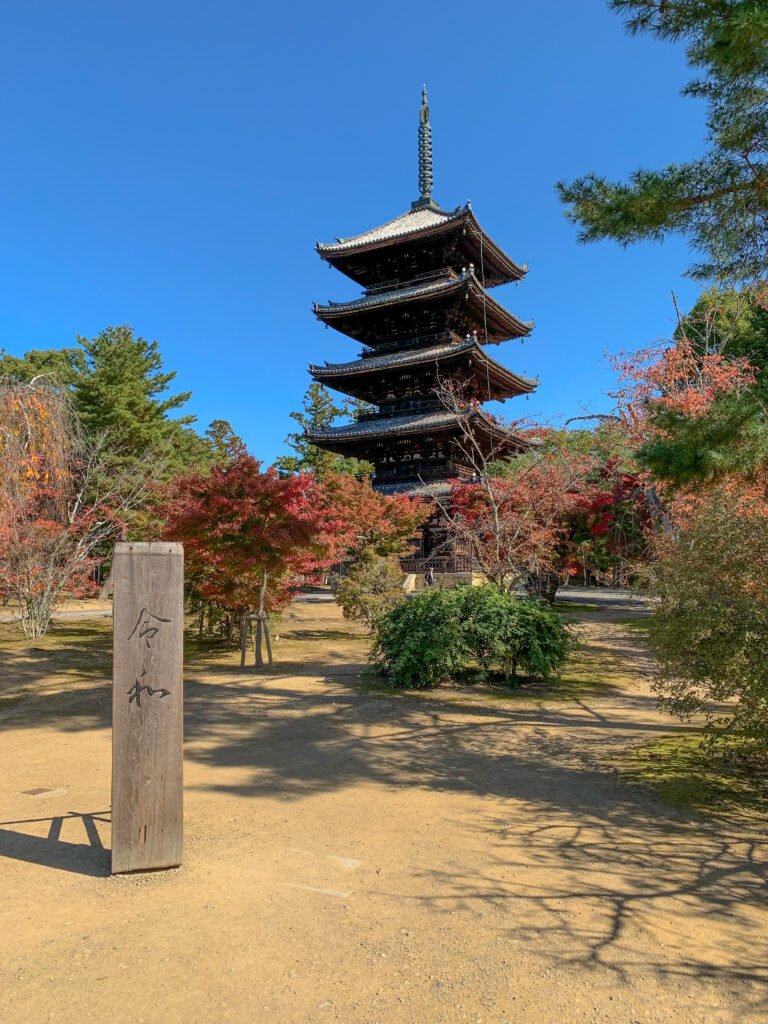
That relocated hall is the Kondo, Ninna-ji’s Golden Hall and a National Treasure, and it’s worth pausing at even if you don’t go inside — its proportions and roofline are distinctly palace architecture rather than temple architecture, which is unusual for a main worship hall in Kyoto. A short walk from it stands the five-story pagoda, built around 1637 and now an Important Cultural Property. Unlike some of the pagodas elsewhere in the city that keep visitors at a distance, this one sits close enough to the path that you can see the bracketing under each roof level, which is where most of the carpentry skill in a structure like this actually shows.
The Goten: Walking Through a Former Residence
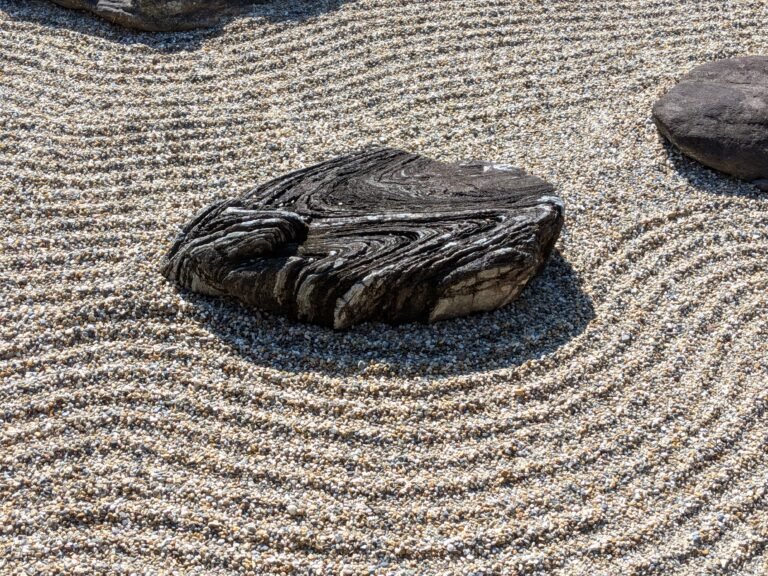
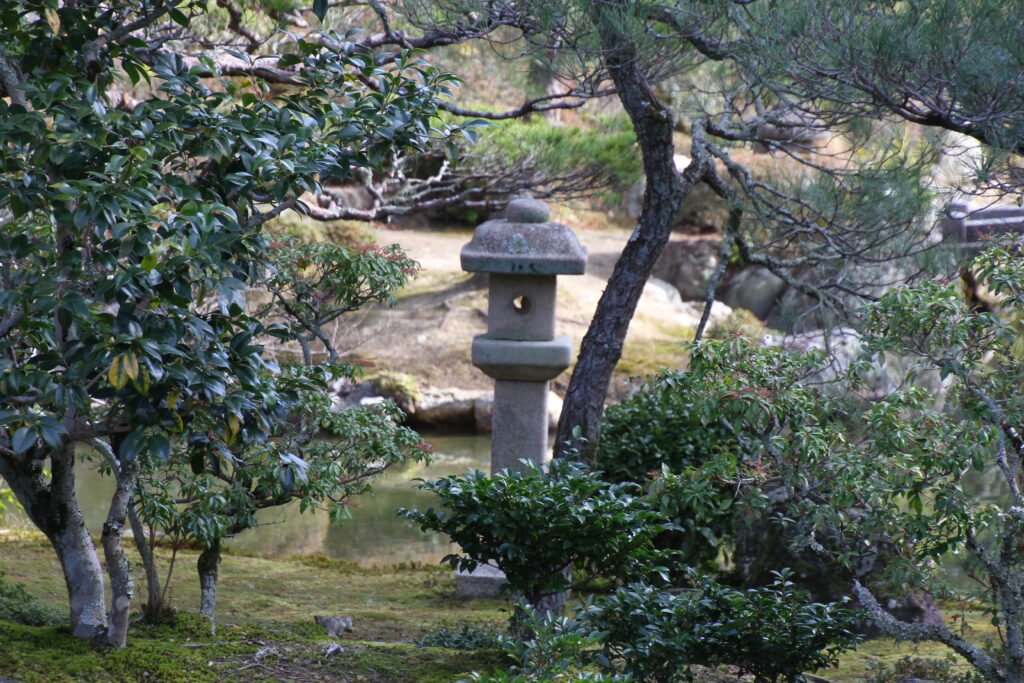
The Goten, the former residence of the head priest, is the part of Ninna-ji that feels least like a typical temple visit. You go through it along covered wooden corridors rather than a single hall, passing rooms with painted fusuma sliding doors and windows that frame a rock-and-pond garden differently at every turn. It’s shoin-zukuri residential architecture, the same style used in aristocratic and samurai residences of the period, so the effect is closer to touring a preserved historic house than praying at a temple altar — which is fitting, given that this is literally where the head priest, historically an imperial family member, actually lived.
The Reiho-kan, Ninna-ji’s treasure museum, sits near the Goten and holds part of the temple’s art collection, including Buddhist statuary and painted screens, but it only opens for limited stretches in spring and autumn rather than year-round. If you’re visiting outside those windows, it’s simply closed, so it’s worth checking the current season’s dates before building a visit around it.
The Omuro Cherry Trees
Ninna-ji’s other claim to fame is a grove of cherry trees found essentially nowhere else: Omuro-zakura, a variety that grows unusually short, with branches low enough to look at eye level instead of overhead, and blooms later than most of Kyoto’s cherries, typically in the second half of April after the rest of the city’s blossoms have already dropped. The trees are old enough to appear in classical Japanese literature — a medieval essay collection pokes fun at a Ninna-ji monk who never got around to visiting a famous shrine nearby, on the assumption that the temple’s own cherry grove had everything he needed. If you’re planning a Kyoto trip specifically around cherry blossoms and want to avoid competing with the Kinkaku-ji and Maruyama Park crowds for peak-week viewing, Ninna-ji’s later bloom window is one of the more useful timing tricks in the city; our Best Time to Visit Kyoto guide covers how the bloom moves around the city more generally.
Getting There and Nearby Temples
The most direct way in is the JR bus that runs straight from Kyoto Station to the Omuro Ninnaji stop, a ride of around 30 minutes that costs ¥230 and accepts an IC card or the city’s one-day bus pass; our Getting Around Kyoto guide covers how those passes work if you haven’t used one yet. The Keifuku Kitano Line, a small tram-like railway, is the other option and drops you at Omuro-Ninnaji Station, a few steps from the main gate.
Ninna-ji sits close enough to two other major sites that all three can reasonably fit into one morning or afternoon. Ryoan-ji, famous for its rock garden, is a 10-minute walk east. Kinkaku-ji, the Golden Pavilion, is a short bus ride further on and tends to draw the bulk of this area’s tourist traffic, which is part of why Ninna-ji stays comparatively quiet even on a day when its neighbors are packed.
Bottom Line
Ninna-ji rewards a slower visit than most people give it: the pagoda and grounds are worth 45 minutes on their own, and the Goten adds a different kind of experience if you have the time. It’s not a detour so much as the third stop on a walk that already includes Ryoan-ji and Kinkaku-ji, and if you can time it for the last two weeks of April, the Omuro cherry trees are reason enough to make it the first stop instead.