Yasaka Shrine: A Practical Guide to Kyoto’s Gion Guardian Shrine
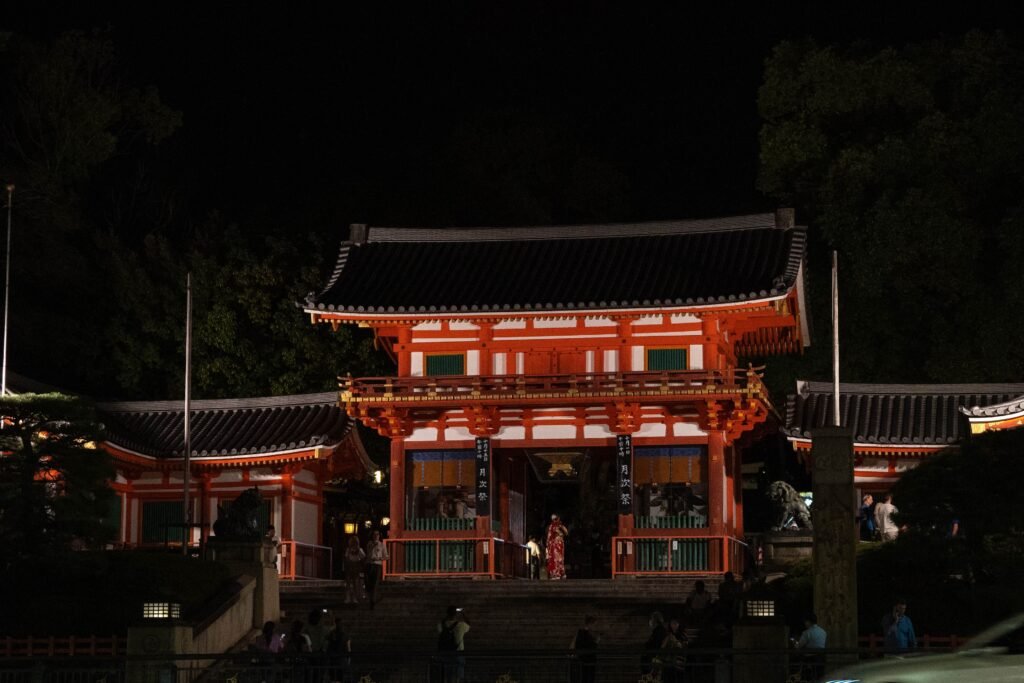
Unlike almost every other major shrine or temple in Kyoto, Yasaka Shrine has no opening hours, no admission fee, and no ticket window — it simply never closes. Sitting right at the boundary between Gion and the Higashiyama temple district, it is less a planned stop on most visitors’ itineraries than a place they pass through twice: once by daylight, and again after dark, when hundreds of lanterns over the dance stage are lit.
This guide covers what is worth seeing on the grounds, why the shrine looks completely different after sunset, and how it fits into a day spent walking between Gion and the temples above it.
The Essentials at a Glance
| What | Details |
|---|---|
| Admission | Free |
| Hours | Always open, no closing days |
| Typical visit length | 15–30 minutes (longer after dark) |
| By bus from Kyoto Station | City Bus 206 to the Gion stop, about 20 minutes |
| By train | Keihan Gion-Shijo Station or Hankyu Kyoto-Kawaramachi Station, both a short walk away |
| Best time for the lanterns | After sunset |
Getting There
City Bus 206 runs from Kyoto Station to the Gion stop in about 20 minutes, dropping you right in front of the shrine’s main Romon gate on Higashioji-dori. Coming by train instead, both Keihan Gion-Shijo Station and Hankyu Kyoto-Kawaramachi Station sit a few minutes’ walk away, on the opposite bank of the Kamo River.
Because the shrine sits directly between Gion and the Higashiyama temples, most visitors do not plan a dedicated trip here at all — it is simply the natural crossing point on a walk between the two, and worth pausing at rather than passing through.
When to Go
With no gates or opening hours to work around, Yasaka Shrine can be visited at any point in the day, but the two ends of it offer genuinely different experiences. Mornings, before the tour groups arrive from Kiyomizu-dera and the Higashiyama slopes, are quiet enough to hear gravel underfoot on the main approach.
Evenings are the better reason to come back, though. Once the sun sets, the rows of lanterns hanging over the dance stage in front of the main hall are lit — each one paid for by a local business whose name is painted on it — and the shrine takes on an entirely different character from its daytime self.
What You’ll See
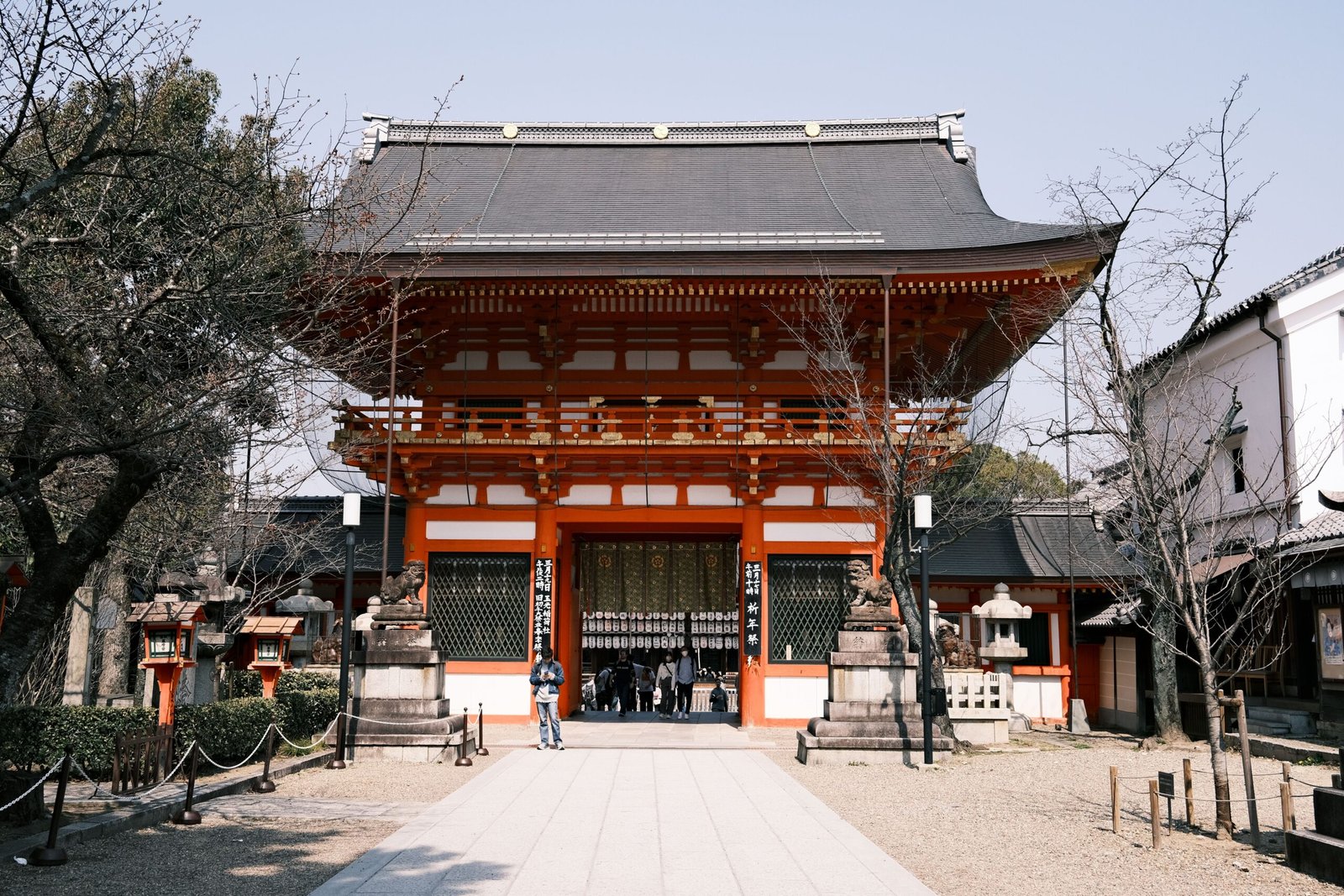
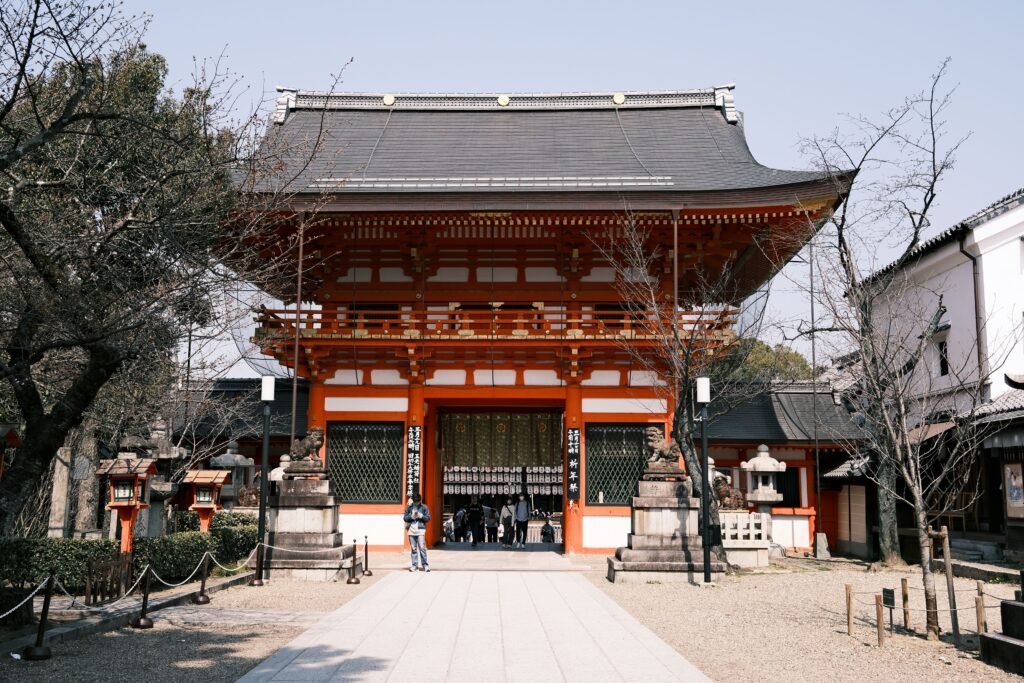
The Romon Gate and Main Hall. The vermillion two-story gate facing Higashioji-dori is the shrine’s most photographed spot, especially with the Higashiyama hills as a backdrop. Behind it, the honden (main hall) sits on a raised stone platform and is dedicated to Susanoo-no-Mikoto, the storm god credited with warding off plague and disease — the reason this shrine became the center of the Gion Festival in the first place.
The dance stage lanterns. Directly in front of the main hall, an open-air dance stage is ringed with lanterns that stay dark during the day and come alive after sunset. It is a free, no-planning-required version of the illuminated-temple events other Kyoto sights charge admission for during peak season.
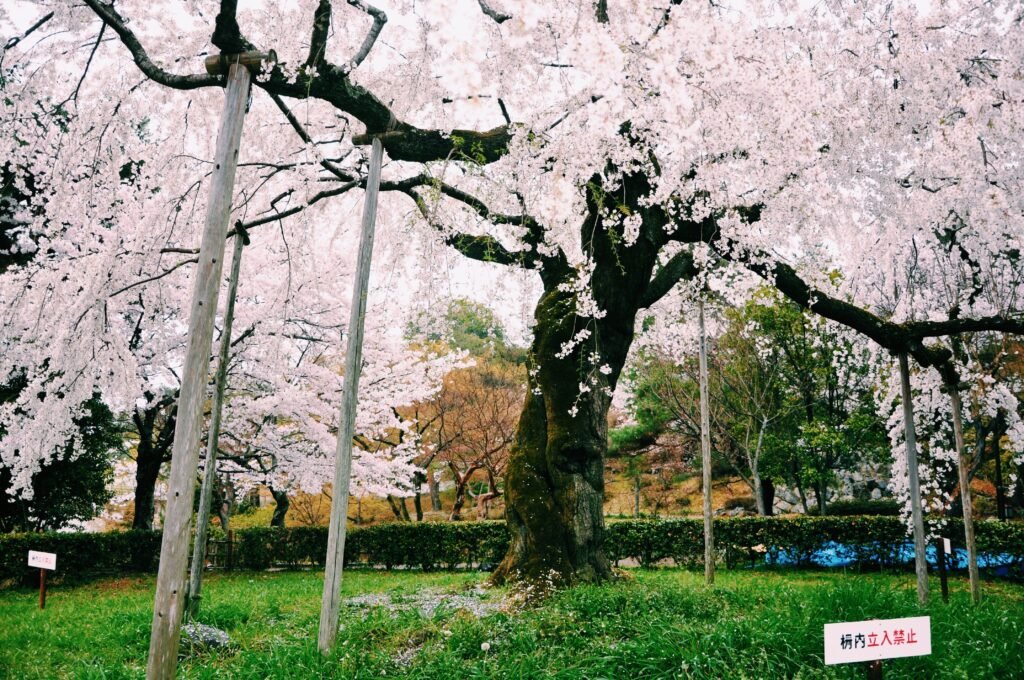
Maruyama Park. The shrine’s east gate opens directly into Maruyama Park, Kyoto’s oldest public park and one of its best-known cherry blossom spots, built around a large weeping cherry tree that has been replanted more than once over the past century. It is a natural next stop if you are continuing on toward Kodai-ji or the rest of Higashiyama.
Nearby, If You Have More Time
Yasaka Shrine sits right at the edge of Gion, and our Gion guide covers the historic streets and teahouses just a few minutes’ walk from the shrine’s south gate. Heading the other direction through Maruyama Park connects to the Higashiyama temples and the Sannenzaka and Ninenzaka slopes.
Where to Stay Nearby
Gion and eastern Kyoto around the shrine are some of the most convenient — and priciest — neighborhoods to base yourself in for exactly this kind of walking. Our Kyoto neighborhood comparison guide breaks down how this area compares to staying elsewhere in the city.
Booking.com is a reasonable place to check availability in Gion and the surrounding Higashiyama area.
Bottom Line
Yasaka Shrine rewards showing up twice more than it rewards a single long visit: once during the day as a crossing point between Gion and Higashiyama, and once after dark to see the lanterns most day-trippers never stick around for. It costs nothing and never closes, so there is no real reason not to do both.